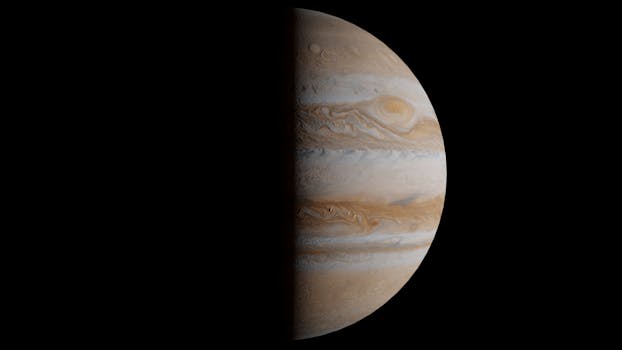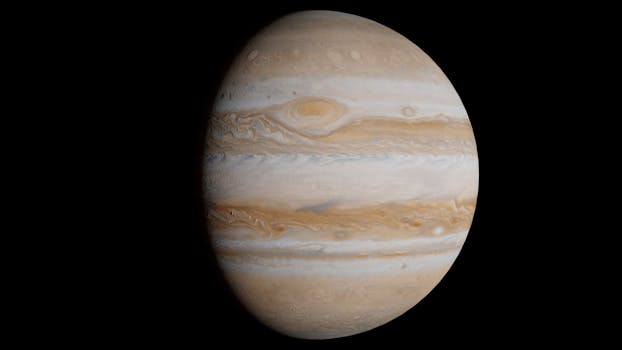
Jupiter's role in the solar system extends far beyond its imposing presence as the largest planet; it significantly impacts the stability and structure of the asteroid belt situated between Mars and Jupiter. Understanding this influence is crucial for both safeguarding Earth and comprehending our solar system's history and dynamics.
Jupiter's Gravitational Impact on the Asteroid Belt
Jupiter's gravitational force is the dominant factor in the sculpting of the asteroid belt’s current structure. The massive planet, with its strong gravitational pull, interacts with asteroids in a way that creates gaps known as Kirkwood gaps. These gaps are essentially regions within the asteroid belt where fewer asteroids are found, corresponding to the orbital resonances with Jupiter. For instance, at certain points in their orbits, asteroids that align with these resonances experience gravitational nudges from Jupiter, altering their trajectories. This can lead to them being pushed into new orbits, and in some cases, being ejected from the belt altogether.
.png)
Jupiter as a Cosmic Shield
The concept of the "Jupiter Shield" theory posits that Jupiter, by virtue of its massive size and gravitational strength, acts as a guardian of the inner planets. By deflecting or capturing comets and asteroids, Jupiter reduces the number of potential impactors that could otherwise threaten Earth. This protective role, however, is nuanced; the gravitational influence of Jupiter also has the potential to redirect asteroids towards the inner solar system, including Earth.
The Dual Role of Jupiter
This dual nature of Jupiter’s influence highlights its complex role in solar system dynamics. On one hand, it acts as a protector by steering hazardous objects away from Earth. On the other, it can potentially send dangerous objects towards the inner solar system. This makes Jupiter a significant focus in the study of planetary defense and understanding asteroid impact probabilities.
Insights into Solar System Evolution
The interactions between Jupiter and the asteroid belt provide valuable clues about the early solar system. The patterns and compositions found in the asteroid belt today are largely the result of past interactions with Jupiter, which have helped shape the belt over billions of years. These insights are crucial for astronomers and planetary scientists trying to reconstruct the solar system’s formative processes.
Broader Implications
Jupiter’s influence extends beyond the asteroid belt. Its gravitational forces also affect the orbits of comets from the Kuiper Belt and the Oort Cloud, directing some of these icy visitors towards the inner solar system where they can become spectacular cometary displays.
Future Research and Exploration
Continued exploration and study of Jupiter and its interactions with surrounding celestial bodies remain pivotal. Missions like NASA’s Juno spacecraft, which orbits Jupiter, are essential for providing the data needed to understand not only Jupiter’s own characteristics but also its profound impact on the solar system’s architecture and stability.
In conclusion, Jupiter’s immense influence on the asteroid belt and its role in solar system dynamics underscore the interconnected nature of celestial bodies. Its ability to both protect and endanger Earth highlights the complexities of planetary science and the need for ongoing research in understanding the intricate balance of forces within our solar system.