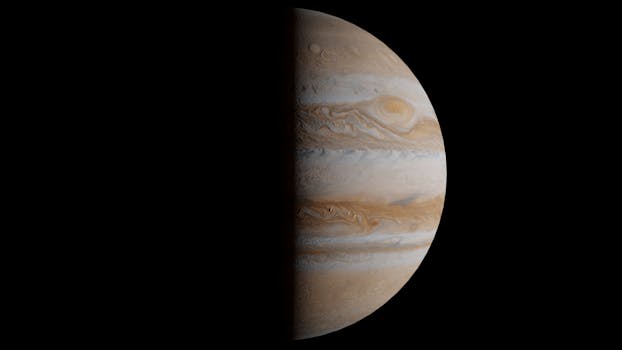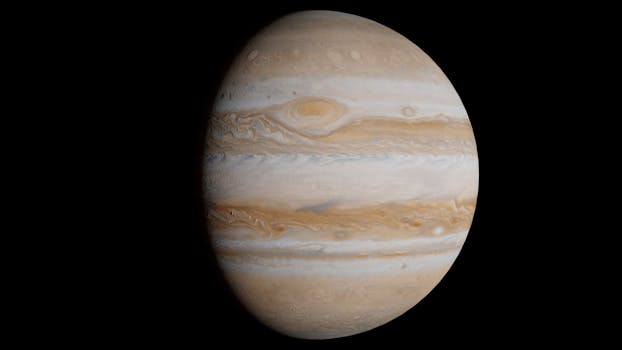
Jupiter, known for its colossal size and strong gravitational force, significantly influences the trajectories of comets within our solar system. This giant planet, which contains more than twice the mass of all other planets combined, plays a crucial role in the dynamic interplay of celestial bodies in our cosmic neighborhood.
The Gravitational Giant
Jupiter's gravitational impact is so significant that it can dramatically alter the paths of comets. These small celestial bodies, made up of ice, dust, and rock, travel through the solar system under the influence of the Sun’s gravity. However, when they come within proximity to Jupiter, their paths can change unpredictably due to the giant planet's powerful gravitational pull.
.png)
Temporary Satellite Capture
One fascinating aspect of Jupiter's interaction with comets is the phenomenon known as Temporary Satellite Capture (TSC). This occurs when a comet passes close enough to Jupiter to be caught in its gravitational field, leading it to orbit the planet temporarily. An example of this was comet Shoemaker-Levy 9, which not only orbited Jupiter but eventually fragmented and collided spectacularly with the planet in 1994, providing a rare and valuable observation event for astronomers.
Jupiter as Earth’s Guardian
Jupiter also plays a protective role in our solar system. Its strong gravitational field can act as a shield, redirecting comets away from Earth. This protective mechanism helps reduce the likelihood of potential impacts, which could have severe consequences for our planet. By diverting these comets, Jupiter prevents them from entering the inner solar system where they could pose a threat to Earth.
A Double-Edged Sword
However, the influence of Jupiter on comets is not solely benevolent. In some instances, its gravitational pull can redirect comets towards the inner solar system, potentially including Earth. This scenario has led to speculation that Jupiter could have been responsible for altering the path of the comet believed to have caused the extinction of the dinosaurs. Thus, while Jupiter can defend Earth from some space debris, it can also send other objects hurtling our way.
Importance of Monitoring Jupiter’s Influence
Understanding how Jupiter affects comet trajectories is crucial for predicting potential threats to Earth. Astronomers and scientists continually monitor comets, particularly their interactions with Jupiter, to predict their paths and assess any risk they pose. This ongoing research is vital not only for planetary defense but also for gaining deeper insights into the behavior of comets and the overall dynamics of our solar system.
Conclusion
In summary, Jupiter's dual role as both protector and potential threat highlights the complex dynamics of our solar system. Its ability to capture, alter, and redirect the paths of comets makes it a key player in celestial mechanics and a crucial focus for ongoing astronomical studies. By continuing to study Jupiter and its effects on cometary paths, scientists can better prepare for and potentially mitigate the risks posed by these icy visitors from the outer reaches of our solar system.