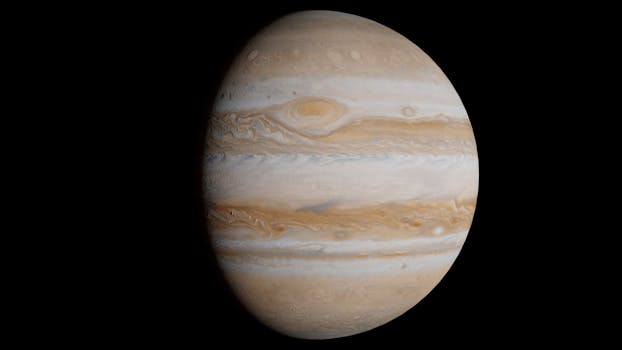
Jupiter’s Trojans are among the most fascinating and mysterious populations of small bodies in our solar system. Named after characters from Greek mythology, these celestial objects share Jupiter’s orbit around the Sun, clustered in two vast swarms that precede and trail the giant planet by roughly 60 degrees. Their discovery over a century ago unlocked new insights into the solar system’s evolution, while ongoing research continues to reveal their importance for planetary science, the origins of our cosmic neighborhood, and even the future of space exploration.
The Discovery of Jupiter’s Trojans: A Chance Find That Changed Astronomy
The story of the Jupiter Trojans began in 1906, when German astronomer Max Wolf discovered an odd asteroid at the Lagrange point ahead of Jupiter. He named it 588 Achilles, after the legendary Greek hero. This object was found to occupy a gravitationally stable region 60 degrees ahead of Jupiter in its orbit—a point now known as L4, one of the five Lagrange points in the Jupiter-Sun system.
Soon after, two more asteroids—Patroclus and Hektor—were found in similar positions, but trailing Jupiter by 60 degrees, at a point called L5. As more such objects were discovered, astronomers realized that these asteroids were not isolated oddities, but part of extensive swarms locked in a gravitational dance with Jupiter.
.png)
By 2024, over 12,000 Jupiter Trojans have been catalogued, and researchers estimate that there may be as many as 1 million Trojans larger than 1 kilometer in diameter. This makes the Jupiter Trojan population comparable in number to the main asteroid belt between Mars and Jupiter.
Where Are Jupiter’s Trojans? The Dynamics of Co-Orbital Companions
Jupiter’s Trojans occupy two enormous clusters located at the L4 and L5 Lagrange points, which are about 778 million kilometers (484 million miles) from the Sun. These points are unique regions in space where the gravitational pull of Jupiter and the Sun combine to create stable pockets. Within these zones, objects can maintain their positions relative to Jupiter for billions of years.
Unlike the main asteroid belt, which encircles the Sun in a wide, somewhat flat ring, the Trojan populations are more like clouds stretched along Jupiter’s orbital path. The leading group at L4 is sometimes called the “Greek camp,” while the trailing group at L5 is known as the “Trojan camp,” a nod to the Homeric mythology that inspired their names.
The gravitational stability of these regions means that Trojans are not just transient visitors, but long-term residents. Computer models suggest that many Trojans have been in their current positions since the earliest days of the solar system, making them cosmic time capsules.
What Makes Jupiter’s Trojans Unique? Size, Composition, and Color
Jupiter’s Trojans display a remarkable range of sizes. The largest, 624 Hektor, is about 225 kilometers (140 miles) long—roughly the same size as Connecticut. Most, however, are much smaller, with the majority being less than 15 kilometers (9 miles) across.
In terms of composition, Trojans are believed to be rich in dark, carbon-based materials, similar to the D-type and P-type asteroids of the outer main belt. Their surfaces are some of the darkest in the solar system, reflecting only about 4-7% of the sunlight that strikes them. Spectroscopic studies indicate the presence of complex organic molecules, silicates, and possibly water ice beneath their surfaces.
One intriguing fact is that the two swarms are not identical. The L4 group contains about 40% more known objects than L5, for reasons that are still not fully understood. Additionally, there is a diversity in color and spectral type among the Trojans, hinting at complex histories and possible differences in origin.
Why Are Jupiter’s Trojans Important? Insights into Solar System History
The importance of Jupiter’s Trojans extends far beyond their numbers or curious orbits. Researchers believe these objects are among the most primitive bodies in the solar system, largely unchanged since their formation over 4 billion years ago. Studying them offers a unique window into the conditions that prevailed during the birth of the planets.
According to the widely accepted Nice model of solar system evolution, the orbits of the giant planets shifted dramatically in the early epochs. During this period, Jupiter’s gravity may have captured Trojans from a wide region, including the distant Kuiper Belt. This means the Trojans could be relics from different parts of the solar system, preserved in their current locations.
Analysis of their compositions can help scientists test models of planetary migration, the mixing of primordial material, and the delivery of water and organics to the inner planets—including Earth. In fact, the Trojans may hold clues to how life-sparking compounds arrived on our planet.
Exploration of Jupiter’s Trojans: Lucy and Beyond
Despite their scientific importance, Jupiter’s Trojans have never been visited by a spacecraft—until now. In October 2021, NASA launched the Lucy mission, a pioneering journey to explore multiple Trojan asteroids up close. Lucy is scheduled to visit seven Trojans between 2027 and 2033, including both L4 and L5 swarms.
Lucy’s objectives include detailed imaging, surface composition analysis, and searches for moons or rings. The data collected will provide the first direct observations of these distant objects, likely revolutionizing our understanding of their origins, structure, and relationship to other small bodies.
The Lucy mission is remarkable not only for its ambitious itinerary but also for its potential to bridge gaps in our knowledge about the early solar system. By comparing Trojans to asteroids, comets, and Kuiper Belt objects, scientists hope to unravel the common threads that tie together the solar system’s history.
How Do Jupiter’s Trojans Compare to Other Asteroid Populations?
While Jupiter’s Trojans are often discussed alongside the main asteroid belt, they have distinct characteristics. The table below highlights some key differences and similarities between these two major populations:
| Feature | Jupiter Trojans | Main Asteroid Belt |
|---|---|---|
| Location | L4/L5 points of Jupiter’s orbit (~5.2 AU from Sun) | Between Mars and Jupiter (2.1-3.3 AU from Sun) |
| Estimated Population > 1 km | Up to 1 million | About 1.3 million |
| Largest Member | 624 Hektor (225 km) | 1 Ceres (940 km) |
| Composition | Mainly dark, carbon-rich (D, P types) | Varied: carbonaceous, silicate, metallic |
| Surface Reflectivity (Albedo) | Very low (4-7%) | Varied (3-22%) |
| Orbit Shape | Co-orbital with Jupiter | Elliptical, independent orbits |
This comparison shows that while the two populations are similar in number, they differ in location, composition, and potentially in origin. Studying both groups in context helps astronomers piece together the broader story of the solar system.
The Future of Trojan Research: What’s Next?
The next decade promises to be an exciting era for Trojan science. Alongside the Lucy mission, ground-based telescopes and advanced computer simulations are shedding light on the formation, evolution, and potential hazards posed by these objects.
One area of growing interest is the possibility that Trojans could be targets for future resource extraction, such as mining for water ice or rare minerals to support deep-space exploration. Their stable orbits and abundance may make them valuable stepping stones for missions venturing into the outer solar system.
Additionally, studying the Trojans could help scientists identify and understand similar populations around other planets. Neptune, for example, has its own set of Trojans, and researchers have begun to search for Trojans of Earth and Mars. These comparisons could reveal whether the processes that shaped Jupiter’s Trojans are common throughout the galaxy.
Conclusion
The discovery of Jupiter’s Trojans over a century ago opened a new chapter in the study of our solar system. These enigmatic co-orbital companions have proved to be more than just curiosities—they are keys to understanding the formation, migration, and evolution of planets and small bodies alike. With upcoming missions like Lucy poised to deliver the first close-up images and data, our knowledge of these ancient survivors is set to expand dramatically. As we continue to explore, Jupiter’s Trojans will remain at the forefront of planetary science, offering clues not just to our own history, but perhaps to the histories of planetary systems across the cosmos.