The Spectacular Journey: Unfolding the NASA Juno Mission to Jupiter
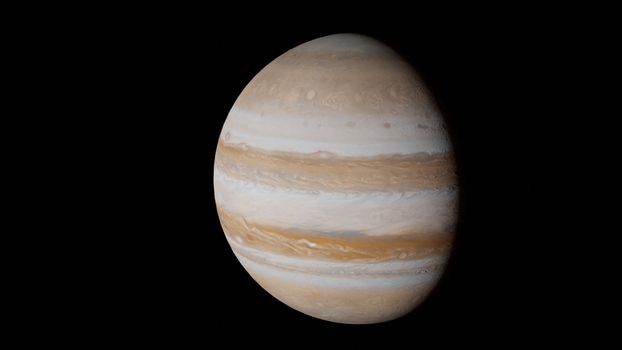
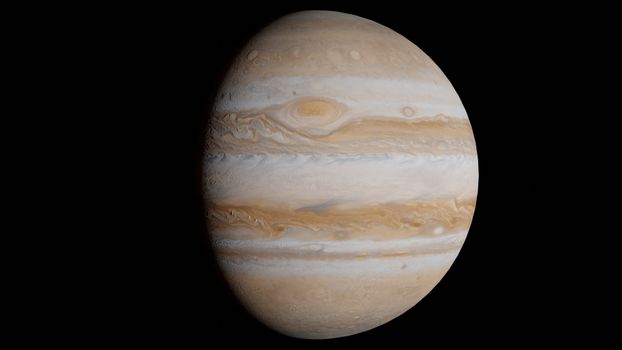
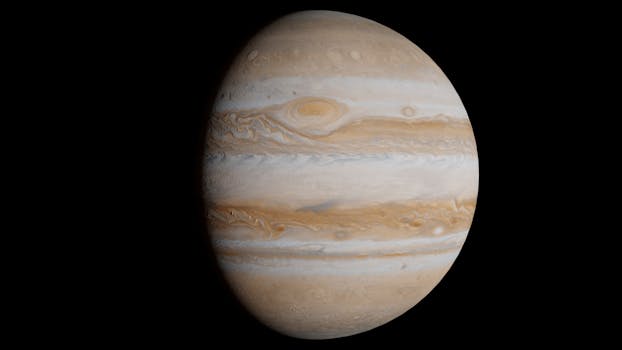
Since the dawn of space exploration, Jupiter has captivated scientists and dreamers alike with its swirling storms, vast size, and mysterious magnetic fields. Among the many missions designed to study the solar system’s largest planet, none has matched the drama, endurance, and scientific impact of NASA’s Juno mission. Launched on August 5, 2011, Juno embarked on a 1.7 billion-mile odyssey to unlock Jupiter’s deepest secrets, uncovering new insights into planetary formation, atmospheric dynamics, and the origins of our solar system.
This article traces the spectacular journey of the Juno spacecraft, from its ambitious launch and perilous arrival at Jupiter to its groundbreaking discoveries and lasting legacy. We’ll delve into Juno’s innovative technology, the mission’s unique elliptical orbit, and the data revolution it sparked in planetary science.
Juno’s Mission Objectives: A Bold Plan to Decode Jupiter
NASA’s Juno mission was conceived to answer some of the most fundamental questions about Jupiter and, by extension, the early solar system. Prior missions like Pioneer 10, Voyager 1 and 2, Galileo, and Cassini offered glimpses of Jupiter’s grandeur, but left many mysteries unsolved.
.png) Juno’s primary objectives were:
- To map Jupiter’s gravity and magnetic fields, shedding light on its internal structure.
- To probe the composition and dynamics of Jupiter’s atmosphere, including its famous Great Red Spot.
- To explore the planet’s polar magnetosphere and auroras in unprecedented detail.
- To search for evidence of a solid planetary core, a key to understanding planetary formation.
Juno’s primary objectives were:
- To map Jupiter’s gravity and magnetic fields, shedding light on its internal structure.
- To probe the composition and dynamics of Jupiter’s atmosphere, including its famous Great Red Spot.
- To explore the planet’s polar magnetosphere and auroras in unprecedented detail.
- To search for evidence of a solid planetary core, a key to understanding planetary formation.
To achieve these goals, Juno was equipped with a suite of nine scientific instruments, including the Microwave Radiometer (MWR), Jupiter Energetic Particle Detector Instrument (JEDI), and JunoCam for public outreach and science imaging.
One of the mission’s most innovative aspects was its reliance on solar power. Before Juno, no spacecraft venturing beyond Mars had ever used solar panels as its primary power source. Juno’s three massive solar arrays, spanning 20 meters tip-to-tip, generate about 500 watts of electricity—enough to power a few household appliances—while operating more than 800 million kilometers from the Sun.
Journey to Jupiter: Navigational Feats and Challenges
The road to Jupiter was a marathon of engineering and navigation. After a flawless launch atop an Atlas V rocket in 2011, Juno spent five years spiraling through the inner solar system. To gain the speed necessary for a Jupiter encounter, the spacecraft performed a gravity-assist flyby of Earth on October 9, 2013, slingshotting itself toward the outer solar system.
Juno’s cruise phase was not without hazards. Engineers had to shield the spacecraft’s sensitive electronics from dangerous cosmic radiation and micrometeoroid impacts. The spacecraft traveled at an average speed of 60,000 kilometers per hour (about 37,000 mph), crossing a vast expanse of space before its critical rendezvous.
On July 4, 2016, after a journey of nearly five years and 2.8 billion kilometers (1.74 billion miles), Juno executed a dramatic 35-minute engine burn to enter orbit around Jupiter. This high-stakes maneuver, known as Jupiter Orbit Insertion (JOI), slowed Juno by 542 meters per second (1,210 mph), allowing the planet’s gravity to capture it into a highly elliptical polar orbit.
Since then, Juno has completed more than 50 science orbits (as of early 2024), swooping as close as 4,200 kilometers (2,600 miles) above Jupiter’s cloud tops at speeds exceeding 208,000 kilometers per hour (129,000 mph) during each perijove, or closest approach.
Cutting-Edge Science: Peering Beneath Jupiter’s Clouds
Juno’s array of scientific instruments has delivered a treasure trove of data, revolutionizing our understanding of Jupiter. Here are some of the mission’s standout discoveries:
- $1 Juno’s gravity measurements revealed that Jupiter’s core is not a compact, rocky sphere as once thought, but rather a “fuzzy” or diluted core, blending with the planet’s deep hydrogen envelope. This suggests a violent impact with another large planetary body in Jupiter’s early history. - $1 Juno’s JunoCam and Jovian Infrared Auroral Mapper (JIRAM) uncovered massive clusters of cyclones swirling around both poles. At the north pole, nine cyclones form a pentagon, while the south pole hosts six, each thousands of kilometers wide. - $1 The spacecraft’s Microwave Radiometer showed that Jupiter’s colorful atmospheric bands extend at least 3,000 kilometers (1,900 miles) below the visible cloud tops, much deeper than previously believed. - $1 Juno’s instruments have captured the most detailed images and measurements of Jupiter’s auroras, which are 10 times more powerful than Earth’s and are fueled by the planet’s intense magnetic field.Juno’s data has also revealed that Jupiter’s magnetic field is both stronger and more irregular than expected, with localized “hot spots” and regions of unexpected intensity. These findings challenge existing theories of planetary magnetism and help scientists model the magnetic environments of exoplanets and other gas giants.
Juno’s Orbit: Why the Polar Elliptical Path Matters
One of Juno’s most distinctive features is its highly elliptical, polar orbit. Unlike previous missions such as Galileo, which orbited near Jupiter’s equator, Juno swoops from pole to pole every 53 days (originally planned for 14 days, but increased for safety), minimizing time spent in Jupiter’s hazardous radiation belts.
This orbit allows Juno to: - Sample both the northern and southern auroral regions directly. - Gather global data on Jupiter’s gravity and magnetic fields. - Avoid prolonged exposure to intense radiation, extending the spacecraft’s operational life.Juno’s trajectory was carefully designed to maximize science returns while preserving the spacecraft. Each perijove brings it extremely close to Jupiter’s cloud tops, enabling high-resolution imaging and atmospheric sampling, followed by long stretches far from the planet where data is transmitted back to Earth.
| Mission | Arrival Year | Primary Power Source | Closest Approach to Jupiter (km) | Orbital Inclination |
|---|---|---|---|---|
| Pioneer 10 | 1973 | Radioisotope | 130,000 | 3° |
| Galileo | 1995 | Radioisotope | 214,000 | 0.1° |
| Juno | 2016 | Solar | 4,200 | 90° (polar) |
As the table shows, Juno’s polar orbit and close flybys set it apart from previous Jupiter missions, enabling unique scientific perspectives.
JunoCam: Engaging the Public and Inspiring Discovery
While most of Juno’s instruments are designed for in-depth scientific analysis, the JunoCam imager serves a dual role: providing valuable science data and engaging the global public. Unlike other NASA mission cameras, JunoCam images are released to the public in raw form, inviting citizen scientists, artists, and students to process, interpret, and share their own views of Jupiter.
This open-data approach has generated thousands of stunning images, showcasing swirling storms, polar cyclones, and Jupiter’s dynamic cloud formations in vivid color. JunoCam’s images have graced magazine covers, inspired classroom projects, and brought the wonders of planetary science to millions worldwide.
The Juno mission’s commitment to public engagement is evident in its outreach campaigns, educational resources, and interactive websites, making planetary exploration accessible to people of all ages.
The Extended Mission: New Frontiers and Lasting Legacy
Originally slated for 37 orbits, Juno’s mission was extended through September 2025, allowing it to conduct over 70 science orbits in total. The extended mission has expanded Juno’s scientific objectives to include flybys of Jupiter’s moons Ganymede, Europa, and Io, providing bonus science opportunities.
Notable achievements from the extended mission include: - The closest flyby of Ganymede in over 20 years (June 2021), capturing high-resolution images of its icy surface. - Multiple flybys of Io, the most volcanic body in the solar system, revealing eruptions and surface changes. - New data on Jupiter’s faint rings and magnetosphere interactions.Juno’s extended lifespan is a testament to its robust engineering and the value of maximizing science returns from every mission dollar. As of 2024, Juno has traveled over 2.5 billion kilometers during its time in the Jovian system and transmitted nearly 3 terabits of data to Earth.
Juno’s discoveries have not only rewritten textbooks about Jupiter, but also informed the design of future missions, such as the upcoming Europa Clipper (launching in 2024) and the European Space Agency’s Jupiter Icy Moons Explorer (JUICE).
What’s Next: The Future of Jupiter Exploration After Juno
As Juno continues its spectacular journey, the mission’s legacy is already shaping the next era of Jupiter exploration. Its detailed maps of the planet’s gravity and magnetic fields, insights into atmospheric circulation, and glimpses of the Galilean moons provide a launching pad for future discoveries.
Upcoming missions will build on Juno’s foundation: - $1 Focused on Jupiter’s moon Europa, searching for habitable environments and subsurface oceans. - $1 Aims to study Ganymede, Callisto, and Europa, with a special emphasis on habitability and magnetic environments.Juno’s open-data philosophy and public outreach have fostered a new generation of planetary enthusiasts and scientists. Its success demonstrates the power of international collaboration, innovative engineering, and the enduring human drive to explore.