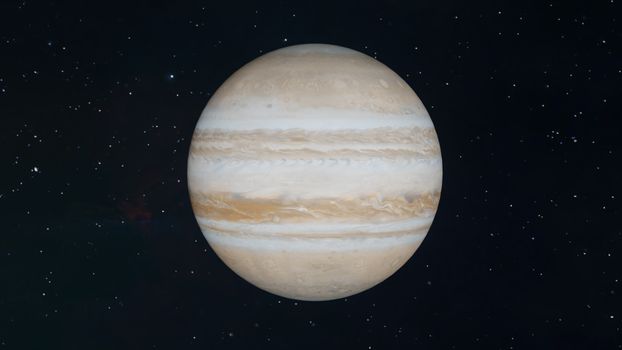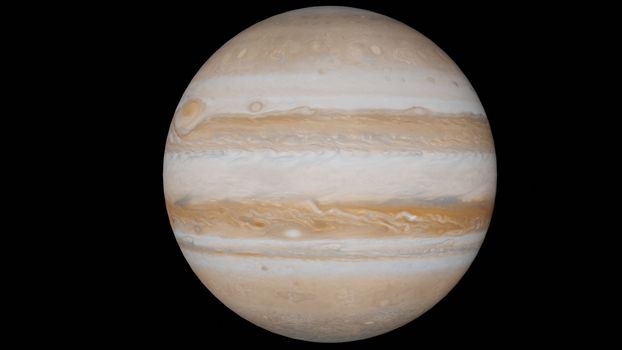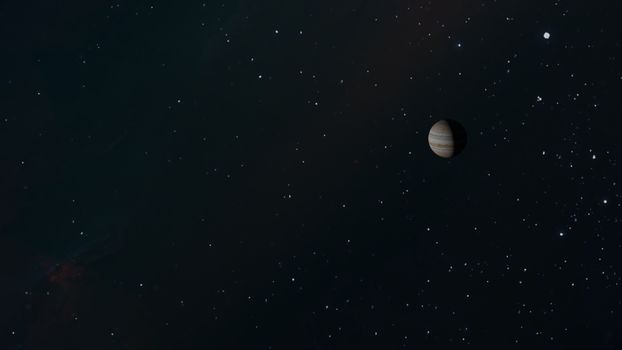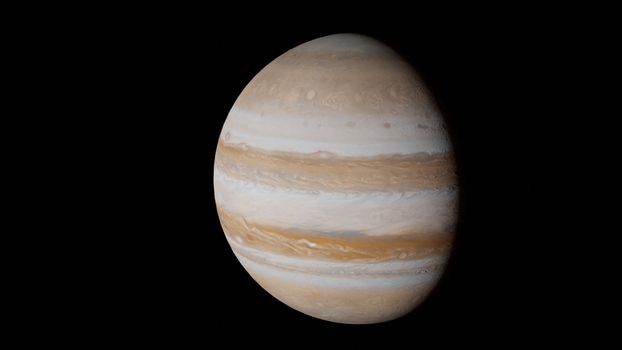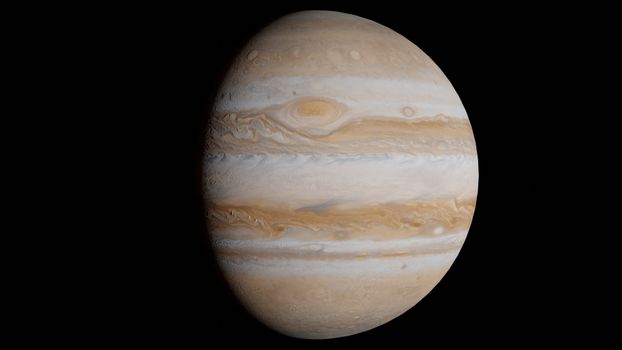
Jupiter stands as the colossus of our solar system, boasting not only the largest mass but also one of the most formidable and complex magnetic fields known to science. The gas giant’s magnetic field, thousands of times stronger than Earth’s, has fascinated astronomers and planetary scientists for decades. But what makes Jupiter’s magnetosphere so unique? How does it form, what effects does it produce, and why is understanding it crucial for planetary science and the future of space exploration? Let’s delve into the mysteries and mechanics of Jupiter's magnetic field through a comprehensive study.
The Origins of Jupiter’s Powerful Magnetic Field
Jupiter’s magnetic field is a product of its immense size and rapid rotation, but the real secret lies deep within its core. Unlike Earth, which has a solid inner core surrounded by a liquid iron outer core, Jupiter’s core is thought to be a dense mix of elements surrounded by an ocean of metallic hydrogen. Under Jupiter’s extreme pressures—over 3 million times Earth’s atmospheric pressure—hydrogen behaves like a metal, conducting electricity and generating a vast magnetic field through the process of dynamo action.
Jupiter completes a rotation on its axis in just under 10 hours, spinning faster than any other planet in the solar system. This rapid rotation amplifies the dynamo effect, helping generate a magnetic field that is both intense and distinctively shaped. At its equator, Jupiter’s magnetic field strength is measured at about 4.3 gauss—over ten times stronger than that of Earth. Near its poles, this strength can be even higher.
.png)
Notably, observations from NASA's Juno mission have revealed that Jupiter’s magnetic field is not symmetrical. It displays complex, lopsided features, including regions of exceptionally strong and unusually weak magnetism, hinting at dynamic processes in the planet’s interior that challenge previous models.
Comparing Planetary Magnetic Fields: Jupiter vs. Earth and Beyond
To grasp the enormity of Jupiter’s magnetosphere, it helps to compare its scale and strength with those of other planets. The table below highlights key differences between Jupiter’s, Earth’s, and other notable planetary magnetic fields.
| Planet | Surface Magnetic Field Strength (Gauss) | Magnetosphere Size (Distance from Planet in Radii) | Key Features |
|---|---|---|---|
| Jupiter | 4.3 (equator), up to 14 (poles) | 50-100 Jupiter radii (approx. 7 million km) | Strongest planetary field; asymmetrical; extensive radiation belts |
| Earth | 0.25 - 0.65 | 10 Earth radii (approx. 64,000 km) | Protects life; causes auroras; relatively stable dipole |
| Saturn | 0.2 | 20 Saturn radii | Symmetrical dipole; weaker than Jupiter |
| Mercury | 0.003 | 1.5 Mercury radii | Weak, but present; likely from a partially liquid core |
| Ganymede (moon of Jupiter) | 0.0075 | Up to 2 Ganymede radii | Only moon with a significant magnetic field |
Jupiter’s magnetosphere dwarfs all others in the solar system. To put it in perspective, if Jupiter’s magnetic bubble were visible in the night sky, it would appear larger than the full Moon as seen from Earth.
The Structure and Extent of Jupiter’s Magnetosphere
Jupiter’s magnetosphere is not merely a scaled-up version of Earth’s. It is a dynamic, complex system, stretching up to 7 million kilometers toward the Sun and extending almost to Saturn’s orbit on the night side, forming a gigantic magnetic tail.
The magnetosphere consists of several key regions: - $1 Where the solar wind first encounters Jupiter’s magnetic field, creating a shockwave. - $1 A turbulent zone between the bow shock and the magnetopause. - $1 The boundary where Jupiter’s magnetic field balances with the solar wind. - $1 Intense zones where charged particles are trapped by the magnetic field, producing lethal radiation levels.One of the most remarkable features is the Io plasma torus, a ring of ionized particles originating from volcanic eruptions on Jupiter’s moon Io. This torus feeds the magnetosphere with up to 1,000 kilograms of material per second, fueling powerful auroras and contributing to Jupiter’s unique electromagnetic environment.
The magnetosphere’s immense size and power create challenges for spacecraft. For example, radiation levels within Jupiter’s inner magnetosphere are more than 1,000 times higher than those around Earth, requiring special shielding for scientific instruments.
Jupiter’s Auroras: The Solar System’s Most Spectacular Light Show
Jupiter’s magnetic field powers the solar system’s most energetic and persistent auroras, far surpassing even those at Earth’s poles. Unlike Earth’s auroras, which are primarily triggered by solar wind interactions, Jupiter’s are largely driven by its rapid rotation and the volcanic activity of its moon Io.
The Juno spacecraft has observed auroral ovals at Jupiter’s poles glowing brightly in ultraviolet and X-ray wavelengths. These auroras are caused by electrons accelerating along magnetic field lines and colliding with Jupiter’s upper atmosphere, releasing bursts of energy. The main auroral emissions circle the magnetic poles and are continually supplied with charged particles from Io.
Jupiter’s auroras are so powerful that they can emit hundreds of terawatts of power—enough to briefly outshine all other sources of ultraviolet light in the solar system. NASA’s Hubble Space Telescope has captured images of these glowing ovals, and Juno’s instruments have detected mysterious “dawn storms,” sudden, intense brightenings in the auroras, which remain a subject of active research.
The Role of Jupiter’s Magnetic Field in Space Exploration
Understanding Jupiter’s magnetic field is not just a matter of academic curiosity—it is vital for the safety and success of future missions to Jupiter and its moons, especially Europa, which is considered a prime target in the search for extraterrestrial life.
The hazardous radiation belts around Jupiter pose significant engineering challenges. For instance, the Galileo spacecraft, which orbited Jupiter from 1995 to 2003, suffered multiple electronic glitches due to radiation. The Juno spacecraft was designed with a titanium vault to shield its electronics from the intense magnetic environment, allowing it to survive longer and collect more data than any previous mission.
Future explorations, such as the upcoming European Space Agency’s JUICE (Jupiter Icy Moons Explorer), will rely on detailed models of Jupiter’s magnetosphere to plan safe trajectories and minimize radiation exposure. These missions aim to study the interaction between Jupiter’s magnetic field and the subsurface oceans of its moons, which could have profound implications for astrobiology.
How Jupiter’s Magnetic Field Shapes Its Moons and Space Weather
Jupiter’s magnetic field is not isolated; it exerts powerful influences on its more than 90 moons, especially the four largest: Io, Europa, Ganymede, and Callisto—the Galilean moons. Io, with its constant eruptions, supplies plasma to the magnetosphere, while Europa and Ganymede experience induced electric currents due to the changing magnetic environment.
Ganymede, uniquely, has its own intrinsic magnetic field, creating a tiny magnetosphere within Jupiter’s vast one—a magnetic “moon within a planet.” This nested system is unique in the solar system and offers an unparalleled laboratory for studying magnetospheric physics.
Jupiter’s magnetic field also shapes the space weather throughout the Jovian system. It accelerates charged particles to nearly the speed of light, creating hazardous radiation, and influences the thin atmospheres of its moons. Understanding these interactions is crucial for interpreting surface chemistry, atmospheric composition, and the potential for habitability on moons like Europa.
Final Insights: Why Jupiter’s Magnetic Field Matters
Jupiter’s magnetic field is a cosmic powerhouse, shaping not just the environment of the giant planet itself but also the fate of its moons, the dynamics of the outer solar system, and the future of planetary exploration. Its study provides vital clues to the processes operating inside giant planets—processes that might be common across the galaxy in exoplanetary systems.
With ongoing missions like Juno and the upcoming JUICE mission, our knowledge of Jupiter’s magnetic mysteries is set to expand dramatically. Each discovery brings us one step closer to understanding not only how Jupiter works but also the universal principles that govern planets and magnetic fields throughout the cosmos.