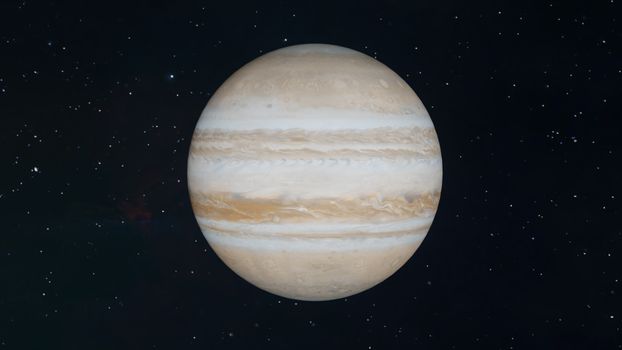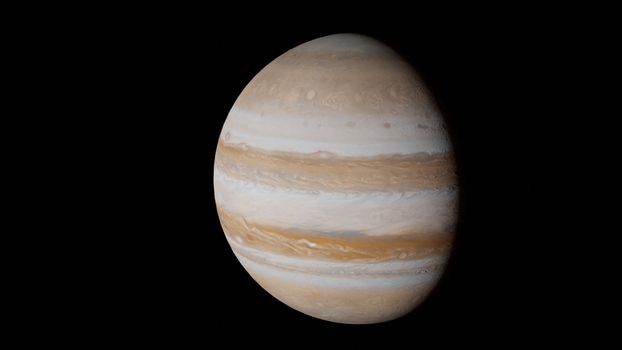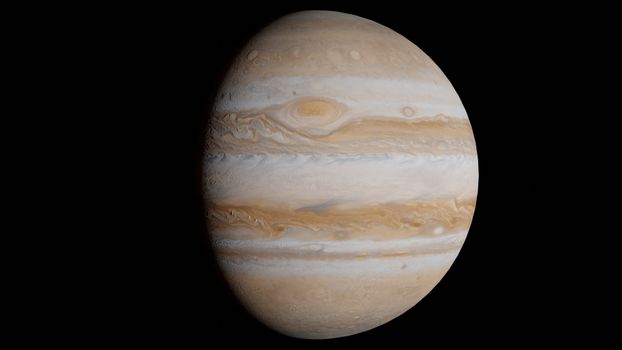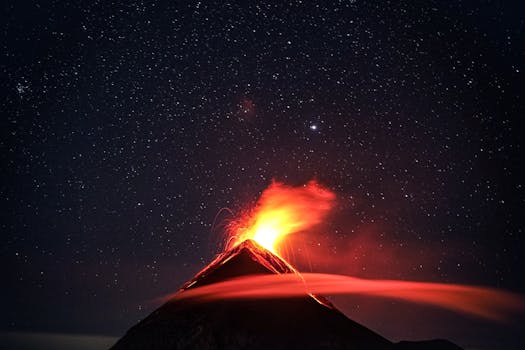
Jupiter, the largest planet in our solar system, commands attention not just for its own colossal size and swirling storms, but for its remarkable family of moons. Among these, Io stands out as a world unlike any other. With its fiery surface, constant eruptions, and vivid colors, Io is the most volcanically active body known in our solar system. This article takes you on a detailed exploration of Io, delving into its volcanic nature, unique geology, atmosphere, and the awe-inspiring forces that make it a true celestial wonder.
Io at a Glance: Key Facts and Figures
Before diving into the volcanic spectacles, it's helpful to understand Io’s place among Jupiter’s moons and within the solar system. Discovered by Galileo Galilei in 1610, Io is one of the four Galilean moons and the third-largest of Jupiter’s satellites. Its distinctive features set it apart from other moons not only of Jupiter but of any planet.
| Feature | Io | Europa | Ganymede | Earth's Moon |
|---|---|---|---|---|
| Diameter (km) | 3,643 | 3,122 | 5,268 | 3,475 |
| Distance from Jupiter (km) | 421,700 | 671,100 | 1,070,400 | N/A |
| Orbital Period (days) | 1.77 | 3.55 | 7.15 | 27.3 |
| Known Volcanoes | 400+ | None | None | None (inactive) |
| Surface Temperature (K) | 90–130 | 50–125 | 70–110 | 100–390 |
| Atmosphere | Very thin (SO₂) | Very thin (O₂) | Very thin (O₂) | None |
Io’s relatively modest size belies the incredible dynamism at its surface. With more than 400 active volcanoes and hundreds of mountains, some taller than Mount Everest, Io is a world in perpetual motion.
.png)
The Source of Io’s Fiery Temper: Tidal Heating Explained
What makes Io so volcanically active? The answer lies in a process called tidal heating, a phenomenon that sets Io apart from every other moon in the solar system. Io’s orbit around Jupiter is not a perfect circle; it’s slightly elliptical. As Io races around Jupiter every 1.77 days, it is constantly squeezed and stretched by Jupiter’s immense gravity and the gravitational tugs from neighboring moons Europa and Ganymede.
This relentless flexing generates immense internal friction, causing Io’s interior to heat up dramatically. It’s estimated that the tidal heating within Io generates more than 100 times the heat produced by Earth’s radioactive decay. This heat melts subsurface rocks into magma, fueling the moon’s unparalleled volcanic activity. Without tidal heating, Io would be a cold, geologically dead world like our own Moon.
Volcanic Wonders: Eruptions, Lava Lakes, and Sulfurous Plumes
Io’s volcanoes are nothing short of spectacular. Some of its eruptions blast material hundreds of kilometers into space, creating plumes that are visible from Earth-based telescopes. For example, the volcano Pele, named after the Hawaiian goddess of volcanoes, regularly produces plumes reaching 300 kilometers (186 miles) high—higher than the diameter of the entire moon!
The surface of Io is covered with extensive lava flows, some stretching for hundreds of kilometers. These lava fields, composed mainly of basalt, can reach temperatures up to 1,600 K (2,420°F), making them hotter than any lava found on Earth. Io’s Loki Patera, the largest active lava lake in the solar system, is roughly the size of Lake Ontario, and its volcanic activity fluctuates in a way that scientists compare to a “lava carousel.”
Sulfur and sulfur dioxide play a major role in Io’s volcanism. The moon’s distinctive yellow, red, and white hues are due in large part to various forms of sulfur deposited by volcanic eruptions. The sulfurous plumes not only color the landscape but also contribute to a constantly changing surface, where few features last more than a few million years—an eye blink in geologic time.
A Surface Like No Other: Mountains, Plains, and a Lack of Impact Craters
Unlike many moons and planets that are heavily cratered, Io’s surface is almost devoid of impact craters. This is direct evidence of its extreme geologic youth; volcanic resurfacing erases old features and quickly covers up craters from meteorite impacts. In fact, Io’s surface is estimated to be less than a million years old in most places.
Io is not only a land of volcanoes but also mountains—some rising higher than Mount Everest. Boösaule Montes, the tallest mountain on Io, towers 17.5 kilometers (10.9 miles) above the surrounding plains. These mountains are not formed by tectonic plate movement as on Earth, but are instead thrust up by the compressive forces of Io’s constantly shifting crust.
The landscape is a remarkable patchwork of lava flows, volcanic pits (called paterae), and vast plains colored by sulfur and frozen gases. The diversity and dynamism of Io’s surface make it a prime target for planetary geologists and a natural laboratory for studying volcanic processes.
Io’s Thin Atmosphere and Its Interactions with Jupiter’s Magnetosphere
Despite its volcanic ferocity, Io possesses only a tenuous atmosphere, composed mainly of sulfur dioxide (SO₂). The atmospheric pressure on Io is about one billionth that of Earth. However, this thin atmosphere is in constant flux, thickening when volcanic eruptions occur and thinning out in Io’s long, cold nights.
One of the most fascinating aspects of Io’s environment is its interaction with Jupiter’s powerful magnetosphere. As Io orbits within Jupiter’s magnetic field, it becomes electrically charged. Volcanic eruptions eject ionized particles into space, forming a torus—a doughnut-shaped ring of plasma—around Jupiter. This Io plasma torus is a significant source of radiation and energetic particles in the Jupiter system.
The interactions between Io and Jupiter’s magnetosphere also generate immense electrical currents, up to 5 million amperes. These currents create auroras not only on Jupiter but also localized auroras on Io itself, further highlighting the moon’s unique role in the Jovian system.
Io’s Importance for Science and Planetary Exploration
Io is more than just a volcanic oddity; it is a key to understanding planetary processes across the solar system and beyond. Studying Io helps scientists learn about tidal heating, a process thought to be central to the development of many other worlds, including Europa, Enceladus, and even exoplanets orbiting other stars.
Missions like Voyager 1 and 2, Galileo, and New Horizons have provided invaluable data on Io, but many mysteries remain. In the 2020s, the Juno spacecraft continues to observe Io from afar, and future missions are being planned to study the moon in even greater detail.
Io’s role in shaping Jupiter’s magnetosphere, its extreme geological activity, and its unique surface chemistry make it a natural laboratory for comparative planetology. It challenges our understanding of how moons and planets evolve and inspires new questions about the dynamic processes at work throughout the universe.
Final Reflections on Exploring Io: A Volcanic Marvel Among Moons
Exploring Io offers a window into some of the most dramatic and energetic processes in the solar system. Its constant volcanic activity, vibrant surface, and complex interactions with Jupiter make it a standout among Jupiter’s many moons. As we continue to observe and eventually return to Io with new missions, this small but fiery world will no doubt yield more surprises and deepen our understanding of planetary science. For anyone fascinated by the extremes of nature, Io stands as a testament to the power and diversity of the cosmos.