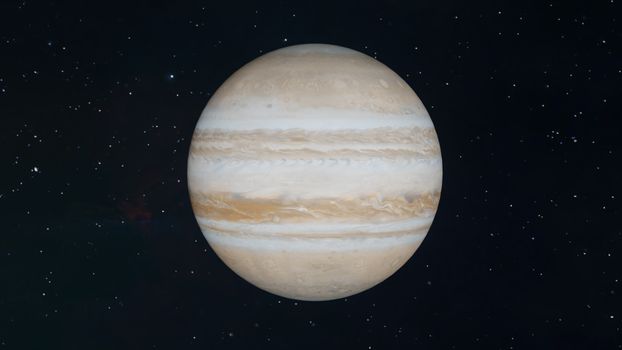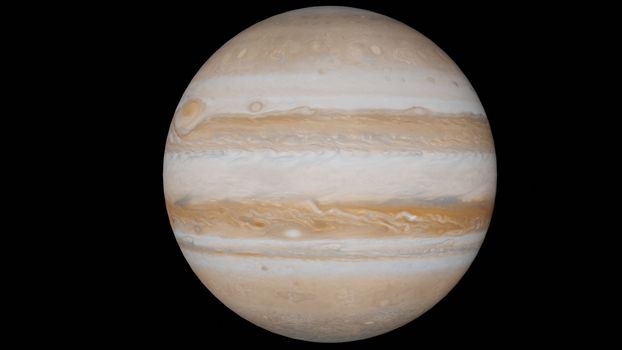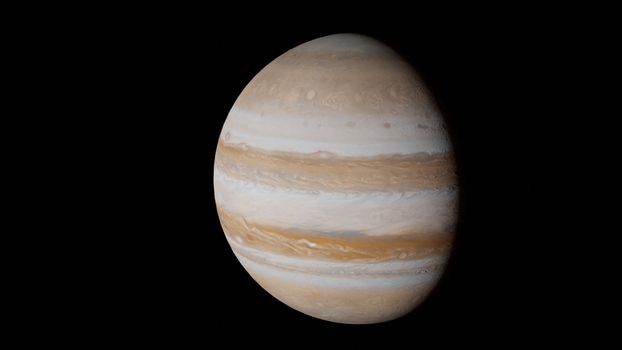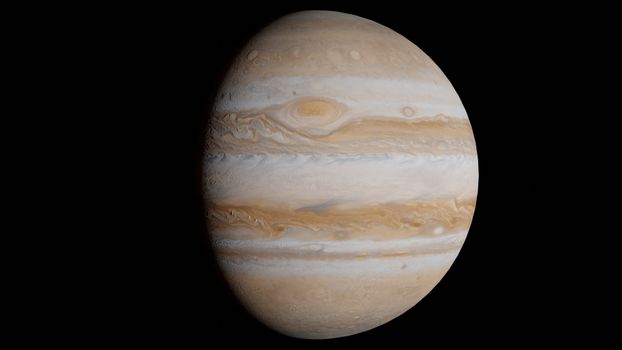
Jupiter is famed not just for its immense size and swirling storms, but also for its captivating retinue of moons. Among the 95 confirmed satellites orbiting Jupiter, two stand out for their sheer scale and scientific intrigue: Ganymede and Callisto. These moons—larger than even the planet Mercury—hold secrets of the early solar system, clues to planetary formation, and tantalizing hints about the potential for life beyond Earth. With space missions continually revealing new data, our understanding of Ganymede and Callisto has never been richer or more exciting.
Ganymede and Callisto in the Spotlight: Why These Moons Matter
Ganymede and Callisto are the two largest of Jupiter’s Galilean moons, discovered by Galileo Galilei in 1610. Ganymede, in fact, is the largest moon in the entire solar system and the only one known to have its own magnetic field. Callisto, while slightly smaller, is the third-largest moon after Ganymede and Saturn’s Titan.
The significance of these moons extends far beyond their size. Both are believed to possess subsurface oceans, making them prime targets in the search for extraterrestrial life. They serve as cosmic time capsules, preserving clues about the solar system’s formative years. Their varied surfaces—one showing signs of tectonic activity, the other pockmarked by billions of years of impacts—offer a unique laboratory for planetary scientists. With upcoming missions such as the European Space Agency’s JUICE (Jupiter Icy Moons Explorer) set to visit both Ganymede and Callisto in the 2030s, our fascination with these icy worlds is only growing.
.png)
Unveiling Ganymede: A Moon of Superlatives
Ganymede’s statistics are nothing short of astonishing. With a diameter of 5,268 kilometers (3,273 miles), it out-sizes Mercury and is nearly three-quarters the size of Mars. Its mass is about 2.02 x 10²³ kg, accounting for more than 40% of the mass of all the solar system’s moons combined.
One of Ganymede’s most remarkable features is its intrinsic magnetic field, discovered by NASA’s Galileo spacecraft in 1996. This is unique among moons and suggests a partially liquid iron-nickel core, similar to Earth’s. Such a core is evidence of internal differentiation and a dynamic geological past. Ganymede's surface is a mix of two terrains: bright, grooved regions that indicate tectonic stretching, and darker, older areas riddled with impact craters.
Beneath its icy crust, scientists believe Ganymede harbors a global ocean, possibly containing more water than Earth’s combined oceans. The ocean may be sandwiched between layers of ice, lying as deep as 150 kilometers (93 miles) below the surface. This raises tantalizing questions about whether Ganymede could support microbial life in its hidden, watery realm.
Decoding Callisto: The Ancient, Mysterious Outlier
Callisto, with a diameter of 4,820 kilometers (2,995 miles), is not much smaller than Ganymede but tells a very different story. Its surface is among the most heavily cratered in the solar system, with impact scars dating back nearly four billion years. Unlike Ganymede, Callisto shows little evidence of internal activity or geological resurfacing. Its crust is a frozen record of the solar system’s violent youth.
Despite its ancient, battered appearance, Callisto is far from a dead world. It, too, is believed to possess a subsurface ocean, inferred from magnetic readings by the Galileo spacecraft. This ocean could be buried as deep as 100 kilometers (62 miles) beneath the crust, kept liquid by the heat generated from radioactive decay and perhaps tidal forces.
Interestingly, Callisto’s lack of significant geological activity may make it one of the safest places in the Jovian system for future exploration or even human habitation. Its distance from Jupiter means it is less affected by the planet’s intense radiation belts, a significant consideration for mission planners.
Comparing Ganymede and Callisto: A Data Overview
To better appreciate the similarities and differences between these two giant moons, here’s a comparative overview highlighting key facts and figures:
| Feature | Ganymede | Callisto |
|---|---|---|
| Diameter (km) | 5,268 | 4,820 |
| Mass (kg) | 2.02 x 10²³ | 1.08 x 10²³ |
| Surface Gravity (m/s²) | 1.428 | 1.235 |
| Distance from Jupiter (km) | 1,070,400 | 1,882,700 |
| Orbital Period (days) | 7.15 | 16.69 |
| Magnetic Field | Present | Absent |
| Subsurface Ocean | Likely | Likely |
| Surface Age | Mix of young & old | Ancient |
| Surface Features | Grooved terrains, few craters | Heavily cratered, old |
Origins and Evolution: How Ganymede and Callisto Formed
The formation histories of Ganymede and Callisto offer insight into the early days of the solar system. Both likely formed from the circumplanetary disk of gas and dust that surrounded Jupiter more than 4 billion years ago. Yet, key differences in their development help explain their contrasting appearances and internal structures.
Ganymede appears to have undergone significant heating after its formation, leading to the differentiation of its core, mantle, and crust. This process enabled the development of its magnetic field and the geological activity evident on its surface. Evidence suggests Ganymede once had a warmer, more dynamic interior, possibly due to tidal heating from gravitational interactions with Jupiter and neighboring moons (Io and Europa).
Callisto, by contrast, seems to have experienced a “cold start.” Its interior remains only partially differentiated, with a mixture of rock and ice extending from the surface to the core. The relative lack of heating meant its surface has remained largely unchanged, preserving a record of ancient impacts. This difference in evolution is a central mystery that planetary scientists continue to explore.
The Search for Life: Subsurface Oceans and Astrobiological Potential
One of the most compelling aspects of both Ganymede and Callisto is the strong evidence for subsurface oceans. On Earth, life thrives in environments previously thought to be inhospitable, such as deep-sea hydrothermal vents and Antarctic subglacial lakes. This raises the possibility that similar environments on these moons could harbor life.
Ganymede’s ocean may be sandwiched between layers of ice, with a possible rocky seafloor where water and mineral interactions could provide energy sources for life. Callisto’s ocean, although likely isolated beneath a thicker, colder crust, could still offer protected habitats.
The presence of these oceans has been inferred primarily through magnetic data and models of the moons' internal structures. For example, Ganymede’s magnetic field interacts with Jupiter’s, causing auroras near its poles. Observations of these auroras by the Hubble Space Telescope have provided indirect evidence for a salty, conductive ocean beneath the surface. Similarly, variations in Callisto’s induced magnetic field imply the presence of a subsurface layer of liquid water.
Current and future missions are designed to probe these hidden oceans more directly. The JUICE mission, launching in the 2020s, will perform multiple flybys of both Ganymede and Callisto, deploying advanced instruments to analyze their surfaces, atmospheres, and internal structures.
Exploring the Future: What Lies Ahead for Ganymede and Callisto
Exploration of Jupiter’s moons is entering a golden era. NASA’s Galileo mission (1995-2003) and the Hubble Space Telescope have laid the groundwork, but the next generation of spacecraft promises even deeper insights.
The European Space Agency’s JUICE mission, scheduled to arrive at Jupiter in 2031, will be the first spacecraft to orbit Ganymede. It will use radar, spectrometers, and magnetometers to study the moon’s ice shell, ocean, magnetic environment, and thin atmosphere. JUICE will also fly by Callisto, collecting high-resolution data on its surface and interior.
NASA’s Europa Clipper mission, while focused primarily on Europa, will gather valuable data about Jupiter’s broader system, including distant observations of Ganymede and Callisto. These missions will help answer key questions: How deep and salty are the oceans? What is the composition of the ice and surface features? Could these worlds support simple life forms?
In addition to robotic missions, some scientists have proposed long-term concepts for human exploration or even the establishment of research outposts on Callisto, given its relatively benign radiation environment. While such endeavors remain decades away, the groundwork being laid today is essential for realizing these ambitions.
Final Reflections: The Enduring Allure of Ganymede and Callisto
Ganymede and Callisto are not just numbers in a catalog of moons. They are dynamic worlds, each with a unique story to tell about the formation, evolution, and diversity of planetary bodies in our solar system. Their immense size, hidden oceans, and mysterious internal processes make them prime candidates in the search for life beyond Earth.
As space agencies prepare for a new wave of exploration, our understanding of these distant moons will only deepen. The discoveries made at Ganymede and Callisto will not only reshape our view of Jupiter’s system but may also challenge our ideas about where life can exist, both in our solar system and beyond.