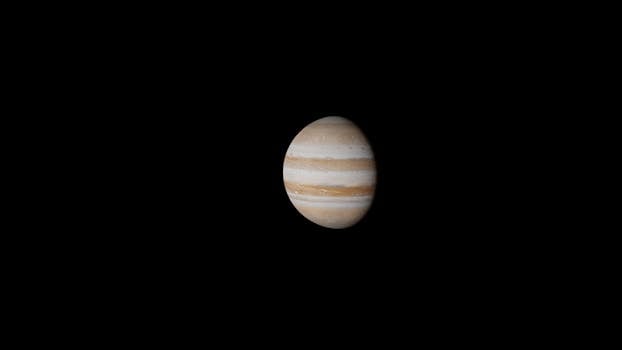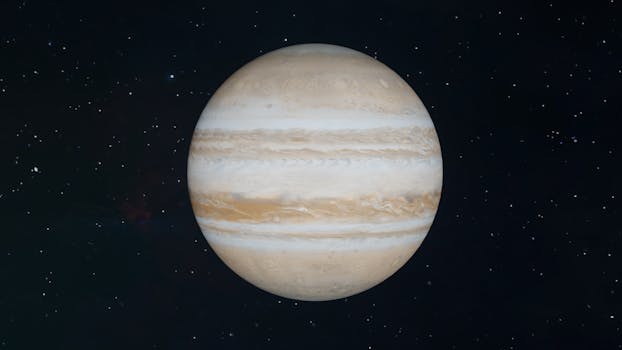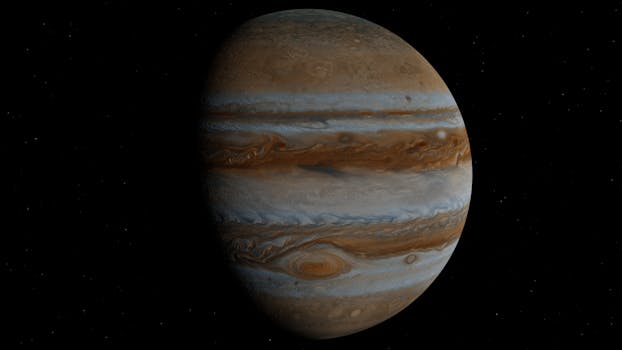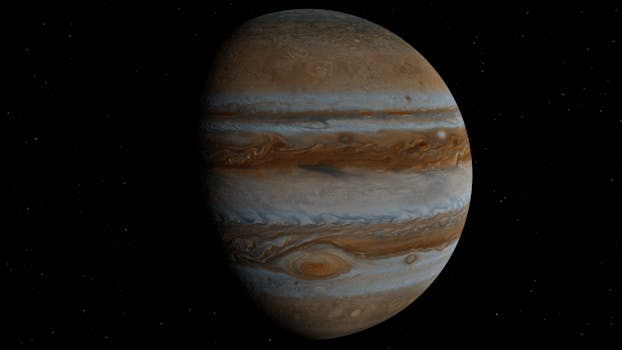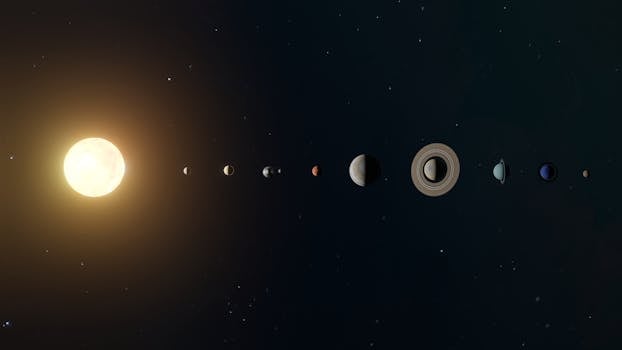
The exploration of Jupiter has been a cornerstone in our quest to understand the vast, mysterious expanse of our solar system. Over the decades, missions to this giant planet have evolved significantly, each building upon the insights and technologies of its predecessors to deepen our understanding of not only Jupiter itself but also its many moons and the broader solar system.
Historical Missions to Jupiter
The journey to explore Jupiter began in earnest with NASA's Pioneer 10 mission, launched in 1972. This spacecraft was the first to traverse the asteroid belt and make a direct pass at Jupiter, capturing vital data about its atmosphere, magnetic field, and moons. Pioneer 11 followed, providing further detail and discovering additional belts of radiation.
.png)
The Voyager missions in 1979 offered groundbreaking revelations. Voyager 1 and Voyager 2 sent back detailed images and extensive data about Jupiter's intense radiation belts, its magnetic fields, and its elaborate system of moons and rings, transforming our understanding and fueling further scientific inquiry.
The Galileo spacecraft, launched in 1989, was the first to orbit Jupiter, conducting a prolonged study from 1995 to 2003. Despite issues with its main antenna, Galileo transmitted a trove of valuable data, including evidence of subsurface saltwater oceans on the moon Europa and volcanic activity on Io.
Current and Future Missions
The Juno spacecraft, launched in 2011, marked a new era of exploration. It arrived at Jupiter in 2016 with the mission of examining the planet’s core structure and magnetic field, offering insights that could explain the system’s formation. Juno’s observations have provided spectacular real-time imagery and a better understanding of Jupiter's atmospheric dynamics, including its polar cyclones.
Looking ahead, the planned Europa Clipper mission is poised to launch in the 2020s. Its objective is to closely examine Europa, one of Jupiter’s largest moons, known for its icy crust and potential subsurface ocean. This mission aims to scrutinize the thickness of the ice shell, the chemistry of the subsurface ocean, and the geology of the surface for future reference, particularly for missions that might land on Europa.
Comparative Advantages and Disadvantages
The progression from early flybys to sophisticated orbiters and probes illustrates both technological advancement and increasing ambition in space exploration. Early missions like Pioneer and Voyager were limited by technology of their time but paved the way with their fundamental discoveries and broad surveys. In contrast, Galileo and Juno have benefited from advanced propulsion and communication technologies, allowing for more detailed and specific investigations, albeit with challenges such as intense radiation and complex orbital dynamics around Jupiter.
Practical Examples
The wealth of data from these missions has practical applications beyond mere academic interest. For instance, understanding the magnetic environment around Jupiter can help enhance our understanding of space weather, with direct implications for satellite operations and communication technologies on Earth. Moreover, exploring moons like Europa aids in the broader search for extraterrestrial life, guiding future astrobiology strategies.
Conclusion
The exploration of Jupiter represents a significant chapter in the human pursuit of knowledge about our solar system. Each mission has contributed layers of understanding, helping to shape future objectives in space exploration. As technology advances and our curiosity expands, missions like Europa Clipper and others potentially following it will continue to build on this foundation, pushing the boundaries of what we know about Jupiter and the possibilities of life beyond Earth.