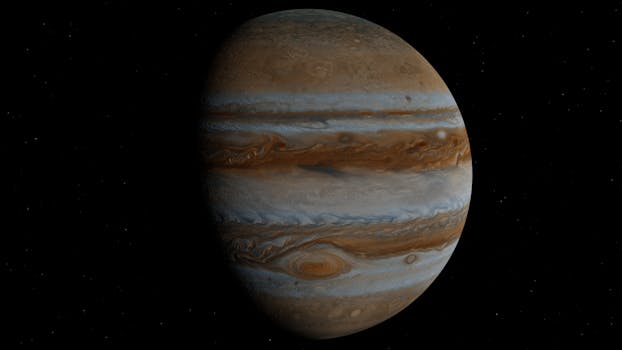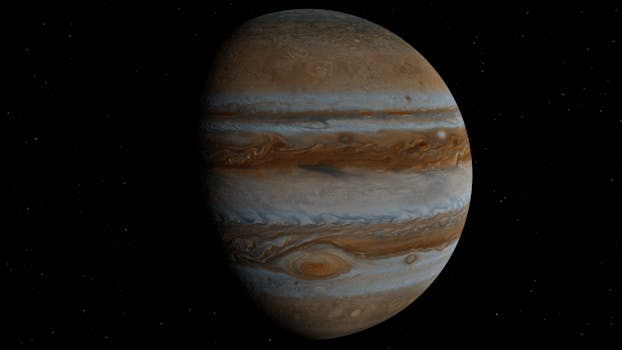
Exploring Jupiter, the behemoth of our solar system, has been a monumental endeavor in understanding not only the gas giant itself but also providing broader insights into planetary science. These missions, through their innovative engineering and scientific investigations, offer a window into the early processes of planetary formation and the conditions that may support life.
The initiation of Jupiter probe missions began with NASA's Pioneer 10, launched in 1972. This mission was groundbreaking as it provided humanity with the first close-up images of Jupiter, unveiling the intense and complex nature of its atmosphere and magnetic field. Pioneer 10's journey set the stage for subsequent missions, which would delve even deeper into the mysteries of Jupiter and its moons.
Pioneer 11, Voyager 1, and Voyager 2 followed, with each mission contributing uniquely to our understanding of Jupiter. These probes highlighted Jupiter's dynamic atmosphere, its faint ring system, and the astonishing discovery of volcanic activity on Io, one of its moons. This finding particularly underscored the moon's geological vitality, radically altering our understanding of celestial body dynamics in the outer solar system.
.png)
The Galileo mission, launched in 1989, was particularly notable for its deployment of a probe directly into Jupiter's atmosphere, providing unprecedented data on its composition and wind patterns. Furthermore, Galileo extensively studied the Jovian moons, revealing the existence of subsurface oceans on Europa and showcasing the moon's potential for supporting life. These discoveries have profound implications, suggesting that life could potentially exist in the harsh conditions of outer space.
More recently, the Juno mission, which arrived at Jupiter in 2016, has continued this legacy of exploration. Juno's sophisticated instruments allow scientists to look beneath the dense cloud cover of Jupiter, offering new insights into its structure, weather systems, and magnetic environment. The mission has unveiled complexities in Jupiter's interior, including massive polar cyclones and an unexpectedly irregular magnetic field.
Looking ahead, NASA's Europa Clipper mission exemplifies the ongoing interest in Jupiter's moons. Targeted for a launch in the 2020s, this mission aims to scrutinize the icy surface and subsurface ocean of Europa, assessing its habitability. By understanding the thickness of the ice shell and the characteristics of the underlying ocean, scientists hope to uncover whether this moon could support life.
The continuous exploration of Jupiter and its moons serves not only to quench our thirst for knowledge about the gas giant but also enriches our understanding of the cosmos. Each mission builds upon the past endeavors, pushing further the boundaries of space exploration and our understanding of the solar system. They allow us to test and refine our theories on planetary science, magnetic fields, and atmospheric dynamics.
In essence, the journey of Jupiter’s probe missions is a vivid narrative of human curiosity and technological triumph. From Pioneer to Juno, and with future missions on the horizon, our pursuit of knowledge about Jupiter is boundless, each discovery feeding into the next, and expanding our understanding of not just our own solar system, but of potential systems beyond our own. As these missions continue to send back data, they not only fulfill the immediate goals of understanding Jupiter’s mechanics and potential for life but also help pave the way for future explorations into the deeper reaches of space.