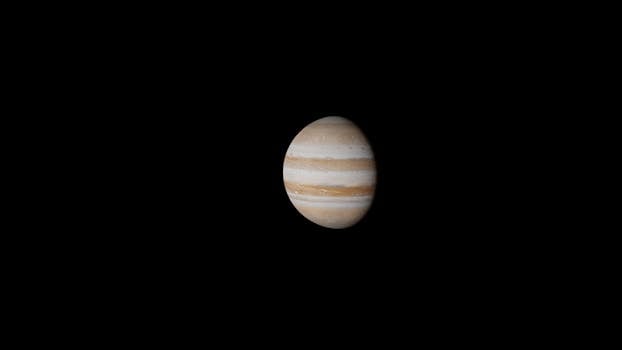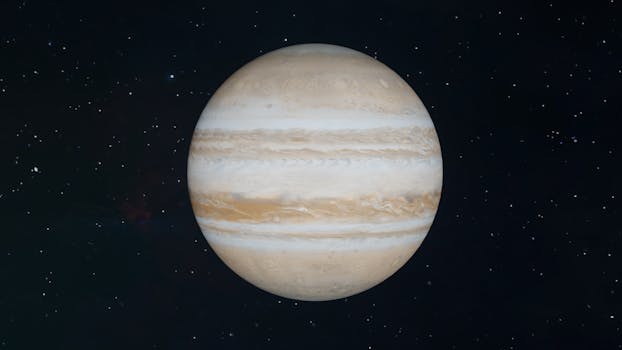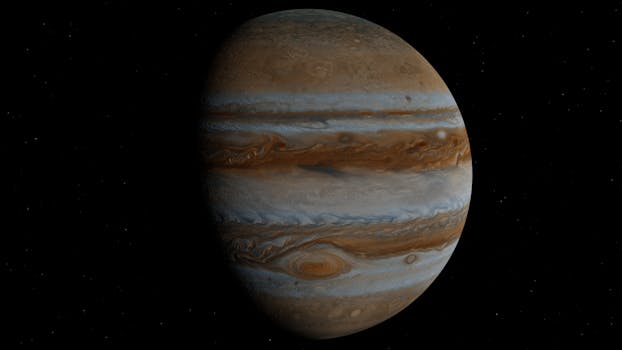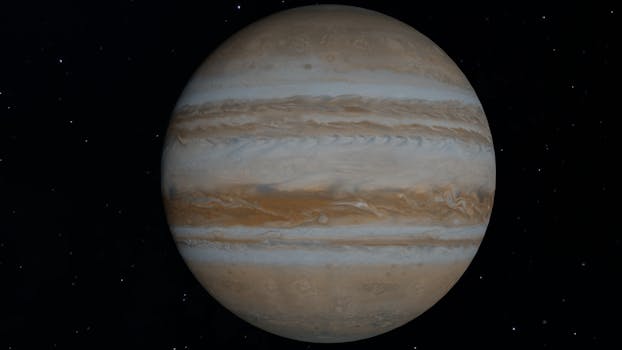
Jupiter, the behemoth of our solar system, has significantly influenced the trajectory of space exploration. This gas giant, renowned for its enormous size and captivating atmospheric phenomena, has been a focal point of scientific study and has profoundly expanded our comprehension of the solar system and beyond.
Early Observations and Pioneering Missions
The exploration of Jupiter began with ground-based telescopic observations, which significantly advanced with the launch of Pioneer 10 in 1972. This NASA spacecraft was the first to traverse the asteroid belt and make a direct encounter with Jupiter, sending back vital data and images. It was followed by Pioneer 11 and the Voyager missions, which enriched our understanding of Jupiter’s magnetic fields, rings, and moons. These early missions laid the groundwork for all subsequent Jupiter exploration efforts.
.png)
Discoveries of the Galilean Moons
Jupiter is not just a planet; it is a mini solar system in its own right, with 79 known moons. The Galilean moons—Ganymede, Callisto, Io, and Europa—are the largest and among the most intriguing celestial bodies in our solar system. These moons, discovered by Galileo Galilei in 1610, have been subjects of intense study. Europa, in particular, with its subsurface ocean, offers tantalizing clues about the potential for life beyond Earth. NASA’s Galileo spacecraft, which orbited Jupiter from 1995 to 2003, provided a plethora of data that reshaped our understanding of these moons and their geological and environmental characteristics.
Technological Innovations and Gravity Assists
Space exploration often necessitates technological innovation, and missions to Jupiter have been instrumental in this regard. The concept of gravity assist, or slingshot maneuvers, was employed to great effect with Jupiter due to its massive gravitational field. This technique, which involves using the gravity of planets to alter the speed and trajectory of spacecraft, has been crucial for enabling missions to reach the outer regions of our solar system, including the historic voyages of the Voyager spacecraft and the New Horizons mission to Pluto.
Contributions to Exoplanet Studies
Jupiter has also enhanced our understanding of exoplanets, particularly gas giants orbiting distant stars. By studying Jupiter’s atmospheric dynamics and magnetic fields, astronomers have developed models that apply to many of the exoplanets discovered in our galaxy. These comparative studies help scientists infer the characteristics of these distant worlds and refine our understanding of planet formation and evolution.
Ongoing Exploration: Juno and Europa Clipper
The exploration of Jupiter continues with missions like NASA’s Juno, which arrived at Jupiter in 2016. Juno’s detailed study of Jupiter’s atmosphere, magnetic field, and interior has provided insights into the planet’s formation and structure, insights that are crucial for understanding the overall architecture of our solar system. Looking ahead, the Europa Clipper mission, targeted for a launch in the 2020s, aims to explore Europa’s icy crust and subsurface ocean, further advancing our quest to find signs of life beyond Earth.
Conclusion
Jupiter's role in space exploration is multifaceted and profound. As a subject of scientific inquiry, a tool for advancing space travel technology, and a model for studying distant exoplanets, Jupiter has greatly influenced our approach to exploring the cosmos. The ongoing and future missions to this giant planet and its moons are likely to continue providing valuable data that will reshape our understanding of the cosmos, offering new perspectives on our place within it. Jupiter, thus, remains an essential cornerstone in the continuing saga of space exploration.