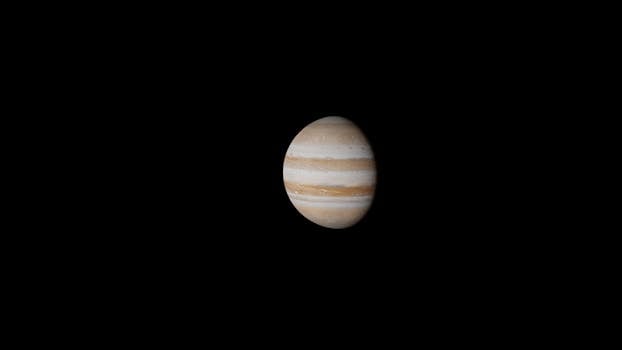
Jupiter, the largest planet in our solar system, has always captivated observers with its striking appearance, characterized by colorful stripes and swirling patterns. These atmospheric features provide valuable insights into Jupiter's meteorological activity and the physical processes occurring within. This article delves into the origins, variations, and scientific study of Jupiter's distinctive stripes and swirls.
The Nature of Jupiter's Atmospheric Bands and Zones
At the heart of Jupiter's visual allure are its zones and belts, which are essentially alternating bands of differing colors and appearances. Composed mainly of hydrogen and helium, Jupiter's atmosphere also contains small amounts of methane, water vapor, ammonia, and other compounds that contribute to its colorful cloud layers.
.png)
- Zones: These are the lighter-colored bands that appear to rise higher in the atmosphere and are cooler in temperature. They are primarily composed of ammonia ice.
- Belts: In contrast, the belts are darker and lie lower in the atmosphere. They are warmer and have a higher concentration of deeper clouds and compounds.
These atmospheric bands are a result of Jupiter's rapid rotation, which completes a turn approximately every 10 hours. This fast rotation drives complex fluid dynamics and leads to the formation of the planet's pronounced jet streams and the turbulent weather systems observed.
Scientific Exploration of Jupiter's Stripes and Swirls
To gain a deeper understanding of these features, astronomers employ several observational strategies:
- Ground-based Telescopes: These instruments provide long-term data essential for tracking changes in Jupiter's atmosphere. However, atmospheric interference can sometimes limit the clarity of the images obtained.
- Space Missions: Missions like NASA's Juno spacecraft offer a closer look at Jupiter. Juno, in particular, is equipped with instruments designed to analyze the atmospheric properties right below the cloud tops, providing direct data on the atmospheric structure, temperature, and chemistry.
Each method complements the other, with ground-based observations offering extensive temporal coverage and space missions providing high-precision localized data.
Recent Discoveries and Insights
Recent findings from missions like Juno have revolutionized our understanding of Jupiter. For example, it was revealed that the zones and belts extend much deeper into the atmosphere than previously believed, suggesting that Jupiter's weather systems are influenced by internal processes deep within the planet. Additionally, phenomena like the Great Red Spot, a massive storm larger than Earth, continue to be subjects of intense study due to their complex dynamics and longevity.
Future Prospects and Continued Research
The ongoing study of Jupiter’s atmospheric features is crucial for more than just understanding the planet itself. It also provides a comparative basis for studying other gas giants in our solar system and beyond, particularly in terms of atmospheric dynamics and weather systems.
As technology advances, future missions may provide even more detailed images and data, enhancing our understanding of this giant planet. For enthusiasts and scientists alike, each new piece of data enriches our comprehension of not only Jupiter but also the broader dynamics of planetary atmospheres.
In conclusion, Jupiter’s stripes and swirls are not merely aesthetic features but are key to unlocking the mysteries of the gas giant’s atmospheric phenomena. With each observation and mission, we continue to learn more about Jupiter, adding layers of knowledge that extend far beyond its striking appearance.