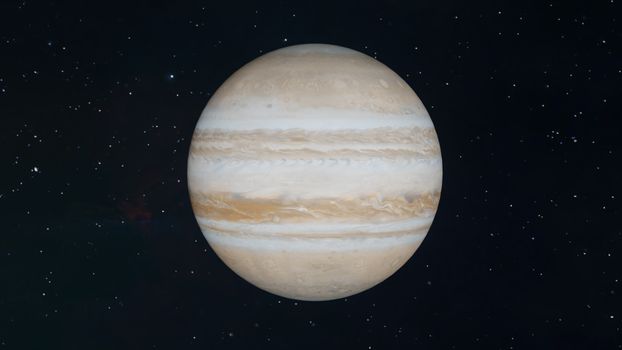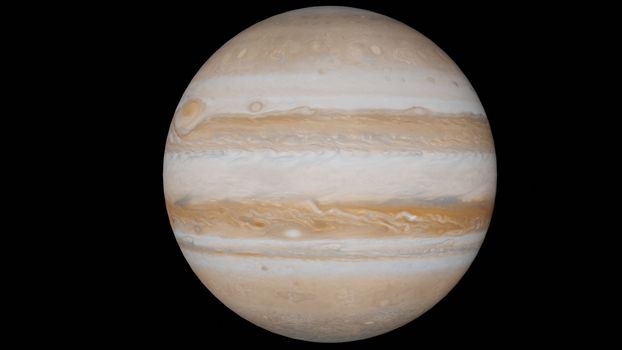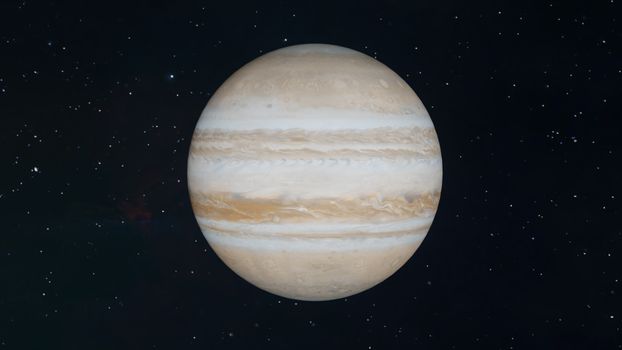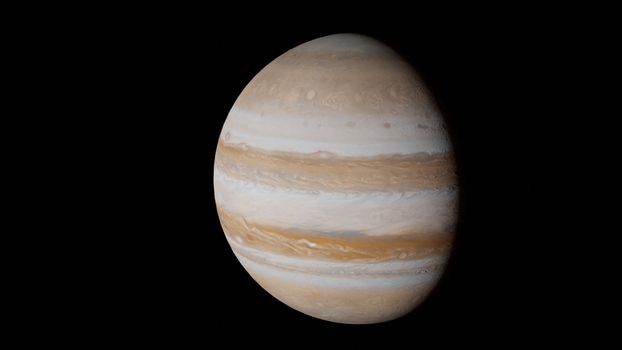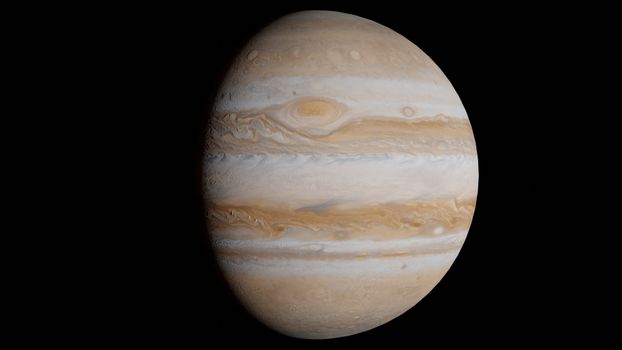
Jupiter, the largest planet in our solar system, looms like a gas giant mystery, shrouded in swirling clouds and enigmatic storms. But what lies beneath those stunning bands and iconic Great Red Spot? The answer lies in the intricate blend of gases and compounds that make up Jupiter’s atmosphere—a composition that holds clues to the planet’s origin, evolution, and even the formation of our entire solar system. Decoding the composition of Jupiter's atmosphere is not just a journey through chemistry; it’s a voyage into the very processes that shaped the early cosmos.
The Layered Structure of Jupiter’s Atmosphere
Jupiter’s atmosphere is not a simple, uniform blanket of gas. Instead, it is a vast, multi-layered envelope stretching thousands of kilometers deep, structured by temperature, pressure, and chemical composition. The visible “surface” of Jupiter is actually the uppermost layer of clouds, beneath which lies a complex stratification of gases.
Scientists generally divide Jupiter’s atmosphere into three main layers based on cloud composition and altitude:
.png) 1. The uppermost layer consists mainly of ammonia ice clouds, found at altitudes where temperatures hover around -145°C (128 K).
2. Below this is a layer of ammonium hydrosulfide clouds, forming at slightly higher temperatures and pressures.
3. The deepest visible layer is composed of water ice and liquid water clouds, although these are obscured from direct observation.
1. The uppermost layer consists mainly of ammonia ice clouds, found at altitudes where temperatures hover around -145°C (128 K).
2. Below this is a layer of ammonium hydrosulfide clouds, forming at slightly higher temperatures and pressures.
3. The deepest visible layer is composed of water ice and liquid water clouds, although these are obscured from direct observation.
Beneath these cloud decks, the atmosphere transitions into a denser, hotter region dominated by hydrogen and helium—the primary constituents of the planet. The atmospheric pressure increases rapidly with depth, reaching over 1,000 times the atmospheric pressure at Earth’s sea level in the deepest layers explored by spacecraft.
Key Chemical Constituents: More Than Just Hydrogen and Helium
Jupiter’s vast atmosphere is primarily composed of hydrogen (about 89.8% by volume) and helium (about 10.2% by volume). These two elements account for over 99% of Jupiter’s atmospheric makeup, closely mirroring the composition of the primordial solar nebula from which the planet formed.
However, it’s the trace compounds—present in much smaller amounts—that give Jupiter its unique character and provide vital scientific insights. These minor constituents include methane (CH₄), ammonia (NH₃), water vapor (H₂O), hydrogen sulfide (H₂S), and a variety of other hydrocarbons and noble gases.
Here’s a comparative overview of key atmospheric components:
| Component | Jupiter Atmosphere (%) | Earth Atmosphere (%) | Notes |
|---|---|---|---|
| Hydrogen (H₂) | ~89.8 | 0.000055 | Main component in Jupiter, trace on Earth |
| Helium (He) | ~10.2 | 0.00052 | Second most abundant in Jupiter |
| Methane (CH₄) | ~0.3 | 0.00018 | Key in Jupiter’s coloration |
| Ammonia (NH₃) | ~0.026 | Trace | Forms cloud decks |
| Water vapor (H₂O) | Varies (trace) | ~0.4 | Hidden in deeper layers on Jupiter |
| Hydrogen sulfide (H₂S) | Trace | Trace | Contributes to cloud chemistry |
The presence and ratios of these elements have been determined through a combination of remote sensing, spectroscopy, and direct measurements by missions such as Galileo and Juno.
How We Know: Spacecraft, Spectroscopy, and Atmospheric Probes
Determining the composition of Jupiter’s atmosphere has required ingenuity and decades of scientific effort. The first clues came from telescopic spectroscopic observations, which analyze the light reflected and emitted by Jupiter to identify the “fingerprints” of various molecules.
However, the real breakthroughs came with spacecraft missions:
- In 1995, NASA’s Galileo mission dropped an atmospheric probe into Jupiter, gathering direct measurements as it descended for nearly an hour before succumbing to intense pressure and temperature. Galileo’s probe detected surprisingly low levels of water vapor in the region it sampled, sparking debates about how representative this sample was. - NASA’s Juno spacecraft, which has orbited Jupiter since 2016, uses microwave radiometers to peer through the thick clouds, revealing variations in water and ammonia concentrations at different depths and latitudes. - Observations from Earth-based telescopes and the Hubble Space Telescope supplement these findings, especially for atmospheric dynamics and cloud chemistry.Spectroscopy, both from space and Earth, remains a cornerstone technique. By measuring absorption lines in Jupiter’s spectrum, scientists can identify and quantify gases such as methane and ammonia. For instance, methane’s spectral signature is responsible for absorbing red light, giving Jupiter its distinctive hues.
Dynamic Chemistry: Weather, Color, and Atmospheric Processes
Jupiter’s atmosphere is a theater of powerful dynamics and chemistry. The interplay of its components gives rise to its famous belts and zones, vivid coloration, and titanic storms like the Great Red Spot.
1. $1 The distinct bands across Jupiter are the result of differing chemical compositions and temperatures. Ammonia ice clouds appear white, while deeper ammonium hydrosulfide and water clouds may impart brown, orange, or red hues. The exact compounds responsible for the planet’s deep reds and browns remain a subject of research, but complex sulfur and phosphorus compounds are leading candidates. 2. $1 Jupiter’s storms and jet streams are far more intense than anything on Earth. The planet’s rapid rotation (a day lasts just under 10 hours) and internal heat drive jet streams that separate the colorful bands and spawn gigantic storms. The Great Red Spot, for example, is a centuries-old anticyclonic storm larger than Earth itself, with wind speeds exceeding 430 km/h (270 mph). 3. $1 Unlike Earth, where atmospheric layers are relatively stable, Jupiter experiences vigorous vertical mixing. Gases and cloud particles are constantly churned by upwelling and downwelling currents, bringing deeper material to the surface and vice versa. Juno’s data indicate that ammonia and water are not evenly distributed but vary with both depth and latitude. 4. $1 Jupiter’s thunderstorms are the most powerful in the solar system, with lightning flashes up to three times more energetic than those on Earth. These storms suggest significant amounts of water in the deeper atmosphere—critical for understanding both Jupiter’s weather and its role in the solar system’s water distribution.What Jupiter’s Atmospheric Composition Reveals About Planetary Formation
Understanding the makeup of Jupiter’s atmosphere is not just a planetary science curiosity—it is central to unraveling the story of our solar system’s birth. The ratios of hydrogen, helium, and trace gases mirror the composition of the early solar nebula, suggesting that Jupiter captured most of its gas directly from this primordial material.
The presence of heavier elements (known as “metals” in astronomical parlance) such as carbon, nitrogen, sulfur, and noble gases like argon and xenon, points to a more complex history. These elements likely arrived via icy planetesimals—small bodies that formed in the outer solar system and were captured by Jupiter’s immense gravity.
Juno’s measurements, for instance, reveal that Jupiter is enriched in certain heavy elements compared to the Sun. This enrichment supports the “core accretion” model of planetary formation, where a massive solid core formed first and then gravitationally attracted vast amounts of gas.
Additionally, the distribution of water and ammonia relates to long-standing questions about how and where Jupiter formed. If Jupiter is found to contain more water than expected, it could mean the planet formed farther from the Sun, where ices were more abundant, and later migrated inward.
Implications for Exoplanets and the Broader Universe
Jupiter serves as a template for understanding gas giants orbiting other stars—so-called “exoplanets.” By decoding Jupiter’s atmospheric composition, scientists develop models for interpreting data from exoplanetary atmospheres, especially as telescopes like the James Webb Space Telescope begin detecting atmospheric signatures in distant worlds.
Key takeaways include:
- Jupiter’s relative enrichment in heavy elements compared to its star is a trend now observed in some exoplanets, hinting at similar formation processes. - The way Jupiter’s clouds and weather patterns respond to different chemical mixes provides a framework for predicting climate and habitability on alien worlds. - The detection of water, ammonia, and methane in Jupiter-like exoplanets could indicate similar origins and evolutionary processes, shedding light on the diversity of planetary systems across the galaxy.Final Insights: The Continuing Quest to Understand Jupiter’s Atmospheric Composition
The atmosphere of Jupiter is more than a swirling veil—it is a dynamic, chemically rich laboratory that holds the secrets of planetary birth, weather, and evolution. Through a combination of remote sensing, spacecraft exploration, and theoretical modeling, scientists have uncovered a wealth of detail about the planet’s atmospheric makeup: from its overwhelming hydrogen-helium base to the trace compounds that color its clouds and fuel its storms.
Yet, mysteries remain. The precise amounts of water and ammonia, the identity of the compounds responsible for Jupiter’s deepest colors, and the full story of its formation are still active areas of research. As missions like Juno continue to send back data—and as we prepare for future probes and telescopes—our understanding of Jupiter’s atmosphere is set to deepen, offering ever more profound insights into the workings of our solar system and the cosmos beyond.