Unmasking Jupiter's Hidden Features through Satellites and Probes
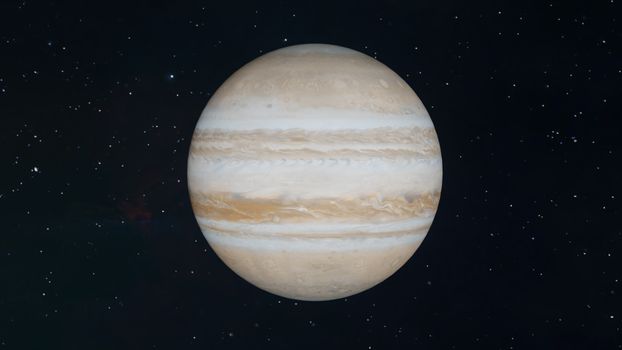
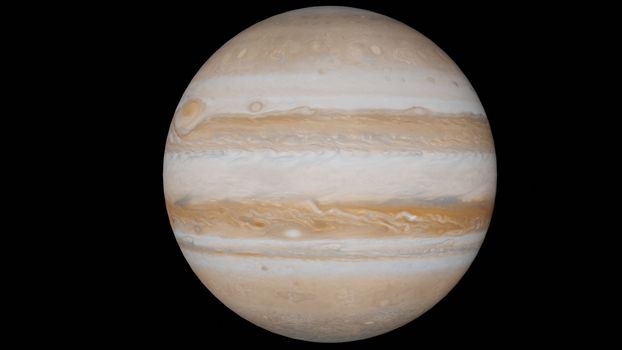
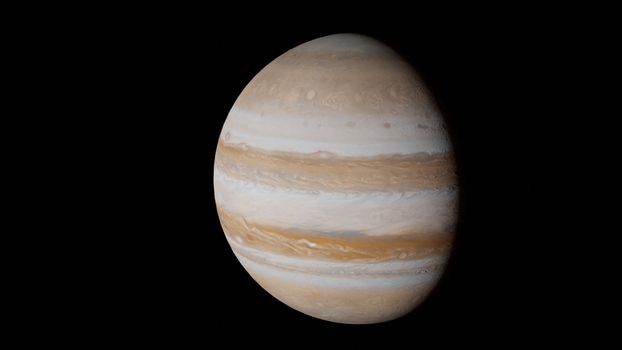
Jupiter, the Solar System’s largest planet, has long captivated astronomers and the public alike. Its swirling clouds, powerful storms, and mesmerizing bands are just the surface revelations of a world that holds countless secrets beneath its turbulent atmosphere. While powerful telescopes from Earth have provided breathtaking views of Jupiter, it is only through the eyes of robotic explorers—satellites and probes—that we have begun to truly unmask the planet’s hidden features. Each mission, from early flybys to modern orbiters, has peeled back a new layer, revealing details that challenge our understanding of planetary science and the evolution of our solar system.
Jupiter: A World of Concealed Wonders
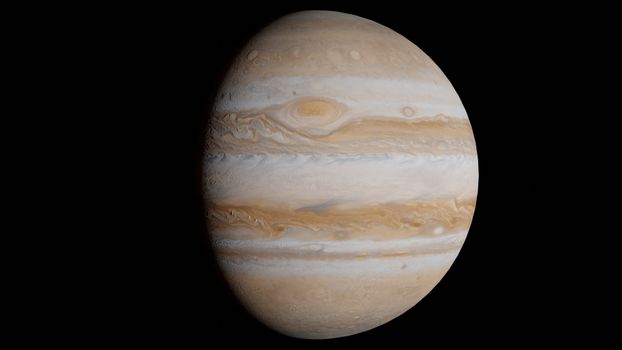
Jupiter is not just a massive ball of gas; it is a dynamic, complex system brimming with mysteries. Its atmosphere boasts winds reaching over 400 miles per hour (640 km/h), and it harbors storms so large that they could engulf Earth several times over. But much of Jupiter’s true nature lies hidden: its deep atmospheric layers, faint rings, and enigmatic magnetic field are all cloaked beneath its visible clouds.
Before the advent of space exploration, astronomers could only theorize about what lay beneath Jupiter’s dazzling exterior. The planet’s immense distance—over 484 million miles (778 million kilometers) from the Sun—meant that ground-based observations were limited by the distortion of Earth’s atmosphere and the sheer scale of Jupiter’s features. Everything changed in the latter half of the 20th century, as technological advances allowed us to send probes and satellites directly into Jupiter’s realm.
.png)
Pioneering Encounters: Early Missions and Their Discoveries
The quest to unmask Jupiter’s hidden features began in earnest with NASA’s Pioneer and Voyager missions. Pioneer 10, launched in 1972, became the first spacecraft to fly past Jupiter in December 1973. It provided humanity’s first close-up images of the gas giant and measured its intense radiation belts. These belts, composed of charged particles trapped by Jupiter’s magnetic field, were found to be 10 times stronger than Earth’s Van Allen belts—posing a significant hazard to future spacecraft.
Voyager 1 and 2, launched in 1977, transformed our understanding of Jupiter with their 1979 flybys. They captured detailed images of the planet’s turbulent atmosphere, revealing complex cloud formations, hidden jet streams, and a dynamic system of storms. The Voyagers also discovered Jupiter’s faint ring system—a surprising find, as rings were previously thought to be unique to Saturn. Furthermore, these missions uncovered active volcanism on the moon Io, fundamentally changing our perception of what was possible on other worlds.
Orbital Exploration: Galileo's Groundbreaking Insights
While flybys provided valuable snapshots, the first mission to orbit Jupiter—Galileo, launched in 1989—delivered sustained and transformative observations. Arriving at Jupiter in 1995, Galileo spent nearly eight years studying the planet and its moons up close. It deployed a probe directly into Jupiter’s atmosphere, which descended for nearly an hour, sending back unprecedented data before being crushed by the immense pressure.
One of Galileo’s most significant contributions was the mapping of Jupiter’s deep atmospheric structure. The probe measured temperatures, pressures, and chemical compositions down to depths where sunlight never penetrates. It found that the atmosphere was drier than expected, raising questions about where Jupiter’s water is stored. Galileo also mapped the planet’s magnetic field in detail, revealing that it is tilted relative to the planet’s rotation axis and offset from the center by about 10,000 kilometers.
In addition to studying Jupiter itself, Galileo’s observations of its moons—particularly Europa—hinted at the existence of a subsurface ocean, a discovery with profound implications for astrobiology.
Juno: Peering Beneath the Clouds
Launched in 2011 and entering orbit around Jupiter in 2016, NASA’s Juno spacecraft is the most advanced probe ever sent to study the gas giant. Juno’s unique polar orbit allows it to pass just 2,600 miles (4,200 kilometers) above Jupiter’s cloud tops at its closest approach, giving scientists an unparalleled view of the planet’s poles and deep atmospheric layers.
Juno’s instruments use microwave radiometry to peer beneath the clouds, revealing the mysterious workings of Jupiter’s interior. One of its most groundbreaking findings is that Jupiter’s famous bands and storms extend far deeper into the atmosphere than previously believed—some as deep as 1,800 miles (3,000 kilometers). Juno also discovered that the planet’s core is not a solid, neatly defined sphere but rather a “fuzzy” region of diluted material, possibly a relic of a colossal collision in Jupiter’s ancient past.
Juno’s detailed mapping of Jupiter’s magnetic and gravitational fields has provided clues to how the planet formed and evolved. Notably, Juno found that Jupiter’s magnetic field is the strongest of any planet in the Solar System, reaching up to 20,000 times the strength of Earth’s field at certain locations.
Comparative Table: Major Jupiter Missions and Key Discoveries
| Mission | Year(s) | Type | Key Discoveries |
|---|---|---|---|
| Pioneer 10 & 11 | 1973-1974 | Flyby | First close-up images, intense radiation belts |
| Voyager 1 & 2 | 1979 | Flyby | Atmospheric dynamics, faint rings, volcanic activity on Io |
| Galileo | 1995-2003 | Orbiter + Probe | Atmospheric structure, magnetic field mapping, evidence of subsurface ocean on Europa |
| Juno | 2016-present | Orbiter | Deep atmospheric bands, “fuzzy” core, strongest magnetic field measured |
Hidden Features Revealed: From Rings to Radiation
Each probe and satellite has peeled back Jupiter’s secrets, transforming our understanding of its hidden features. Among the most striking discoveries are:
- Faint Rings: Discovered by Voyager, Jupiter’s ring system is composed mainly of dust particles ejected from its moons by micrometeoroid impacts. Unlike Saturn’s bright icy rings, Jupiter’s are extremely faint and dark. - Giant Magnetosphere: Jupiter’s magnetic field creates a vast magnetosphere, stretching up to 7 million kilometers toward the Sun and nearly reaching Saturn’s orbit on the night side. This enormous bubble traps high-energy particles, creating intense radiation belts that endanger spacecraft and drive spectacular auroras—hundreds of times more powerful than those on Earth. - Dynamic Weather Systems: Juno’s close-up images of Jupiter’s poles revealed massive cyclones, some larger than the continental United States, locked in intricate geometric patterns. These structures had never been seen before and challenge existing models of planetary weather. - Deep Atmospheric Phenomena: The Juno probe’s microwave imager revealed that Jupiter’s iconic belts and zones are not merely surface features but extend deep below the cloud tops, indicating powerful, planet-wide circulation systems.Why Jupiter’s Hidden Features Matter for Science
Unmasking Jupiter’s hidden features is more than a quest for curiosity—it is essential for understanding the origins of our solar system and the processes that shape giant planets everywhere. Jupiter contains more than twice the mass of all other planets combined, and its immense gravity has shaped the orbits and histories of countless bodies, including Earth.
The study of Jupiter’s atmosphere, magnetic field, and interior structure helps scientists refine models of planet formation. For example, Juno’s discovery of a diluted core suggests that giant planets may be formed by violent collisions—insights that can be applied to exoplanets orbiting other stars.
The revelations about Jupiter’s rings and radiation environment are also critical for planning future missions, especially those that may one day send robotic landers—or even crewed spacecraft—to study its moons, some of which may harbor environments suitable for life.
The Future of Jupiter Exploration: Next-Generation Probes
The journey to unmask Jupiter’s mysteries is far from over. The next wave of exploration will focus on both the planet and its remarkable moons. The European Space Agency’s Jupiter Icy Moons Explorer (JUICE), set for launch in 2023 and arrival in 2031, will conduct detailed studies of Ganymede, Callisto, and Europa, searching for subsurface oceans and signs of habitability. NASA’s Europa Clipper, launching in the mid-2020s, will make dozens of flybys of Europa, using ice-penetrating radar to peer beneath its frozen shell.
These missions will build on the foundation laid by past explorers, using advanced instruments to further reveal the hidden workings of Jupiter and its system. As technology advances, scientists hope to eventually send atmospheric probes deep into Jupiter’s layers, or even deploy landers on its moons—pushing the boundaries of discovery even further.