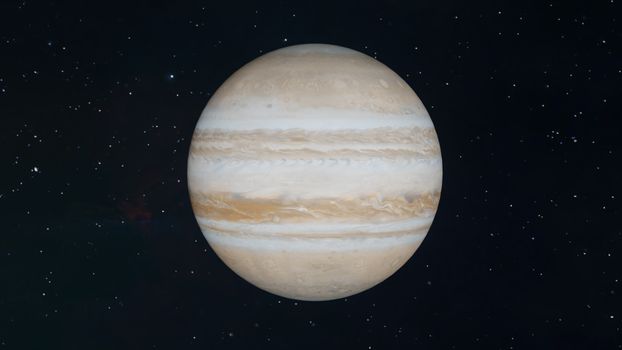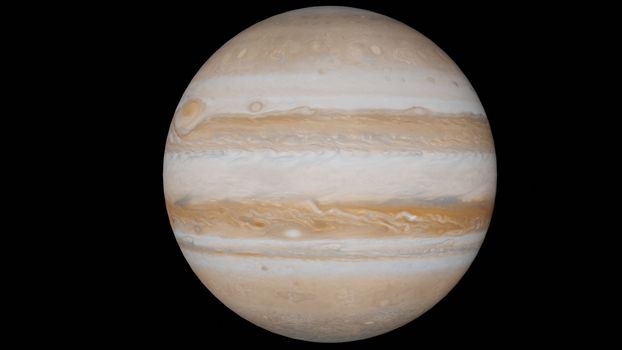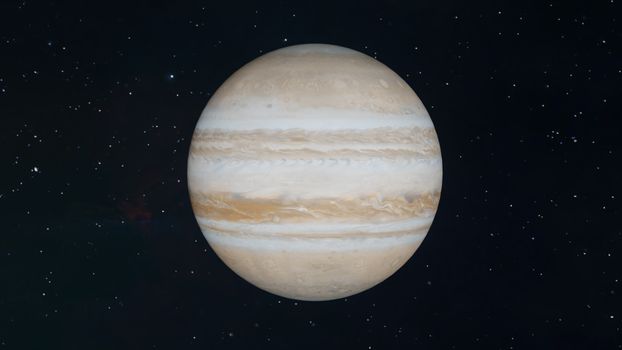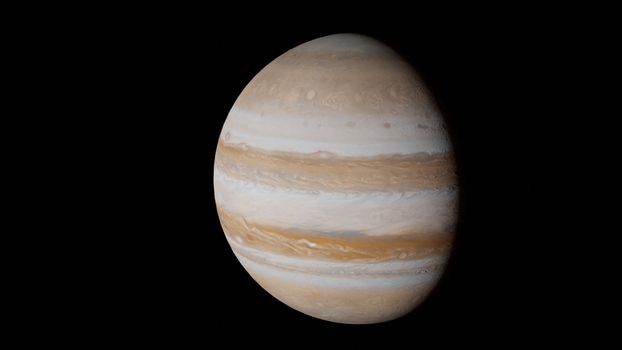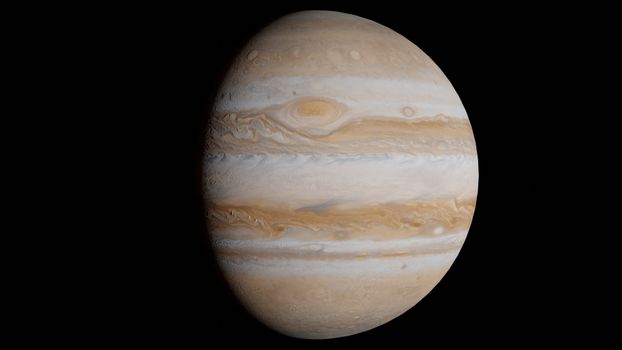
Jupiter, the colossal gas giant ruling the solar system, is not just remarkable for its swirling storms or immense gravitational pull. Orbiting this behemoth is a stunning array of moons—over 90 known as of 2024—that have captivated astronomers and fueled scientific intrigue for centuries. These natural satellites, ranging from volcanic infernos to icy ocean worlds, are shrouded in mystery, each with its own unique formation story, geological features, and the potential to reveal secrets about planetary systems both near and far. In this exploration, we journey into the enigmatic realm of Jupiter's moons, uncovering their origins, diversity, scientific surprises, and the missions poised to unlock their greatest mysteries.
The Origins: How Did Jupiter's Moons Form?
The story of Jupiter’s moons begins over 4.5 billion years ago, in the early days of the solar system. Unlike Earth's relatively modest lunar companion, Jupiter boasts a complex satellite system, hinting at a dynamic history. Scientists classify Jupiter’s moons into several groups based on their origins and orbits: the Galilean moons, inner regular moons, and a host of irregular outer moons.
The four largest—Io, Europa, Ganymede, and Callisto—are known as the Galilean moons, discovered by Galileo Galilei in 1610. These giants are believed to have formed in a miniature “solar nebula” around Jupiter, coalescing from the disk of gas and dust left over after Jupiter’s own formation. Their near-circular, equatorial orbits and differentiated interiors (with cores, mantles, and crusts) support this “in situ” formation model.
.png)
In contrast, Jupiter’s irregular moons, such as Himalia and Pasiphae, have elongated, inclined or even retrograde orbits. Most scientists believe these are captured asteroids or Kuiper Belt objects, snagged by Jupiter’s gravity long after the planet formed. This capture process remains an open question in planetary science—how could such small bodies lose enough energy to be captured, and why do so many cluster in similar orbits?
These competing origins make Jupiter’s moons a natural laboratory for understanding satellite formation, planetary migration, and the chaotic early solar system.
Diversity Among the Moons: From Volcanic Worlds to Ice-Covered Oceans
The sheer variety among Jupiter’s moons is breathtaking. The Galilean quartet alone exemplifies this:
- Io is the most volcanically active body in the solar system, with over 400 active volcanoes spewing sulfur and silicate. - Europa, slightly smaller than our Moon, features a smooth, ice-covered surface crisscrossed by reddish fractures, beneath which scientists suspect lies a vast subsurface ocean. - Ganymede is the largest moon in the entire solar system, even bigger than Mercury, and the only moon known to have its own magnetic field. - Callisto, heavily cratered, is thought to have an ancient, icy crust over a possible internal ocean.Beyond these giants, the diversity continues. Amalthea, one of the inner moons, is a reddish, potato-shaped object that orbits just 181,000 km from Jupiter’s cloud tops. The tiny outer moons, many less than 10 km across, exhibit a bewildering array of shapes, colors, and orbital inclinations.
The diversity is not just superficial. For example, Io’s volcanic activity is powered by tidal heating—gravitational flexing from Jupiter and its sibling moons—which melts the interior. Europa’s younger-looking surface, with few impact craters, hints at icy tectonics and ongoing resurfacing. Ganymede’s magnetic field suggests a liquid, iron-rich core. These geophysical peculiarities offer tantalizing clues about habitability, internal structures, and the potential for life.
Scientific Surprises: What Have We Learned from Space Missions?
Our understanding of Jupiter’s moons has been revolutionized by robotic explorers. Since the 1970s, a series of missions have provided close-up views and invaluable data:
- Pioneer 10 and 11 (1973-1974) first imaged Jupiter’s major moons. - Voyager 1 and 2 (1979) revealed Io’s erupting volcanoes and Europa’s icy plains. - Galileo orbiter (1995-2003) conducted detailed flybys, discovering evidence for subsurface oceans on Europa, Ganymede, and Callisto. - Juno (2016-present) focuses on Jupiter itself but has provided new insights into the planet’s gravitational field, indirectly informing models of moon formation.One of the most astonishing discoveries came from Galileo: the detection of magnetic field anomalies near Europa, consistent with a salty ocean beneath its ice. In 2018, reanalysis of old Galileo data confirmed plumes of water vapor erupting from Europa, suggesting active geological processes and the exciting possibility that life could exist in its dark ocean.
Io’s volcanic eruptions, imaged in detail by Voyager and Galileo, revealed lava fountains hundreds of kilometers high and lakes of molten sulfur, making it a testbed for understanding extreme volcanism.
Comparing Jupiter’s Major Moons: A Data Overview
To appreciate the diversity and scale of Jupiter’s largest moons, consider the following comparative table:
| Moon | Diameter (km) | Orbital Distance (km) | Surface Features | Notable Fact |
|---|---|---|---|---|
| Io | 3,643 | 421,700 | Volcanoes, lava flows | Most volcanically active body |
| Europa | 3,121 | 671,100 | Ice crust, fractures | Likely subsurface ocean |
| Ganymede | 5,268 | 1,070,400 | Grooved terrain, ice | Largest moon, has magnetic field |
| Callisto | 4,821 | 1,882,700 | Craters, ice | Oldest surface, possible ocean |
This table highlights not just the physical differences—such as Ganymede’s enormous size—but the unique characteristics that make each moon a scientific target.
Unsolved Mysteries: The Biggest Questions About Jupiter’s Moons
Despite dramatic advances, many mysteries remain. For example:
- What is the true origin of the irregular outer moons? Their groupings suggest past collisions or breakups, but detailed studies are lacking. - How thick is Europa’s ice, and what lies in its subsurface ocean? Is it warm enough and chemically rich enough to support life? - Why does Ganymede have a magnetic field, and how does it interact with Jupiter’s powerful magnetosphere? - Are there “hydrothermal vents” on Europa or Ganymede’s ocean floors, similar to those on Earth, which could provide energy for life? - What is the composition of the smallest moons, and could they be remnants from the dawn of the solar system?Answering these questions will require a new generation of missions and technologies.
Looking Ahead: Future Missions to Unlock the Secrets
The next decade promises a new era of discovery. Two major missions are set to transform our understanding:
- $1, launched by the European Space Agency in 2023, will arrive at Jupiter in 2031. JUICE will focus on Ganymede, Europa, and Callisto, studying their oceans, surfaces, and potential habitability. - $1, a NASA mission scheduled for launch in 2024, will conduct dozens of flybys of Europa, using ice-penetrating radar, spectrometers, and cameras to map the surface and probe the subsurface ocean.Both missions are equipped to detect organic molecules, study surface chemistry, and search for signs of ongoing activity or even life. If they succeed, they could answer some of the most profound questions in planetary science—and perhaps even redefine our place in the cosmos.
Final Thoughts: Why Jupiter’s Moons Matter to Us
The mystery of Jupiter’s moons is more than a tale of distant worlds—it’s a window into the history of our solar system, a frontier in the search for life beyond Earth, and a testament to the power of curiosity-driven exploration. Each moon, from volcanic Io to icy Europa, offers a unique piece of a cosmic puzzle billions of years in the making. With new missions on the horizon and ever-advancing technology, the next chapters in this story promise to be even more extraordinary.
Whether you’re an astronomy enthusiast or simply captivated by the unknown, Jupiter’s moons remind us that the universe is vast, surprising, and full of secrets waiting to be discovered.