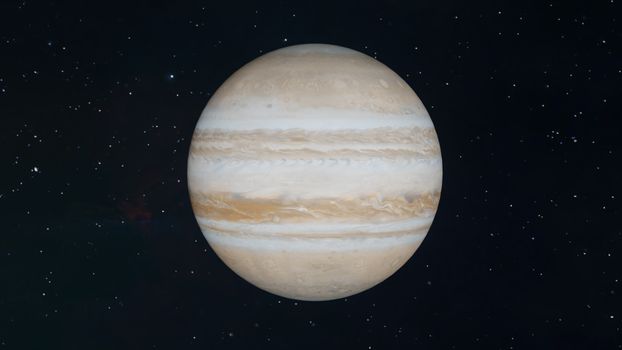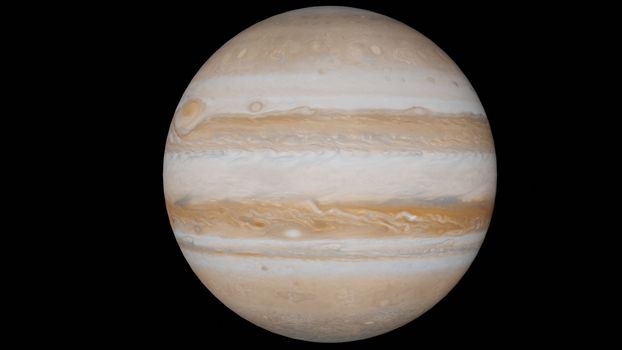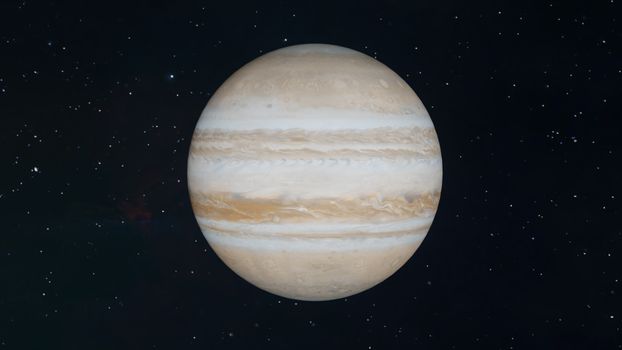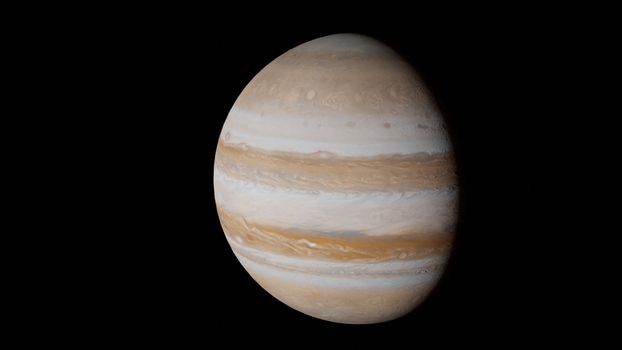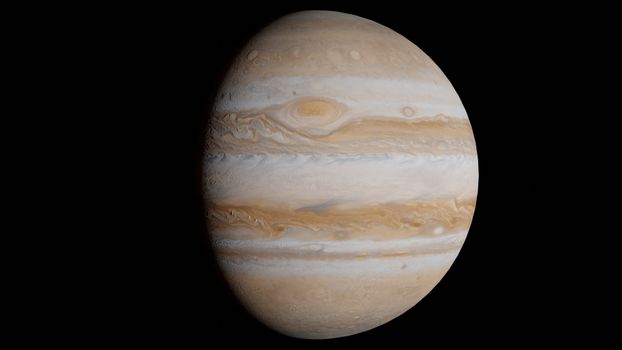
Jupiter, the largest planet in our solar system, has long captured humanity’s imagination with its swirling storms, colossal size, and vibrant bands of color. Yet, beyond its striking appearance, Jupiter holds critical clues about the origins and evolution of our planetary neighborhood. By understanding how Jupiter formed and what it is made of, scientists unlock secrets not only of the gas giant itself but also of the entire solar system. In this article, we delve into the fascinating processes that led to Jupiter’s birth, its unique composition, and what these reveal about the broader story of planetary formation.
The Birth of a Giant: How Jupiter Formed
The story of Jupiter’s formation begins over 4.5 billion years ago, in the swirling disk of gas and dust that surrounded our young Sun. Astronomers propose two main models for how gas giants like Jupiter come into existence: core accretion and disk instability.
The core accretion model, which is the leading theory, suggests that Jupiter began as a solid core composed of rock and ice. This core, estimated to be around 10–20 times the mass of Earth, formed by accumulating planetesimals—small, solid objects in the protoplanetary disk. Once this core reached a critical mass, its gravity became strong enough to attract and hold onto vast amounts of surrounding hydrogen and helium gas, rapidly ballooning in size.
.png)
The alternative, disk instability, posits that portions of the protoplanetary disk could have collapsed under their own gravity, forming Jupiter directly as a massive ball of gas without a substantial solid core. However, current evidence from spacecraft and telescopic observations tends to favor the core accretion model, especially for Jupiter.
Recent missions like NASA’s Juno spacecraft have provided new insights into Jupiter’s interior structure. For instance, Juno’s gravity measurements suggest that Jupiter may have a “fuzzy” or diluted core, possibly a result of collisions with other large objects during the planet’s early years. This finding hints at a more tumultuous and dynamic formation process than previously imagined.
Jupiter’s Building Blocks: Key Ingredients
Jupiter’s composition sets it apart from the rocky planets like Earth, Mars, and Venus. More than 90% of Jupiter’s mass is made up of hydrogen (about 75% by mass) and helium (about 24% by mass), reflecting the primordial makeup of the solar nebula from which the Sun and planets formed. The remaining 1–2% includes heavier elements and compounds, such as methane, ammonia, water vapor, and trace amounts of other gases.
Deep within Jupiter’s atmosphere, these ingredients exist in different forms depending on the pressure and temperature. For example, at certain depths, hydrogen transitions from a gaseous state to a liquid, and eventually to a rare metallic form—an exotic state of matter where hydrogen conducts electricity like a metal.
Scientists estimate that Jupiter’s core, if it exists as a distinct entity, could be about 10–15 times the mass of Earth and composed of a mixture of rock, metal, and ices. Surrounding the core is a thick layer of metallic hydrogen, which itself is enveloped by a vast region of molecular hydrogen and helium.
Jupiter also contains traces of other chemicals, such as:
- Methane (CH₄): Responsible for absorbing red light, contributing to Jupiter’s color. - Ammonia (NH₃): Found in the upper clouds, forming streaks and spots. - Water (H₂O): Detected in deeper atmospheric layers.These compounds are not just curiosities; they play a significant role in shaping Jupiter’s weather and cloud patterns and offer clues about the environment in which the planet formed.
Jupiter Versus the Other Planets: A Comparative Overview
Understanding Jupiter’s formation and composition becomes even more enlightening when compared to other major planets. The table below highlights how Jupiter stands apart in key aspects:
| Planet | Mass (Earth = 1) | Main Components | Core Type | Atmospheric Features |
|---|---|---|---|---|
| Jupiter | 317.8 | Hydrogen, Helium | Possibly "fuzzy" or diluted, 10–15 Earth masses | Thick bands, Great Red Spot, ammonia clouds |
| Saturn | 95.2 | Hydrogen, Helium | Rocky/icy, less massive than Jupiter’s | Broad rings, hexagonal storm, less colorful |
| Earth | 1 | Silicates, Iron, Water | Solid, iron-rich | Blue oceans, white clouds, diverse weather |
| Neptune | 17.1 | Hydrogen, Helium, Water, Methane | Rock/ice, small | Intense winds, methane-rich blue clouds |
Two facts stand out: Jupiter’s mass dwarfs that of any other planet—accounting for more than twice the mass of all other planets combined—and its composition closely resembles the Sun’s. This similarity supports the idea that Jupiter formed early in solar system history, capturing much of the nebula’s original hydrogen and helium before these gases dissipated.
Inside Jupiter: Layer by Layer
Jupiter’s immense size means it experiences pressures and temperatures far beyond anything found on Earth. Descending into the planet, one passes through several distinct layers:
1. $1 The colorful bands and storms we see are found here, primarily composed of ammonia ice crystals floating on winds reaching up to 400 miles per hour (about 640 km/h). 2. $1 Below the clouds, hydrogen exists as a gas, mixed with helium and trace compounds. 3. $1 At about 20,000 kilometers below the cloud tops, pressures exceed 3 million times Earth’s atmospheric pressure. Here, hydrogen is compressed into a metallic state, accounting for most of Jupiter’s mass. 4. $1 At the center, there may be a dense, mixed core of rock, metal, and ice, though Juno’s data suggests this region is more diffuse than a solid ball.The transition from molecular to metallic hydrogen is particularly important. This metallic hydrogen acts as a dynamo, generating Jupiter’s incredibly powerful magnetic field—the strongest of any planet in our solar system, about 20,000 times stronger than Earth’s.
Tracing Jupiter’s Origins: What Its Composition Reveals
Jupiter’s chemical makeup serves as a time capsule, preserving the conditions of the early solar system. The abundance of certain elements and isotopes in Jupiter’s atmosphere, like noble gases (argon, krypton, xenon) and heavy elements, indicates that the planet formed in a very cold region, far from the Sun.
Moreover, measurements from the Galileo probe, which entered Jupiter’s atmosphere in 1995, showed that Jupiter has more heavy elements than the Sun. This enrichment points toward a formation process where icy planetesimals from the outer solar system were incorporated into the growing planet.
The distribution of these materials helps scientists refine models of planet formation, migration, and the history of our solar system. For example, the presence of water and ammonia suggests that Jupiter may have “migrated” inward from its original birthplace, scattering other planetesimals and influencing the formation of other planets—including Earth.
Jupiter’s Formation and Composition: Why It Matters Today
Studying Jupiter’s formation and composition is not just an academic exercise. These insights shed light on fundamental questions about how planets form and evolve, both in our solar system and around other stars. Jupiter’s gravitational influence has shaped the architecture of our solar system, possibly protecting Earth from frequent comet impacts and helping to preserve life.
Furthermore, as astronomers discover thousands of “exoplanets”—planets orbiting other stars—many of which are gas giants similar to Jupiter, understanding our own gas giant becomes crucial for interpreting these distant worlds. The processes that built Jupiter may be common throughout the galaxy, making our solar system a valuable laboratory for studying planetary origins.
Key Takeaways: Jupiter’s Legacy in the Solar System
Jupiter’s story is a grand chapter in the narrative of our cosmic neighborhood. From its likely birth as a solid core in a disk of gas and dust, to its growth into a colossal gas giant, Jupiter’s formation and composition have left an indelible mark on the solar system.
Specific facts worth remembering include:
- Jupiter is more than 317 times the mass of Earth and contains more than twice the mass of all other planets combined. - The planet is composed of about 75% hydrogen and 24% helium by mass, mirroring the Sun’s composition. - Juno and Galileo missions have revealed that Jupiter may have a diluted core and contains more heavy elements than the Sun, hinting at a complex formation history.By continuing to unravel Jupiter’s mysteries, scientists not only satisfy human curiosity but also illuminate the processes that create worlds—both near and far.