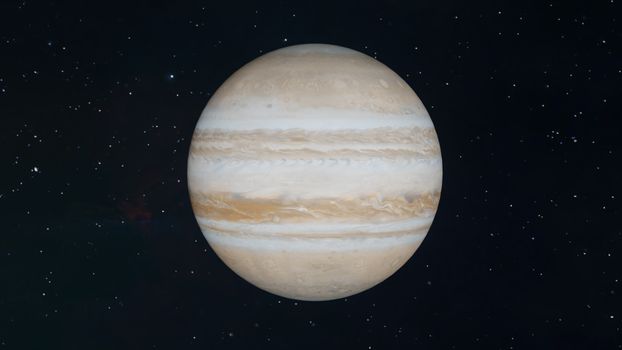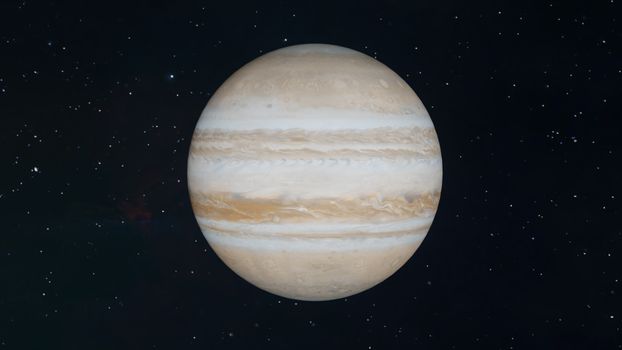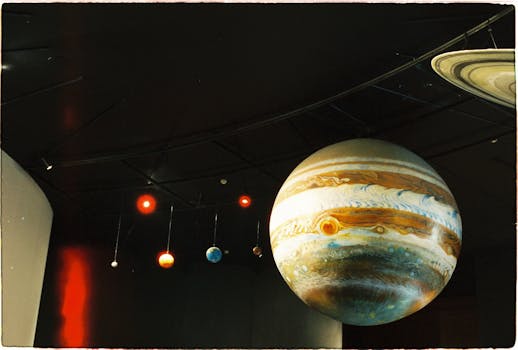
Jupiter, the Solar System’s behemoth, commands attention not only with its staggering size but also with its many mysteries and marvels. As the largest planet orbiting our Sun, Jupiter has fascinated astronomers for centuries, and modern science continues to reveal new wonders hidden within its swirling clouds, immense magnetosphere, and diverse moons. But Jupiter is far more than just a giant ball of gas — it is a cosmic laboratory, a planetary shield, and a key to understanding the formation and evolution of our Solar System. In this article, we’ll dive deep into Jupiter’s astonishing features, its role in shaping our planetary neighborhood, and the enduring mysteries that make it a giant among giants.
The Immense Scale of Jupiter: Size and Structure
Jupiter’s sheer scale sets it apart from every other planet in the Solar System. With a diameter of approximately 142,984 kilometers (88,846 miles), Jupiter is more than 11 times wider than Earth. Its mass is a staggering 1.9 x 10^27 kilograms — that's 318 times the mass of Earth and over two and a half times the mass of all other planets in the Solar System combined.
Unlike terrestrial planets, Jupiter is a gas giant, composed primarily of hydrogen (about 90%) and helium (roughly 10%), with trace amounts of methane, ammonia, water vapor, and other compounds. There is no solid surface; instead, the planet transitions from gaseous outer layers into a dense, possibly metallic, hydrogen core under extreme pressure.
.png)
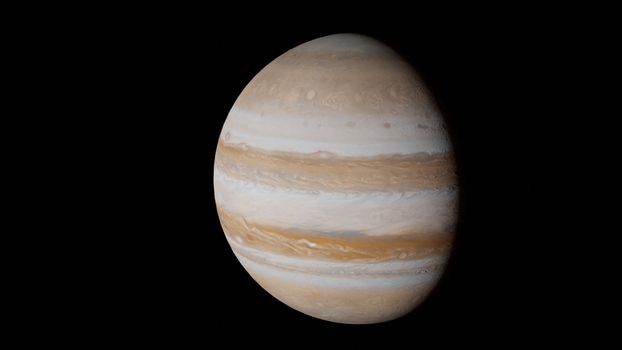
One of Jupiter’s most distinctive features is its rapid rotation. Despite its massive size, a day on Jupiter lasts just under 10 hours, making it the fastest-spinning planet in the Solar System. This rapid rotation flattens Jupiter at the poles and causes its equator to bulge, a shape known as an oblate spheroid.
The Giant’s Gravitational Grip: Jupiter’s Influence on the Solar System
Jupiter’s immense gravity has shaped the Solar System in profound ways. With a gravitational pull 2.5 times greater than Earth's, Jupiter acts as a celestial vacuum cleaner, drawing in or deflecting comets, asteroids, and other space debris. This protective role is not merely theoretical: astronomers have observed Jupiter capturing or redirecting potentially hazardous objects, most famously during the collision with Comet Shoemaker-Levy 9 in 1994. The comet, torn apart by Jupiter’s gravity, slammed into the planet’s atmosphere, leaving scars larger than Earth itself.
Jupiter’s influence extends even further. Its gravitational field has helped sculpt the asteroid belt between Mars and Jupiter, preventing the formation of another planet in that region. Moreover, Jupiter’s migration during the early Solar System may have contributed to the current arrangement of planets and even played a role in delivering water-rich comets to the inner Solar System, possibly seeding Earth with the ingredients for life.
Jupiter’s Dynamic Atmosphere: Storms, Bands, and the Great Red Spot
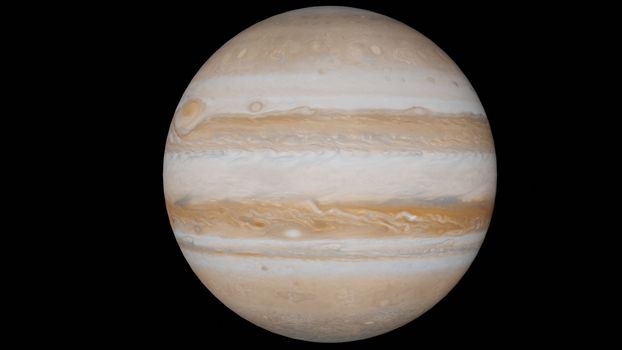
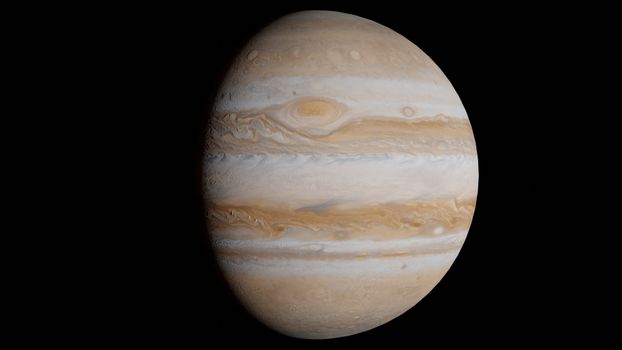
Jupiter’s atmosphere is a roiling, ever-changing tapestry of clouds, storms, and powerful winds. The planet is famous for its colorful bands, which run parallel to the equator and are created by high-speed jet streams blowing in opposite directions. These bands are made up of ammonia ice and other compounds, giving them distinctive shades of white, brown, red, and yellow.
The most iconic feature is the Great Red Spot, a colossal storm larger than Earth that has raged for at least 350 years. Winds inside the Great Red Spot reach speeds of up to 432 km/h (268 mph), and the storm’s diameter is currently about 16,350 kilometers (10,159 miles), though it has been shrinking over the last century. Jupiter’s atmosphere is also home to countless other storms, some lasting only days, while others persist for decades. Lightning strikes in Jupiter’s clouds can be up to 10 times more powerful than those on Earth.
Mysteries Beneath the Clouds: Jupiter’s Core and Magnetic Field
Beneath Jupiter’s colorful clouds lies a realm scientists are only beginning to understand. Jupiter is believed to have a dense core, possibly composed of rock and metallic hydrogen, though its exact nature remains one of the planet’s greatest mysteries. Recent data from NASA’s Juno mission indicate that Jupiter’s core may be “fuzzy” or partially dissolved, mixing with surrounding hydrogen at extreme pressures and temperatures.
Jupiter’s interior dynamics generate the strongest planetary magnetic field in the Solar System, roughly 20,000 times stronger than Earth’s. This immense magnetosphere extends millions of kilometers into space, enveloping many of Jupiter’s moons and capturing charged particles to create intense radiation belts. The interaction between Jupiter’s magnetic field and its moon Io, the most volcanically active body in the Solar System, generates powerful auroras at the planet’s poles — some 1000 times brighter than Earth’s northern lights.
The Moon Menagerie: Jupiter’s Diverse Satellites
Jupiter is orbited by at least 95 confirmed moons as of 2024, making it a miniature solar system in its own right. The four largest, known as the Galilean moons — Io, Europa, Ganymede, and Callisto — were first observed by Galileo Galilei in 1610 and have since become prime targets for scientific exploration.
- $1 is a volcanic powerhouse, with hundreds of active volcanoes spewing sulfur and lava across its surface. - $1 harbors a smooth, icy shell over what is believed to be a global subsurface ocean, making it one of the most promising places to search for extraterrestrial life. - $1 is the largest moon in the Solar System, even bigger than Mercury, and possesses its own magnetic field. - $1 is heavily cratered and ancient, with a surface that records billions of years of impacts.Besides the Galilean moons, Jupiter’s extensive family includes dozens of smaller, irregular satellites, many likely captured asteroids or comets.
Comparing Jupiter to Its Planetary Peers: A Data Overview
To appreciate Jupiter’s place in the Solar System, it helps to compare its key statistics with those of its fellow gas giant Saturn, as well as with Earth for scale.
| Feature | Jupiter | Saturn | Earth |
|---|---|---|---|
| Diameter (km) | 142,984 | 120,536 | 12,742 |
| Mass (kg) | 1.90 x 1027 | 5.68 x 1026 | 5.97 x 1024 |
| Number of Moons (2024) | 95 | 146 | 1 |
| Day Length (hours) | 9.9 | 10.7 | 24 |
| Magnetic Field Strength (Earth=1) | 20,000 | 600 | 1 |
Jupiter’s overwhelming size, mass, and magnetic power are clear, making it truly the giant of the Solar System.
Enduring Mysteries and Future Exploration of Jupiter
Despite centuries of observation and decades of space missions, Jupiter continues to guard many secrets. Questions remain about the exact composition and structure of its core, the mechanisms driving its powerful storms, and the true nature of its deep interior. The Juno spacecraft, currently orbiting Jupiter, is sending back unprecedented data, but many puzzles remain unsolved.
Future missions are on the horizon. The European Space Agency’s Jupiter Icy Moons Explorer (JUICE), set for arrival in the 2030s, will focus on Ganymede, Europa, and Callisto, probing their icy surfaces and subsurface oceans. NASA’s Europa Clipper, launching in the mid-2020s, aims to investigate Europa’s habitability in detail.
Each mission brings us closer to answering fundamental questions: How do gas giants form and evolve? Could life exist elsewhere in the Solar System? And what does Jupiter’s story tell us about the billions of exoplanets orbiting other stars?