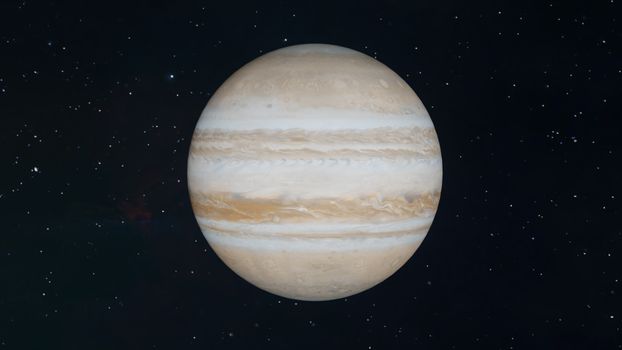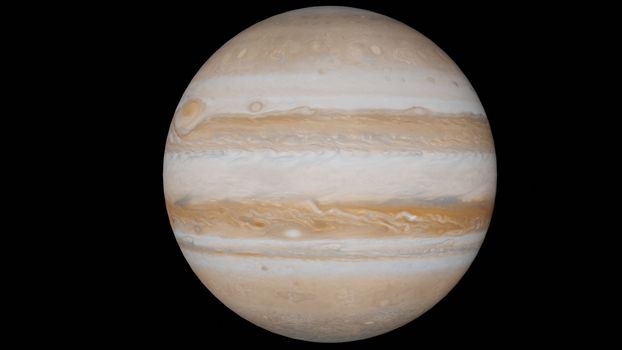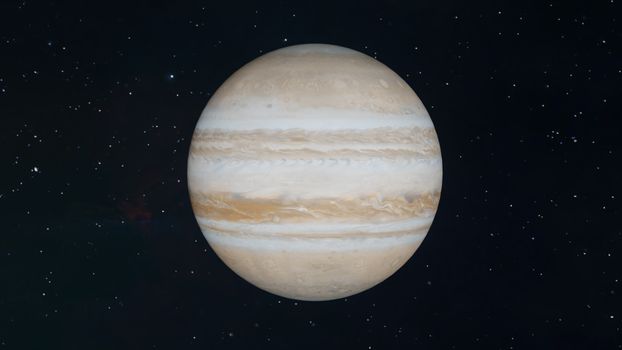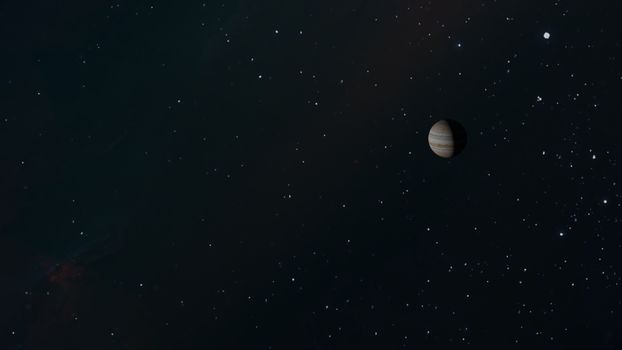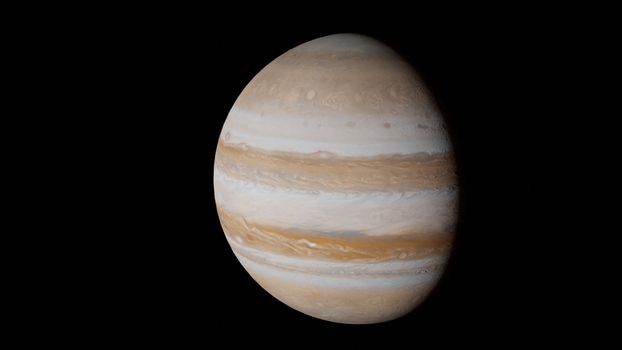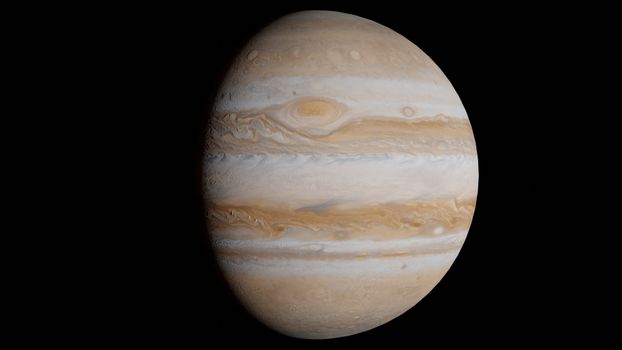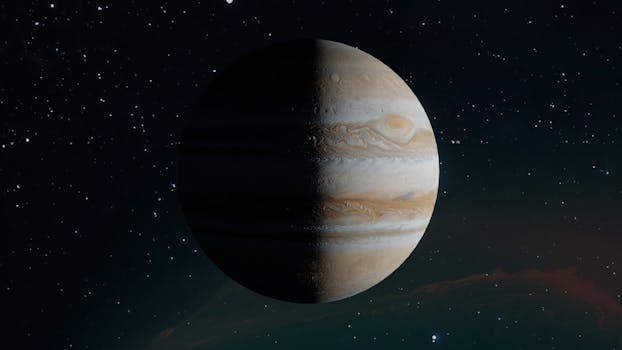
Jupiter, the largest planet in our solar system, has long captivated astronomers, historians, and casual skywatchers alike. Its immense size, swirling storms, and enigmatic bands have inspired myths, scientific revolutions, and countless discoveries. Yet, beyond its present-day grandeur lies a fascinating story of evolution — a cosmic journey spanning billions of years, shaped by the birth of the solar system, shifting scientific paradigms, and technological leaps. This article offers a historical perspective on the evolution of Jupiter: tracing its formation, how our understanding of the planet has changed through the ages, and what the future holds for unraveling its remaining mysteries.
Jupiter’s Birth: The Early Days of a Giant
Jupiter’s story began over 4.5 billion years ago, in the swirling protoplanetary disk that surrounded the young Sun. Unlike the rocky planets, Jupiter formed beyond the so-called “frost line,” where temperatures were cold enough for volatile compounds like water, ammonia, and methane to condense into solid ices. This allowed Jupiter’s core to rapidly accrete mass, reaching about 10 times the mass of Earth — a critical threshold that enabled it to gravitationally attract vast amounts of hydrogen and helium gas.
Current models suggest that Jupiter’s core formed within the first 3 million years of the solar system’s history, making it the first planet to reach maturity. Jupiter’s final mass — 318 times that of Earth — prevented the formation of other giant planets in its immediate neighborhood, shaping the architecture of the solar system as we know it. The planet’s immense gravity helped sculpt the asteroid belt and likely deflected countless comets and planetesimals, protecting the inner planets from catastrophic impacts.
.png)
Ancient Civilizations and Jupiter: Myths and Early Observations
Long before telescopes, early civilizations recognized Jupiter as a bright wandering star, moving against the fixed backdrop of constellations. In Babylonian astronomy, the planet was associated with Marduk, the chief deity, and its 12-year orbit was linked to the zodiac. The Greeks named it after Zeus, while the Romans later dubbed it Jupiter after their own king of the gods — a testament to its prominence in the night sky.
Chinese astronomers referred to Jupiter as Sui-xing, the “year star,” because its orbit marked the passage of time in their calendar systems. Across cultures, Jupiter’s regular motion and occasional retrograde loops inspired both awe and curiosity. These early observations, while rooted in myth, laid the groundwork for systematic study, as ancient astronomers tracked its movements and attempted to predict its positions.
The Telescope Revolution: Jupiter Revealed
The invention of the telescope in the early 17th century unlocked a new era in the study of Jupiter. In 1610, Galileo Galilei famously pointed his homemade telescope at the planet and discovered its four largest moons: Io, Europa, Ganymede, and Callisto. Now collectively known as the Galilean moons, these worlds were the first objects found to orbit another planet, challenging the geocentric worldview that placed Earth at the center of the universe.
Over the next centuries, increasingly powerful telescopes revealed more of Jupiter’s secrets. Astronomers observed its rapidly rotating cloud bands, the Great Red Spot (a massive, centuries-old storm), and a system of faint rings. By 1892, E.E. Barnard discovered a fifth moon, Amalthea, further expanding our understanding of the Jovian system.
| Milestone | Year | Significance |
|---|---|---|
| Galileo discovers four major moons | 1610 | First evidence of celestial bodies orbiting another planet |
| First observation of Great Red Spot | 1665 | Reveals Jupiter’s dynamic atmosphere |
| Discovery of Jupiter’s faint rings | 1979 | Shows that ring systems are not unique to Saturn |
| Juno spacecraft enters orbit | 2016 | Delivers unprecedented close-up data on Jupiter’s structure |
Jupiter in the Age of Space Exploration
The launch of the space age in the 20th century marked another leap in our understanding of Jupiter. In 1973, Pioneer 10 became the first spacecraft to fly by Jupiter, providing the first close-up images and measuring its intense radiation belts. Pioneer 11 followed a year later, confirming the presence of a thin ring system.
In 1979, the twin Voyager probes delivered detailed photographs of Jupiter’s stormy atmosphere and discovered active volcanism on Io — the first time such activity was observed outside Earth. These missions revealed Jupiter’s complex magnetosphere, which extends up to 7 million kilometers (about 4.3 million miles) toward the Sun.
Galileo, launched in 1989, became the first spacecraft to orbit Jupiter in 1995. Over eight years, it dropped a probe into Jupiter’s atmosphere, recorded lightning, measured wind speeds exceeding 600 kilometers per hour (373 mph), and mapped the planet’s faint rings and many moons. More recently, NASA’s Juno mission (arriving in 2016) has continued to revolutionize our understanding, using polar orbits to study Jupiter’s magnetic field, deep structure, and mysterious core.
The Changing Face of Jupiter: Scientific Paradigms and Theories
As technology advanced, so did scientific theories about Jupiter’s origin and evolution. The prevailing “core accretion” model holds that Jupiter’s solid core formed first, then accumulated gas. However, some researchers now propose “disk instability,” where parts of the solar nebula rapidly collapsed under gravity to form giant planets directly, challenging traditional views.
The discovery of exoplanets — planets beyond our solar system — has further complicated the picture. Astronomers have found “hot Jupiters,” gas giants orbiting extremely close to their stars, suggesting that migration may play a crucial role in planetary evolution. Did Jupiter migrate inward and then move back out, disturbing the asteroid belt and shaping the early solar system? Recent computer simulations suggest that Jupiter’s movement could explain why Mars is much smaller than Earth or Venus.
Jupiter’s composition also continues to surprise scientists. Juno’s data reveals that its core may be “fuzzy,” spreading heavier elements across a vast region, rather than being sharply defined. This raises new questions about how the planet accreted material and what this means for gas giants elsewhere in the universe.
Jupiter’s Influence on Solar System Evolution
Jupiter’s evolution is inseparable from that of the entire solar system. Its gravitational might has acted as both a shield and a disruptor. For example, Jupiter’s presence likely prevented the formation of a planet in the asteroid belt, leaving behind a region populated by rocky debris. Its gravity has also ejected many comets and asteroids from the solar system, playing a protective role for Earth — a process sometimes referred to as the “Jupiter Barrier.”
Conversely, Jupiter’s migrations in its early history may have caused chaos. The “Grand Tack” hypothesis suggests that Jupiter moved inward to about where Mars orbits today before reversing course. This movement could have scattered planetesimals, altered the orbits of other planets, and even delivered water-rich asteroids to the inner solar system — a key factor in Earth’s habitability.
Jupiter’s moons, too, have evolved in tandem with their giant host. Ganymede, the solar system’s largest moon, has its own magnetic field, while Europa’s icy crust hides a global ocean. These diverse worlds are now prime targets in the search for life beyond Earth.
The Future of Jupiter Exploration and Understanding
Despite centuries of study, Jupiter remains full of mysteries. The European Space Agency’s Jupiter Icy Moons Explorer (JUICE), launched in 2023, is en route to study Ganymede, Europa, and Callisto up close, aiming to unlock their secrets and assess their potential for hosting life. NASA’s Europa Clipper, set for launch in 2024, will focus on Europa’s subsurface ocean.
On the horizon, new telescopes and missions promise even greater insights. The James Webb Space Telescope is already delivering groundbreaking infrared observations, revealing the planet’s atmospheric composition and thermal structure. Proposed missions could one day send probes deep into Jupiter’s atmosphere or even deploy orbiters around its smaller moons, offering a more complete picture of this dynamic system.
Our understanding of Jupiter’s evolution is not just about this one planet. It offers a template for giant planets throughout the galaxy, helping us understand the diversity of exoplanetary systems and the processes that shape them.
Final Reflections: The Ongoing Journey of Jupiter’s Evolution
From its fiery birth in the solar nebula to its current role as a guardian and disruptor, Jupiter’s evolution is a tale of cosmic drama, scientific discovery, and ongoing mystery. The giant planet has shaped the fate of worlds, inspired generations of observers, and continues to push the boundaries of our knowledge.
Each new mission and observation adds to this unfolding story, revealing a world both familiar and profoundly alien. As we look to the future, Jupiter will remain not just a subject of study, but a cornerstone in our quest to understand how planets — and life itself — arise in the universe.