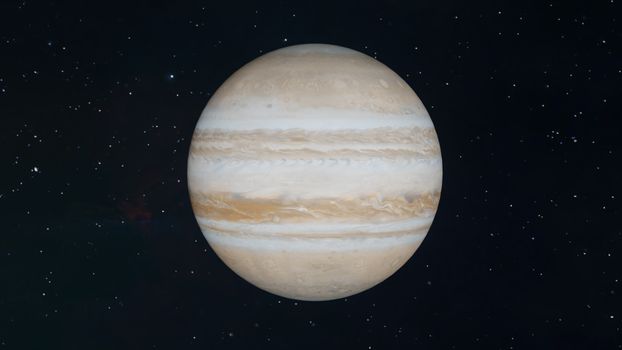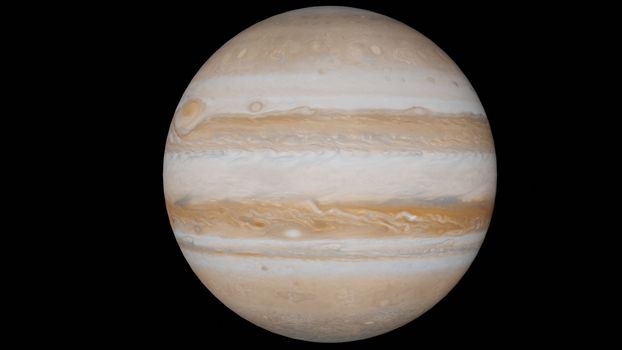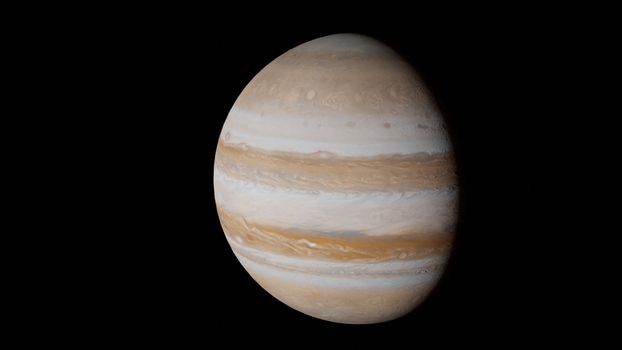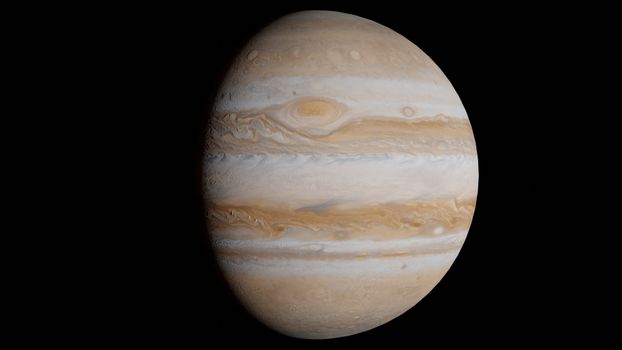
Jupiter, the largest planet in our solar system, has captivated astronomers for centuries. Its swirling storms, immense magnetic field, and diverse family of moons raise profound questions about the origins of our solar system and the possibilities for life beyond Earth. While past missions like Galileo and Juno have provided tantalizing glimpses into Jupiter’s secrets, a new era of exploration is dawning. The future of Jupiter exploration promises not only to deepen our understanding of the gas giant itself but also to revolutionize planetary science as a whole. So, what’s next on humanity’s journey to unravel Jupiter’s mysteries?
Building on Success: The Legacy of Past Jupiter Missions
Before looking forward, it’s important to recognize how past missions have set the stage for the next generation of Jupiter exploration. NASA’s Galileo spacecraft, launched in 1989, was the first to orbit Jupiter, sending a probe into its atmosphere and making detailed studies of its moons and magnetic environment. More recently, the Juno mission, which arrived at Jupiter in 2016, has been orbiting the planet in a highly elliptical path, capturing unprecedented data about Jupiter’s structure, atmosphere, and magnetic field.
These missions have yielded remarkable discoveries: - Galileo revealed evidence of subsurface oceans on Europa, Ganymede, and Callisto, sparking hopes of extraterrestrial life. - Juno’s measurements have shown that Jupiter’s core is much larger and more diffuse than previously thought, challenging models of planet formation. - Both missions have documented Jupiter’s intense radiation belts and complex auroras, driven by its powerful magnetosphere.Yet, despite these achievements, many fundamental questions remain. How do Jupiter’s storms form and persist? What lies beneath its thick cloud layers? Could its moons harbor life? The next wave of missions aims to answer these questions with new technology, ambitious objectives, and international collaboration.
.png)
Upcoming Missions: A New Wave of Exploration
The 2020s and 2030s are set to be a golden age for Jupiter exploration, with multiple missions from different space agencies targeting the planet and its moons.
The most significant missions on the horizon include:
- $1 Scheduled to arrive at Jupiter in 2031, JUICE will focus on Ganymede, Europa, and Callisto. Its objectives include studying the moons’ surfaces, subsurface oceans, and potential habitability. - $1 Expected to launch in 2024 and arrive in the early 2030s, this mission will conduct dozens of flybys of Europa, using a suite of instruments to probe its ice shell and search for signs of life. - $1 Announced in 2022, this ambitious project aims to send a probe to orbit Jupiter and deploy a lander or impactor to one of its moons, possibly Callisto, around the mid-2030s.These missions are designed with cutting-edge technology, such as ice-penetrating radar, high-resolution cameras, and advanced spectrometers, enabling them to peer beneath surfaces and analyze the chemical compositions of moons and atmospheres.
| Mission | Agency | Target(s) | Launch Year | Arrival Year | Main Objectives |
|---|---|---|---|---|---|
| JUICE | ESA | Ganymede, Europa, Callisto | 2023 | 2031 | Study icy moons; search for subsurface oceans and habitability |
| Europa Clipper | NASA | Europa | 2024 | 2030s | Investigate Europa's habitability, ice shell, and potential for life |
| Tianwen-4 | CNSA (China) | Jupiter, Callisto (planned) | Late 2020s | Mid-2030s | Orbiter and possible lander/impactor on Jovian moon |
These missions will dramatically expand our knowledge of the Jovian system, with particular emphasis on the search for life and the origins of giant planets.
International Collaboration: A Global Effort
Jupiter’s allure transcends national boundaries, and future exploration is increasingly becoming a global effort. For example, the European Space Agency’s JUICE mission involves contributions from 23 countries, including critical instruments built by NASA. Similarly, the Europa Clipper mission will share data and coordinate research efforts with European scientists.
Such collaboration enables the sharing of expertise and resources, while also helping to manage the immense technical and financial challenges of deep-space missions. It also ensures that discoveries made at Jupiter benefit humanity as a whole, rather than individual nations or agencies.
China’s growing interest in Jupiter exploration signals a new era of international competition and cooperation. The Tianwen-4 mission is not only technologically ambitious but also potentially open to collaboration with other countries. The emerging role of private companies, such as SpaceX and Blue Origin, in providing launch services and mission support further illustrates the increasingly interconnected nature of space exploration.
Cutting-Edge Technology: Unlocking Jupiter’s Secrets
Reaching and studying Jupiter is no small feat. The planet is approximately 778 million kilometers (484 million miles) from the Sun—more than five times farther than Earth. Its harsh radiation environment, extreme temperatures, and gravitational pull present formidable engineering challenges.
Future missions are relying on several technological breakthroughs to overcome these obstacles:
- $1 New materials and electronic shielding are being developed to protect sensitive instruments from Jupiter’s intense radiation belts, which are 20,000 times stronger than Earth’s. - $1 Instruments like JUICE’s RIME (Radar for Icy Moons Exploration) can probe several kilometers beneath the surfaces of moons like Europa and Ganymede to detect subsurface oceans. - $1 Given the vast distances involved and communication delays (signals can take up to 45 minutes to reach Jupiter from Earth), future spacecraft must be able to make real-time decisions without waiting for instructions. - $1 Solar panels and next-generation radioisotope generators are enabling missions to operate far from the Sun, where sunlight is barely 4% as strong as on Earth.These innovations not only make Jupiter exploration possible but also have applications for missions to other distant worlds, such as Saturn, Uranus, and beyond.
The Hunt for Extraterrestrial Life: Focus on Europa and Beyond
One of the most tantalizing prospects in planetary science is the search for life beyond Earth. Jupiter’s moons, especially Europa, are prime candidates. Galileo data suggest that Europa harbors a salty ocean beneath its icy crust, containing twice as much water as all of Earth’s oceans combined. Scientists believe this ocean could have the right conditions for life: liquid water, energy sources, and essential chemical elements.
The Europa Clipper mission is specifically designed to address this question. Its instruments will analyze the thickness of Europa’s ice shell, look for plumes of water vapor erupting from the surface, and search for organic molecules. If plumes are detected, the spacecraft could fly through them and directly sample their contents, searching for signs of microbial life.
JUICE will perform similar investigations at Ganymede, the only moon in the solar system known to have its own magnetic field, which may help protect its subsurface ocean from radiation and enhance its habitability.
Finding evidence of life—or even prebiotic chemistry—on Jupiter’s moons would be a discovery of profound significance, transforming our understanding of biology, evolution, and the potential for life elsewhere in the universe.
Future Concepts: Ambitious Visions and Next-Generation Missions
Even as the coming decade promises new discoveries, visionary scientists and engineers are already planning the next steps in Jupiter exploration. Some of the most exciting ideas on the horizon include:
- $1 Future missions may deploy entry probes or balloons into Jupiter’s upper atmosphere, gathering direct data on its composition, weather, and dynamics. The Galileo probe survived just 58 minutes due to high pressure and temperature, but new materials and technology could extend mission lifetimes. - $1 Long-term goals include landing on Europa or Ganymede, drilling through kilometers of ice to access the underlying oceans, and deploying robotic submarines (“cryobots”) to explore these alien seas. - $1 Bringing back samples from the surface of a Jovian moon would allow for detailed laboratory analysis on Earth, providing unparalleled insights into their geology, chemistry, and potential biosignatures. - $1 Swarms of small satellites could survey Jupiter’s magnetosphere and moons simultaneously, capturing dynamic processes that single spacecraft might miss.While many of these concepts face significant technical and financial hurdles, they reflect humanity’s enduring curiosity and the drive to push the boundaries of exploration.
Looking Ahead: The Transformative Impact of Jupiter Exploration
The future of Jupiter exploration is more than a quest to study a distant planet: it’s a journey that could answer fundamental questions about our place in the cosmos. By investigating Jupiter’s atmosphere, magnetic field, and diverse moons, scientists hope to:
- Understand how giant planets form and evolve, with implications for thousands of exoplanets discovered around other stars. - Test theories about the origins of life and the distribution of habitable environments in our solar system. - Advance technology that will enable even more ambitious missions throughout the solar system and beyond.With multiple missions set to launch in the next decade, international partnerships, and bold new technologies, the coming years promise to be a thrilling chapter in humanity’s exploration of the outer solar system. As we prepare to unlock Jupiter’s remaining secrets, we are reminded that the spirit of discovery knows no bounds.