The Impact of Jupiter on Our Solar System's Formation: Shaping Worlds and Orbits
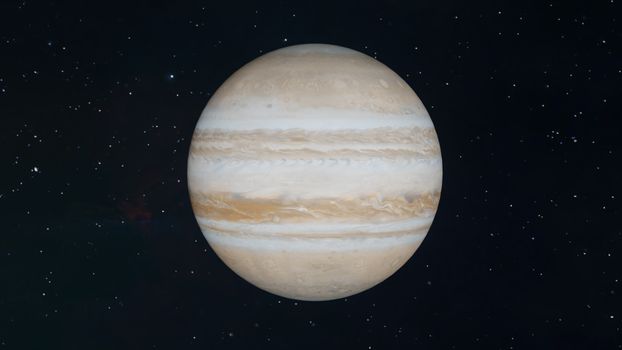
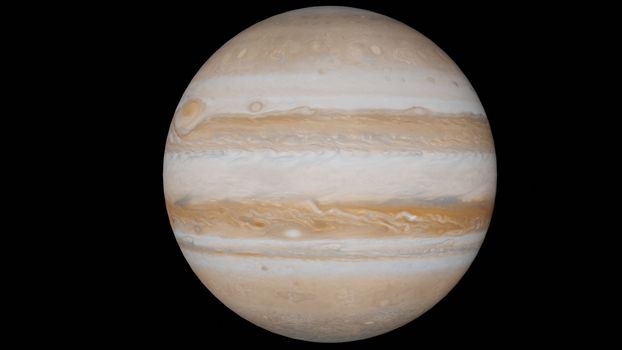
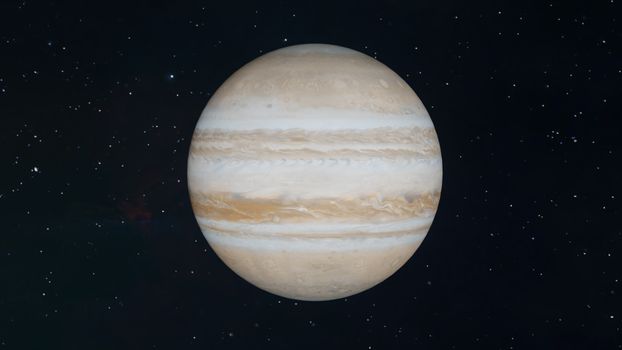
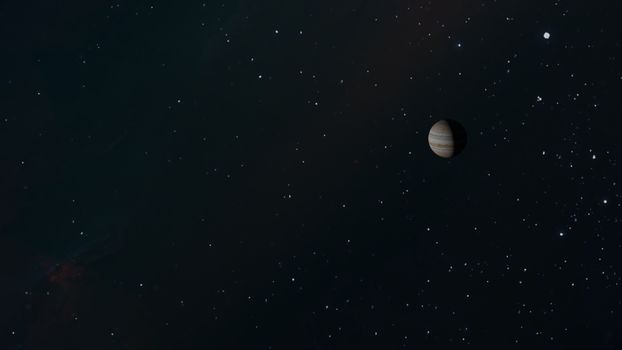
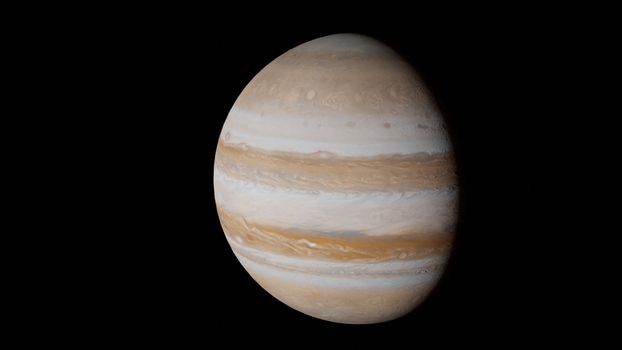
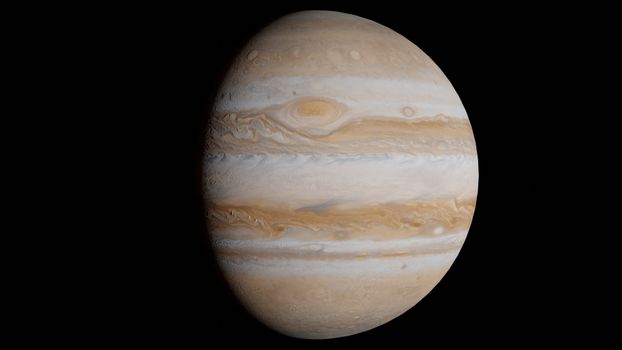
Few planets command as much influence over the architecture of our solar system as Jupiter. This colossal gas giant, with a mass more than 2.5 times that of all other planets combined, has played a pivotal role not just as a planetary body, but as a cosmic architect. Its gravitational might has sculpted planet orbits, shaped the asteroid belt, influenced planetary migrations, and even fostered the conditions necessary for life on Earth. Understanding the impact of Jupiter on our solar system's formation provides a window into how planetary systems emerge, survive, and evolve across the cosmos.
Jupiter’s Formation: A Timeline of Early Influence
Jupiter formed approximately 4.56 billion years ago, shortly after the Sun ignited at the heart of our solar nebula. According to standard models, the process began with the accumulation of icy and rocky planetesimals—a process known as core accretion. Once Jupiter’s core reached about 10 Earth masses, it began to rapidly draw in hydrogen and helium gas, ballooning into the gas giant we know today.
Jupiter’s formation was remarkably swift on a cosmic scale. Estimates suggest it took less than 3 million years to reach its massive size. This rapid growth allowed Jupiter to dominate the nascent solar system, as its gravity began to shape the trajectories of nearby material. Its presence would have profound and lasting effects, both constructive and destructive, on the other developing worlds.
.png)
Jupiter as the Solar System’s Gravitational Architect
Jupiter’s immense gravitational pull has acted as a cosmic sculptor, dramatically altering the distribution of material in the early solar system. Its influence extends across several key domains:
1. Clearing the Inner Solar System: As Jupiter grew, it disrupted the orbits of nearby planetesimals, ejecting many from the solar system entirely or sending them crashing into the Sun. This process likely prevented a super-Earth or another gas giant from forming between Mars and Jupiter. 2. Shaping Planetary Orbits: Jupiter’s gravity is responsible for the relatively stable, non-intersecting orbits of the inner planets. By absorbing and redirecting much of the solar nebula’s leftover debris, Jupiter reduced the frequency of catastrophic collisions in the inner system. 3. The Asteroid Belt’s Guardian: Jupiter’s gravitational pull prevented planetesimals in the region between Mars and Jupiter from coalescing into a planet. Instead, this material became the asteroid belt. Jupiter’s resonances, areas where its orbital period creates gravitational tugs, continue to clear gaps in the belt even today. 4. Protecting Earth from Impacts: Throughout history, Jupiter’s presence has shielded the inner planets from bombardment by comets and asteroids. Simulations indicate that without Jupiter, Earth could have faced impact rates several times higher, potentially stifling the development of life.Jupiter and the Grand Tack Hypothesis
One of the most intriguing theories in planetary science is the “Grand Tack Hypothesis.” This model proposes that, after its initial formation, Jupiter migrated inward toward the Sun, reaching as close as 1.5 astronomical units (AU)—about where Mars orbits today—before reversing course and moving outward to its current position at 5.2 AU.
This dramatic migration had profound effects:
- Mars’s Small Size: Jupiter’s inward movement scattered material in the region where Mars was forming, effectively starving the Red Planet and explaining its relatively small mass. - Shaping the Asteroid Belt: As Jupiter moved in and out, it mixed the asteroid belt’s composition, bringing in material from both the inner and outer solar system. This accounts for the diversity of asteroid types—rocky and metallic objects closer to Mars, and icy bodies farther out. - Preserving Terrestrial Planets: By reversing its migration (“tacking” like a sailboat), Jupiter avoided disrupting the formation of Venus, Earth, and Mercury, allowing these planets to grow undisturbed.This hypothesis is supported by computer simulations and by observations of exoplanetary systems where giant planets have migrated much farther inward, often disrupting their own systems’ architecture.
Jupiter’s Role in Seeding the Outer Solar System
Jupiter’s gravitational reach extends far beyond the asteroid belt. It played a crucial role in populating and shaping the Kuiper Belt and the Oort Cloud, vast regions filled with icy bodies at the edge of the solar system.
- Kuiper Belt: Jupiter’s early interactions helped scatter icy planetesimals outward, where they settled into the Kuiper Belt beyond Neptune. This region is home to Pluto, Eris, and thousands of smaller objects. - Oort Cloud: Some material was flung even farther, creating a spherical shell of comets known as the Oort Cloud, extending up to 100,000 AU from the Sun. Jupiter’s gravity is primarily responsible for sending these comets into deep space.The table below summarizes Jupiter’s impact on key regions of the solar system:
| Solar System Region | Jupiter’s Influence | Resulting Feature |
|---|---|---|
| Inner Solar System | Ejected or redirected planetesimals | Smaller terrestrial planets, fewer impacts |
| Asteroid Belt | Prevented planet formation, created resonances | Diverse, structured asteroid population |
| Outer Solar System (Kuiper Belt) | Scattered icy bodies outward | Kuiper Belt with mixed composition |
| Oort Cloud | Flung material to distant orbits | Oort Cloud of long-period comets |
Jupiter’s Lasting Legacy: Impacts on Planetary Habitability
Jupiter’s influence on habitability goes far beyond mere orbital mechanics. Its role as a “cosmic vacuum cleaner” has had critical consequences for life on Earth and potentially on other worlds.
- Shielding Earth: By capturing or deflecting comets and asteroids, Jupiter has decreased the number of extinction-level impacts on Earth. The Shoemaker-Levy 9 comet, which crashed into Jupiter in 1994, offered a dramatic example of this protective role. - Delivering Water: Some models suggest that Jupiter’s gravitational nudges sent icy bodies from the outer solar system into the inner planets, helping to deliver water and organic molecules to Earth and perhaps Mars. - Stabilizing Orbits: Jupiter’s presence helps keep Earth’s orbit relatively stable over long timescales, reducing the risk of extreme climate swings that could challenge the development and persistence of complex life.These factors combine to make Jupiter an essential player in Earth’s long-term habitability—a unique situation that may not be common in every planetary system.
Comparing Jupiter’s Influence to Other Giant Planets
While Jupiter is the solar system’s dominant planet, Saturn, Uranus, and Neptune also exert gravitational effects. However, their impacts differ significantly due to their size, location, and timing of formation.
- Saturn: At about one-third Jupiter’s mass, Saturn’s influence is less pronounced but still significant. Saturn’s gravity helped halt Jupiter’s inward migration during the Grand Tack, preserving the structure of the inner solar system. - Uranus and Neptune: These ice giants formed farther out and played key roles in shaping the Kuiper Belt and Oort Cloud. Their migrations stirred up the outer solar system, but their smaller masses meant less impact on the inner planets.The unique combination of Jupiter’s size, early formation, and orbital dynamics makes it the primary sculptor of the solar system’s overall architecture. Without Jupiter, our planetary neighborhood would look very different—and may not have been as hospitable to life.
Jupiter and the Search for Life Beyond Our Solar System
The impact of Jupiter extends beyond our own solar system; it provides a template for astronomers searching for habitable worlds elsewhere in the galaxy. Studies of exoplanetary systems reveal that giant planets often migrate close to their stars, disrupting the formation of smaller, rocky worlds.
- Hot Jupiters: Many exoplanetary systems contain “hot Jupiters”—gas giants orbiting extremely close to their stars. These planets can destabilize or even destroy inner planets during migration, reducing the chances for life-friendly environments. - Solar System Uniqueness: The fact that Jupiter stayed relatively distant from the Sun and did not disrupt the inner planets may be a rare and fortunate occurrence, contributing to the emergence of life on Earth.Recent surveys, such as those from the Kepler Space Telescope, suggest that only about 10% of sun-like stars have gas giants at Jupiter-like distances, highlighting how unusual our solar system’s configuration may be.
Final Thoughts: Jupiter’s Enduring Impact on the Solar System’s Formation
Jupiter’s role in the formation of our solar system cannot be overstated. From clearing and structuring the asteroid belt to protecting the inner planets and enabling the conditions necessary for life, this gas giant has shaped our cosmic neighborhood in fundamental ways. Its early formation and massive gravity steered the development of every other planet, moon, and belt of debris. As we look beyond our solar system in search of life, Jupiter serves as a reminder of how a single planet can determine the fate of worlds.