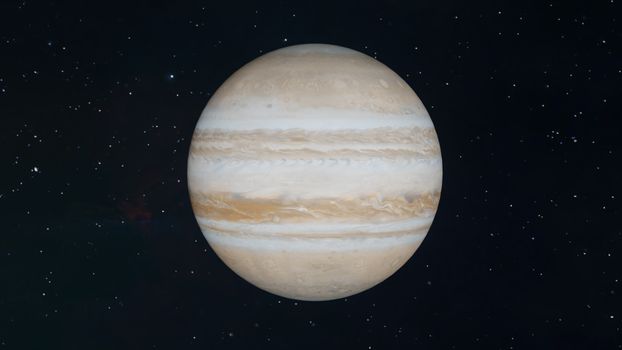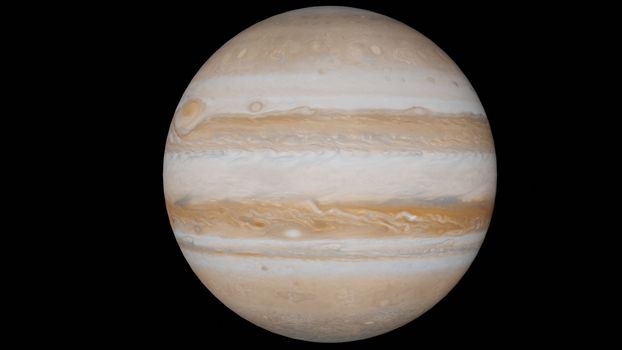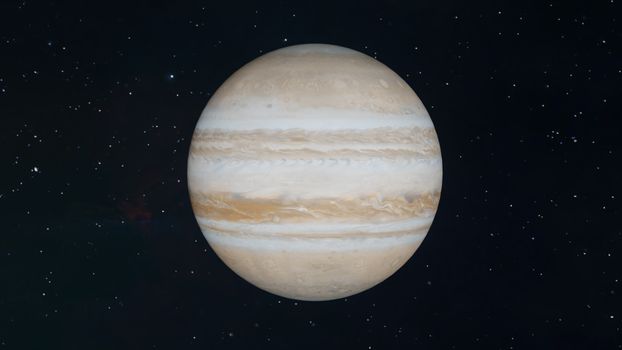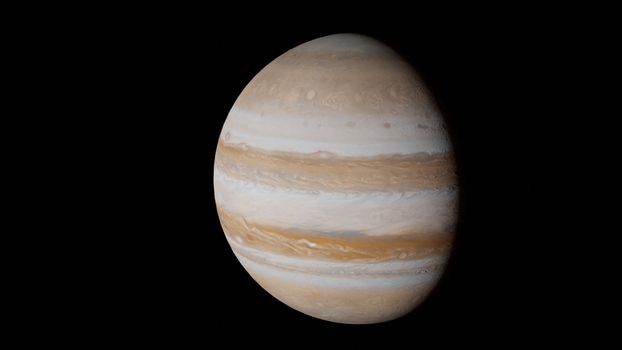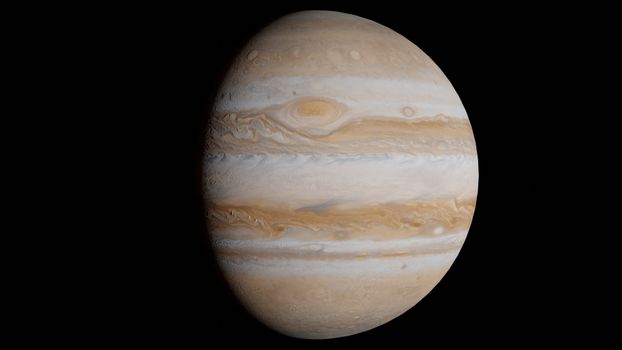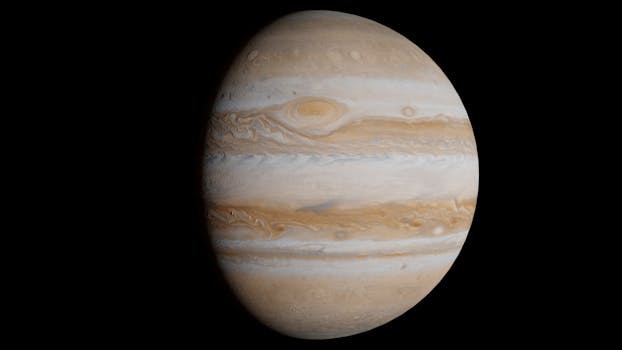
Jupiter is not only the largest planet in our solar system, but its immense gravitational field wields a profound influence that reaches far beyond its swirling clouds and iconic Great Red Spot. Often dubbed the "cosmic bouncer" of the solar system, Jupiter’s gravity has shaped planetary orbits, protected Earth from catastrophic impacts, and even sculpted the asteroid belt. In this article, we pull back the curtain on Jupiter’s gravitational might, exploring the mechanics behind its pull, its sweeping impact on neighboring worlds, and the way it continues to shape the solar system’s evolution.
The Mechanics of Jupiter’s Gravitational Force
Jupiter’s gravity is a consequence of its staggering mass—approximately 318 times that of Earth. This immense bulk, concentrated in a planet with a diameter of about 142,984 kilometers, generates a surface gravity 2.5 times stronger than Earth’s. But it is Jupiter’s position as the most massive object (after the Sun) in the solar system that makes its gravitational influence so far-reaching.
The strength of a planet’s gravitational field is dictated by both its mass and the distance from its center. Newton’s law of universal gravitation explains this relationship: the force decreases with the square of the distance, but with Jupiter’s mass, its reach is extraordinary. For example, a spacecraft passing within 500,000 kilometers of Jupiter would experience about 13 times the gravitational acceleration it would near Earth at the same altitude.
.png)
Jupiter’s dense core and rapid rotation also contribute to its unique gravitational field. The planet completes a rotation every 9.9 hours, which, coupled with its gaseous composition, leads to a pronounced equatorial bulge. This shape slightly modifies its gravity, creating regions of stronger or weaker pull depending on latitude.
Sculpting the Solar System: Jupiter’s Gravitational Reach
Jupiter’s gravitational field has played a pivotal role in shaping the architecture of the solar system. In the early days of planetary formation, its growing mass created powerful tidal forces that cleared out debris, redirected asteroids, and even affected the formation of other planets.
One of Jupiter’s most notable influences is on the asteroid belt. The region between Mars and Jupiter contains millions of rocky bodies, but Jupiter’s regular gravitational tugs have prevented these materials from coalescing into a planet. Instead, the asteroid belt is home to countless objects, many of which are trapped in orbital resonances with Jupiter—meaning their orbits are governed by the timing of Jupiter’s own path around the Sun.
Moreover, Jupiter’s gravity is responsible for the existence of the “Kirkwood gaps”: regions in the asteroid belt with a noticeable scarcity of asteroids. These gaps correspond to orbital distances where Jupiter’s repeated gravitational nudges eject asteroids from those orbits, either sending them into the inner solar system or out into space entirely.
Earth’s Protector: Deflecting Comets and Asteroids
Perhaps the most important effect of Jupiter’s gravity for life on Earth has been its role as a shield against potentially catastrophic impacts. By virtue of its size and position, Jupiter acts as a massive gravitational vacuum cleaner, attracting and capturing or redirecting comets and asteroids that might otherwise cross Earth’s path.
Research published in 1994, after the dramatic collision of Comet Shoemaker-Levy 9 with Jupiter, highlighted this protective function. The comet, broken into 21 fragments, slammed into Jupiter over several days, releasing energy equivalent to 6 million megatons of TNT. If such an object had struck Earth, it could have spelled mass extinction.
Statistical models estimate that Jupiter reduces the number of long-period comets entering the inner solar system by a factor of at least 3. This "gravitational shield" effect is one reason why Earth has experienced relatively few life-threatening impacts over the past several hundred million years.
The Trojan Asteroids: Jupiter’s Gravitational Traps
Jupiter’s gravitational field doesn’t just repel or deflect; it also attracts and traps. The planet is famous for harboring two massive groups of Trojan asteroids—one leading and one trailing its orbit by 60 degrees. These clusters occupy Jupiter’s Lagrange points, regions where the gravitational forces of Jupiter and the Sun balance perfectly, allowing objects to remain stable for billions of years.
There are over 10,000 known Jupiter Trojans, and estimates suggest the total population could rival that of the main asteroid belt. These bodies offer a unique glimpse into the early solar system, as many are thought to be primordial leftovers from planetary formation. NASA’s Lucy mission, launched in 2021, is currently en route to study several of these Trojans up close, aiming to unravel more about the origins of our cosmic neighborhood.
Jupiter’s Reach: Effects on Other Planets and Space Missions
Jupiter’s gravity extends its influence to the orbits and stability of fellow planets. For example, the eccentricity (ovalness) of Mars’ orbit is partly maintained by Jupiter’s periodic gravitational nudges. Over millions of years, this has contributed to climatic fluctuations on Mars, possibly affecting its potential for habitability.
Spacecraft missions have also taken advantage of Jupiter’s might through gravity assists—a technique in which a probe gains speed and alters its trajectory by swinging past a planet. NASA’s Voyager 1 and 2, Galileo, Cassini, and New Horizons missions all used Jupiter’s gravity to slingshot toward their distant targets. In the case of Voyager 1, its flyby of Jupiter in 1979 increased the spacecraft’s velocity by more than 10 kilometers per second, enabling it to reach Saturn and eventually exit the solar system.
To better illustrate Jupiter’s gravitational dominance, consider the following comparative table:
| Planet | Mass (Earth = 1) | Surface Gravity (Earth = 1) | Influence on Solar System |
|---|---|---|---|
| Jupiter | 318 | 2.5 | Main sculptor of asteroid belt, protector from comets, driver of planetary orbits |
| Saturn | 95 | 1.07 | Influences some outer solar system objects, less effect than Jupiter |
| Earth | 1 | 1 | Dominates only its immediate vicinity (Moon, near-Earth asteroids) |
| Mars | 0.11 | 0.38 | Minimal, affected by Jupiter |
Jupiter’s Gravity and the Hunt for Exoplanets
The study of Jupiter’s gravitational field has also informed our search for planets around other stars. Many exoplanets discovered to date are “hot Jupiters”—gas giants orbiting close to their parent stars. Their massive gravitational fields often produce observable "wobbles" in their stars’ motion, a technique known as the radial velocity method.
Closer to home, understanding how Jupiter’s gravity captures, redirects, or ejects smaller bodies has helped astronomers predict the behavior of exoplanetary systems as well. Systems with massive gas giants are often less likely to have stable, Earth-like planets close to their stars, as the giants’ gravity disrupts the formation and orbits of smaller worlds.
Jupiter’s gravitational lessons thus extend not only across space but also through time, helping us decode the evolutionary history of planetary systems, both ours and those light-years away.
Final Reflections on Jupiter’s Gravitational Legacy
Jupiter’s gravitational field is nothing short of a cosmic architect, shaping the solar system’s structure and safeguarding the potential for life on Earth. From corralling asteroids and comets to influencing planetary climates and powering interplanetary missions, Jupiter’s reach is vast and multifaceted. As ongoing missions like NASA’s Juno and Lucy continue to explore this giant’s secrets, we are reminded that the story of our solar system is, in many ways, the story of Jupiter’s gravitational influence—a force that binds, protects, and inspires.