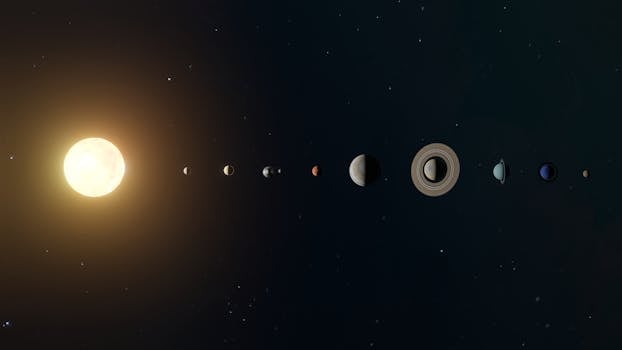
For centuries, Jupiter and Saturn have fascinated astronomers and skywatchers alike. As the two largest planets in our solar system, they dominate the night sky with their brilliance and majesty. But beyond their visual allure, these gas giants are engaged in an intricate gravitational dance that has helped shape the history and structure of our solar system. Investigating the relationship between Jupiter and Saturn reveals not only their mutual interactions but also their profound influence on planetary orbits, asteroid belts, and even the conditions that allowed life to flourish on Earth.
The Giants of the Solar System: Jupiter and Saturn at a Glance
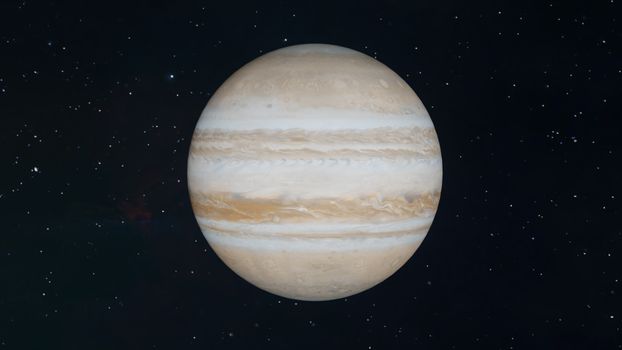
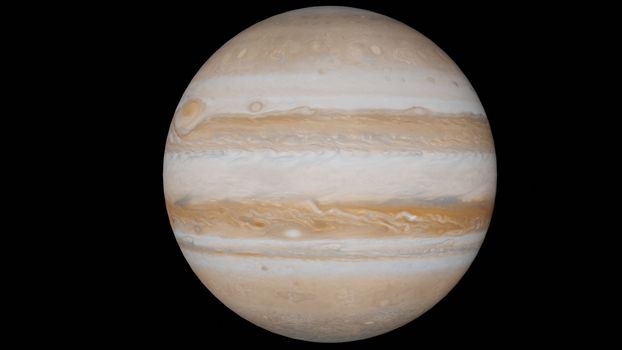
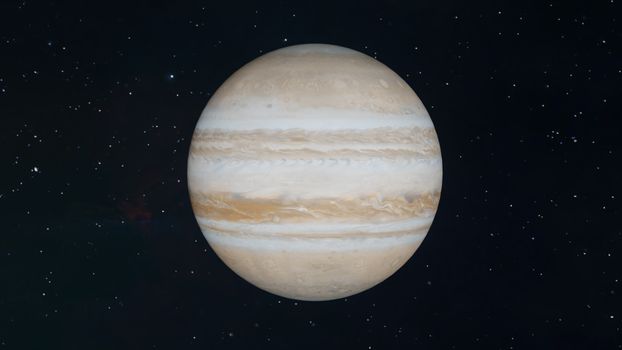
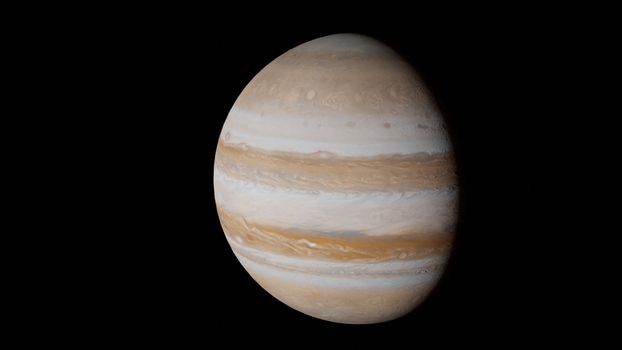
Jupiter and Saturn are the titans of our planetary neighborhood. Jupiter, the fifth planet from the Sun, is the largest, with a diameter of 139,822 kilometers and a mass more than 318 times that of Earth. Saturn, the sixth planet out, is famous for its spectacular ring system and boasts a diameter of 116,464 kilometers—making it the second largest planet.
Both planets are classified as gas giants, composed primarily of hydrogen and helium. Their immense sizes create powerful gravitational fields that exert significant influence not only on each other but on the entire solar system. They are separated by an average distance of roughly 650 million kilometers, but their orbits periodically bring them into notable configurations, such as the famous "Great Conjunction" that occurs every 19.86 years.
.png)
To better visualize their similarities and differences, consider the following comparison:
| Feature | Jupiter | Saturn |
|---|---|---|
| Mean Diameter | 139,822 km | 116,464 km |
| Mass (Earth = 1) | 318 | 95 |
| Distance from Sun | 778 million km | 1.43 billion km |
| Orbital Period | 11.86 years | 29.46 years |
| Number of Moons | 95 (as of 2024) | 146 (as of 2024) |
Celestial Choreography: Orbital Resonance and Gravitational Interactions
The relationship between Jupiter and Saturn is defined by their gravitational interactions and orbital resonance. Orbital resonance occurs when two celestial bodies exert regular, periodic gravitational influences on each other, often because their orbital periods are related by a ratio of whole numbers.
Jupiter and Saturn are near a 5:2 orbital resonance, meaning that for every five orbits Jupiter completes around the Sun, Saturn completes about two. This resonance, known as the "Great Inequality," was first described by Pierre-Simon Laplace in the late 18th century. The resonance causes subtle but important changes in their orbits over time, leading to periodic variations in their distance from each other and from the Sun.
These gravitational tugs are not just mathematical curiosities—they have real effects on the stability of the solar system. For instance, the resonance between Jupiter and Saturn is thought to play a key role in keeping the inner solar system relatively stable, preventing large-scale orbital shifts that could threaten the habitability of planets like Earth.
The Grand Tack Hypothesis: How Jupiter and Saturn Shaped the Early Solar System
One of the most intriguing theories about the early solar system is the "Grand Tack Hypothesis," which postulates a dramatic migration of Jupiter and Saturn during the solar system's infancy, around 4.5 billion years ago.
According to this hypothesis, Jupiter initially migrated inward toward the Sun, reaching as close as 1.5 astronomical units (AU), roughly the current orbit of Mars. However, as Saturn formed and caught up to Jupiter, their mutual gravitational influence caused both planets to reverse course and migrate outward. This "tack" (a sailing term for changing direction) not only halted Jupiter's inward journey but also shaped the distribution of material in the inner solar system.
The Grand Tack Hypothesis helps explain several anomalies:
- The relatively small mass of Mars (only about 11% the mass of Earth) - The composition and structure of the asteroid belt, which contains both rocky and icy bodies - The absence of "super-Earth" planets in the inner solar systemIn essence, the early gravitational dance between Jupiter and Saturn set the stage for the solar system as we know it today, influencing the mass and position of the terrestrial planets.
Jupiter and Saturn’s Influence on the Asteroid Belt and Cometary Traffic
Jupiter and Saturn act as both shepherds and gatekeepers in the solar system, particularly when it comes to the asteroid belt and the influx of comets.
The asteroid belt, located between Mars and Jupiter, is a region containing millions of rocky bodies. Jupiter's massive gravity has prevented these bodies from coalescing into a planet. Resonances with Jupiter, such as the Kirkwood gaps, create regions where the gravitational effects are so strong that asteroids are either ejected from the belt or moved into different orbits.
Saturn, though less massive, also plays a crucial role. When the orbits of Jupiter and Saturn align in certain ways, their combined gravitational pull can send asteroids or comets careening toward the inner solar system—or out into interstellar space. In fact, studies suggest that Jupiter and Saturn together reduce the likelihood of catastrophic impacts on Earth by deflecting or capturing potential threats. For example, Jupiter alone is estimated to absorb or eject over 90% of long-period comets that enter the inner solar system.
The Great Conjunctions: A Celestial Spectacle and Scientific Opportunity
Every 19.86 years, Jupiter and Saturn appear to pass very close to each other in the sky, in an event known as a "Great Conjunction." These alignments have been observed for millennia, with records dating back to Babylonian astronomers around 7th century BCE.
The Great Conjunction is not only a visual wonder but also a scientific opportunity. During these events, astronomers can study the atmospheres and magnetospheres of both planets with Earth-based telescopes and space missions. The 2020 conjunction, for example, brought the two giants to within just 0.1 degrees of each other—closer than they had appeared in nearly 400 years.
Great Conjunctions also played a key role in historical astronomy. Johannes Kepler, for instance, used the timing of these events to refine his laws of planetary motion. Today, these conjunctions remain a highlight for both professional astronomers and amateur skywatchers.
Mutual Magnetospheres and Atmospheric Mysteries
While Jupiter and Saturn are separated by vast distances, their massive magnetospheres—the regions dominated by their magnetic fields—are among the most powerful in the solar system. Jupiter's magnetosphere, for example, is nearly 20,000 times stronger than Earth's, while Saturn's is about 580 times stronger. These magnetospheres create complex interactions with the solar wind and, occasionally, each other.
When both planets are on the same side of the Sun during a Great Conjunction, some scientists have speculated about potential interactions between their magnetospheres and the heliosphere (the Sun's magnetic domain). While direct magnetospheric interaction is minimal due to the great distance, the combined gravitational and electromagnetic effects of these giants can influence the broader structure of the solar wind and the distribution of charged particles throughout the solar system.
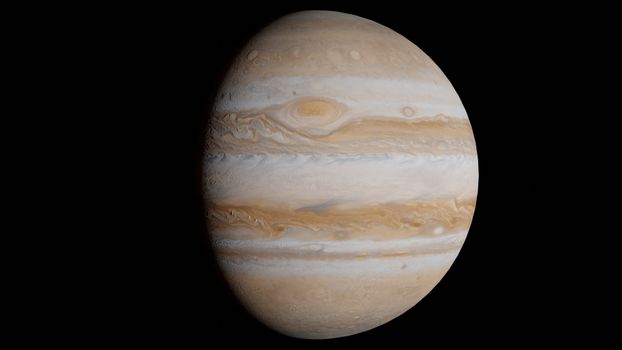
Additionally, both Jupiter and Saturn are known for their dramatic atmospheric phenomena. Jupiter’s Great Red Spot and Saturn’s hexagonal storm at its north pole are enduring mysteries. Understanding the similarities and differences between their atmospheric dynamics helps scientists refine models of planetary weather and magnetic field generation.
Final Insights: The Enduring Bond Between Jupiter and Saturn
The relationship between Jupiter and Saturn is more than just a tale of two planets orbiting the Sun. Their mutual gravitational pull, orbital resonances, and historic migrations have left indelible marks on the solar system's architecture. From shaping the asteroid belt to influencing the formation of the inner planets, these gas giants play a pivotal role in the ongoing story of our cosmic neighborhood.
Their periodic conjunctions inspire both wonder and scientific inquiry, while their interactions continue to provide clues about planetary formation, migration, and the long-term stability of solar systems. As new missions like the James Webb Space Telescope and future Jupiter/Saturn probes expand our understanding, the intricate relationship between these two giants remains a frontier for discovery.