Juno Mission: Unmasking the Secrets of Jupiter
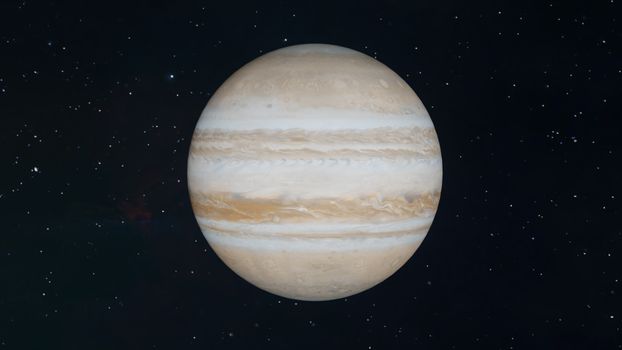
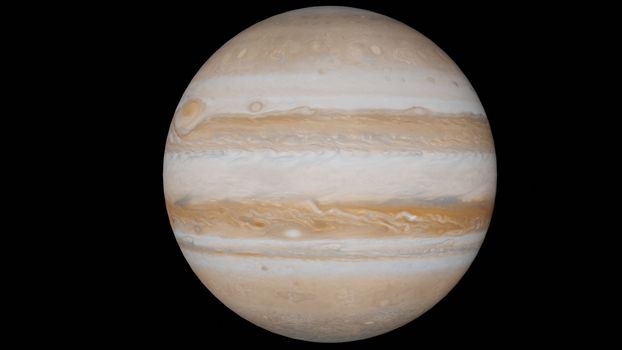
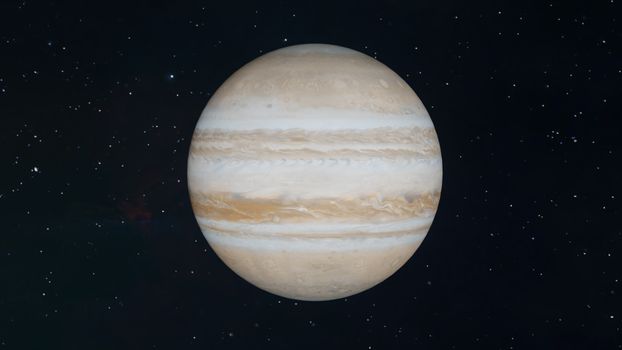
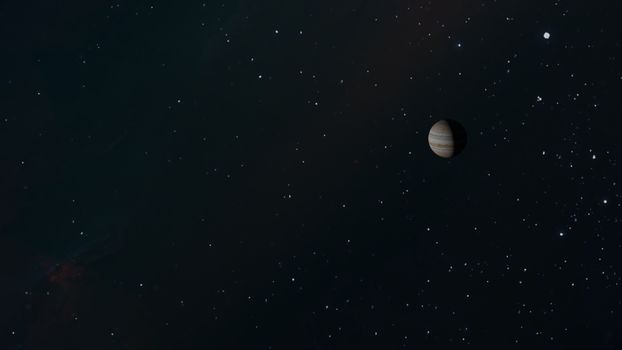
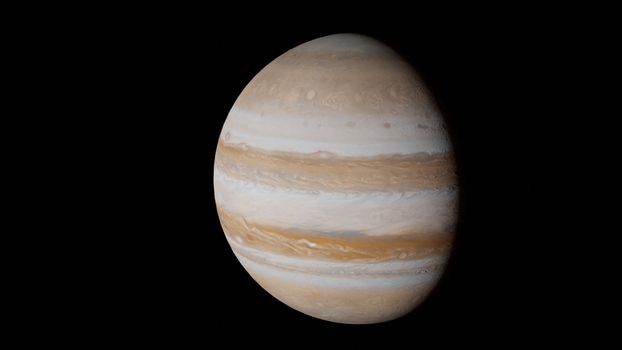
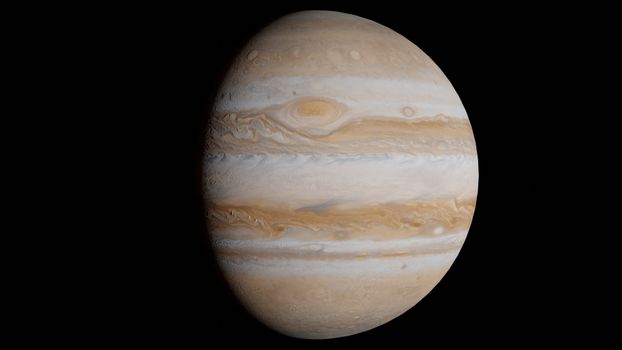
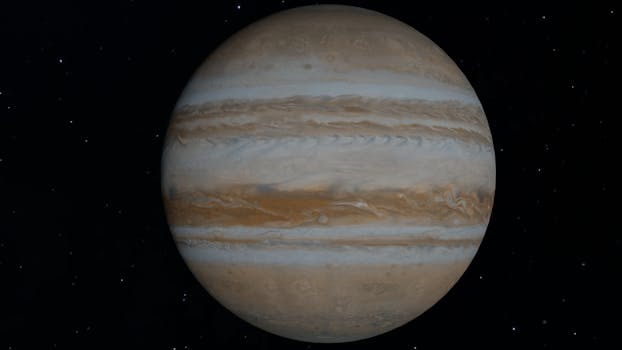
Few feats in modern space exploration can match the daring ambition and scientific revelations of NASA’s Juno mission. Launched in 2011, Juno has orbited Jupiter since 2016, delivering a constant stream of jaw-dropping images and unparalleled data. But beyond stunning visuals, Juno’s true legacy lies in its ability to peel back the layers of the giant planet, revealing secrets about Jupiter’s formation, structure, atmosphere, and magnetic environment that were previously beyond our reach. As humanity’s eyes and ears in the Jovian system, Juno is rewriting our understanding of the largest planet in our solar system—and, by extension, the early evolution of our cosmic neighborhood.
The Genesis and Journey of the Juno Mission
The Juno mission was conceived to answer fundamental questions about Jupiter’s origin and structure—questions that have puzzled scientists since Galileo first spotted the planet’s moons in 1610. NASA selected Juno as the second mission in its New Frontiers program, following the successful New Horizons mission to Pluto.
Juno was launched atop an Atlas V rocket on August 5, 2011. The spacecraft traveled nearly 2.8 billion kilometers (1.74 billion miles) before entering Jupiter’s orbit on July 4, 2016. Uniquely, Juno became the first solar-powered spacecraft to operate at such a great distance from the Sun, relying on three massive solar panels spanning 20 meters (66 feet).
.png)
Juno’s highly elliptical orbit—swinging as close as 4,200 kilometers (2,600 miles) above Jupiter’s clouds and then far out to minimize radiation exposure—allows it to observe the planet from pole to pole. Its nominal mission was planned for 37 orbits over 20 months, but due to the mission’s resounding success and robust engineering, NASA has extended Juno’s operations through at least September 2025.
Peering Beneath the Clouds: Juno’s Scientific Payload
Juno carries a suite of nine scientific instruments, each custom-designed to probe a different aspect of Jupiter’s complex environment. These instruments allow researchers to study everything from the planet’s turbulent atmosphere to its powerful magnetic field.
Some of the most notable payloads include:
- JunoCam: A visible-light camera that provides striking color images of Jupiter’s poles and cloud tops, used for both science and public engagement. - Microwave Radiometer (MWR): Measures thermal emissions at six wavelengths, revealing the structure of Jupiter’s atmosphere up to 350 kilometers deep. - Magnetometer (MAG): Maps Jupiter’s intense magnetic field in detail, uncovering secrets about the planet’s internal dynamo. - Jovian Infrared Auroral Mapper (JIRAM): Observes Jupiter’s auroras and probes deep into the planet’s atmosphere using infrared wavelengths.These instruments, working in concert, have collected over 60 terabytes of data as of 2024—offering a treasure trove for planetary scientists worldwide.
Rewriting Jupiter’s Story: Major Discoveries from Juno
Juno’s findings have upended many long-standing assumptions about Jupiter and introduced new mysteries. Here are just a few groundbreaking discoveries:
1. $1 Scientists expected Jupiter to have a compact, rocky core. Instead, data indicate a “diluted” or “fuzzy” core, where heavy elements are mixed with lighter hydrogen and helium over a vast region, perhaps 30-50% of the planet’s radius. This suggests Jupiter may have experienced a colossal collision with another protoplanet early in its history. 2. $1 Juno revealed enormous, persistent cyclones at both poles—eight at the north, five at the south—arranged in striking geometric patterns. Each cyclone is about 4,000 to 7,000 kilometers wide, larger than the continental United States. These formations are unlike anything found elsewhere in the solar system. 3. $1 Unlike previous spacecraft, Juno’s microwave radiometer has shown that Jupiter’s famous bands and zones extend much deeper than expected—over 3,000 kilometers below the visible cloud tops. The roots of Jupiter’s Great Red Spot also reach far deeper than previously thought, helping explain its centuries-long persistence. 4. $1 Juno has mapped Jupiter’s magnetic field in unprecedented detail, finding that it is not symmetrical or uniform. One region, called the “Great Blue Spot,” is a concentrated area of intense magnetic flux near the equator. This hints at complex processes occurring within Jupiter’s metallic hydrogen interior.Juno’s Approach: A Comparison to Past Jupiter Missions
Jupiter has been visited by several spacecraft, most notably Pioneer 10 and 11, Voyager 1 and 2, Galileo, and now Juno. Each brought its own toolkit and mission profile. Here’s a comparison of the key missions:
| Mission | Year(s) Active | Main Power Source | Primary Science Goals | Key Contributions |
|---|---|---|---|---|
| Pioneer 10 & 11 | 1973-1974 | Radioisotope | First flybys, measure radiation | First images, measured radiation belts |
| Voyager 1 & 2 | 1979 | Radioisotope | Atmosphere, moons, rings | Discovered ring system, volcanic activity on Io |
| Galileo | 1995-2003 | Radioisotope | Atmosphere, moons, magnetosphere | Atmospheric probe, observed Galilean moons |
| Juno | 2016-present | Solar | Internal structure, atmosphere, magnetosphere | Fuzzy core, deep atmospheric flows, detailed magnetic mapping |
Juno stands apart as the first solar-powered mission to Jupiter and the first to focus on the planet’s deep interior and polar regions.
Unveiling Jupiter’s Role in Solar System Formation
Understanding Jupiter is key to understanding the early solar system. As the largest planet—more than twice as massive as all the other planets combined—Jupiter’s formation shaped the destinies of its neighbors. Juno’s data are helping scientists answer critical questions about planetary origins:
- $1 Juno’s measurements of Jupiter’s gravitational field and atmospheric composition allow scientists to test competing formation theories. The “fuzzy” core and abundance of heavy elements support a model where Jupiter may have accreted rapidly, possibly swallowing other planetary embryos in the process. - $1 Juno has measured water concentrations at Jupiter’s equator, finding values consistent with the solar system average—about 0.25% by mass. This supports models where Jupiter formed early, before the solar nebula’s water was depleted. - $1: By understanding how Jupiter formed and evolved, researchers can better interpret the growing catalog of “hot Jupiters” and other giant exoplanets observed around other stars.Juno’s Extended Mission: Moons, Rings, and More
While the primary mission focused on Jupiter itself, Juno’s extended mission is bringing a new focus: the planet’s fascinating system of moons and rings. In 2021, Juno performed the closest flybys in decades of Ganymede and Europa, two of Jupiter’s four largest moons. The spacecraft’s instruments have mapped Ganymede’s ice shell and magnetic field, and searched Europa for evidence of water plumes.
Juno is also investigating Jupiter’s faint ring system and smaller moons, offering the best data since the Galileo mission. These efforts set the stage for future exploration, including ESA’s Jupiter Icy Moons Explorer (JUICE) and NASA’s Europa Clipper mission, both scheduled for launch later this decade.
Final Reflections: Juno’s Lasting Legacy at Jupiter
As Juno continues its extended mission, its legacy is already secure. By providing the first detailed look beneath Jupiter’s clouds and into its deep interior, Juno has transformed planetary science. The mission’s findings are helping to answer age-old questions about how giant planets form and evolve—not just in our solar system, but throughout the galaxy.
Juno’s combination of advanced scientific instruments, robust engineering, and innovative polar orbit has proven that solar-powered spacecraft can thrive even in the distant reaches of our solar system. As it continues to explore, Juno is not just unmasking the secrets of Jupiter; it’s setting a new standard for interplanetary exploration.