The Mysterious Connection Between Jupiter and the Sun
The solar system is a complex cosmic stage, and in this grand performance, two of its lead actors—Jupiter and the Sun—share a relationship that is as profound as it is mysterious. While the Sun is the life-giving center of our planetary neighborhood, Jupiter is its giant guardian, a planet more massive than all its siblings combined. But their connection goes far beyond mere proximity. Recent discoveries reveal a web of interactions—magnetic, gravitational, and energetic—linking the gas giant and the blazing star in ways that are only now coming to light. This article delves into the enigmatic bond between Jupiter and the Sun, exploring how their cosmic dance shapes everything from planetary weather to the dynamics of the entire solar system.
Jupiter: The Solar System’s Second Powerhouse
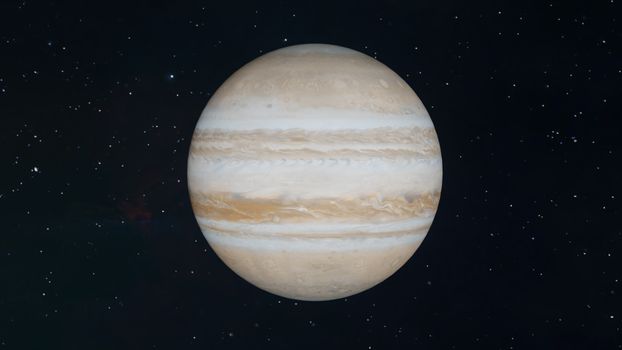
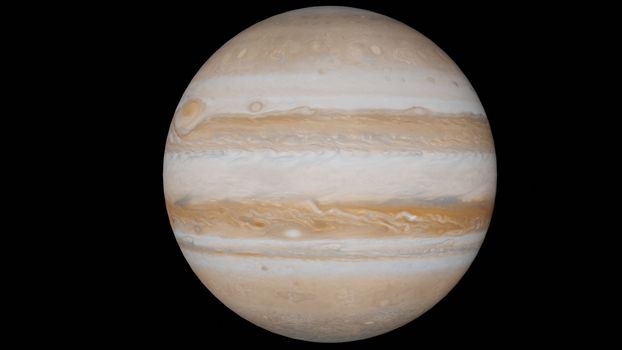
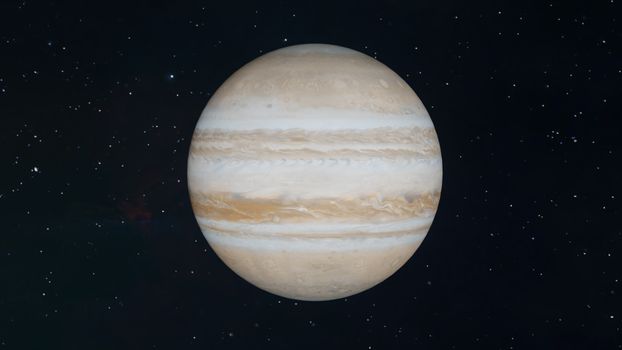
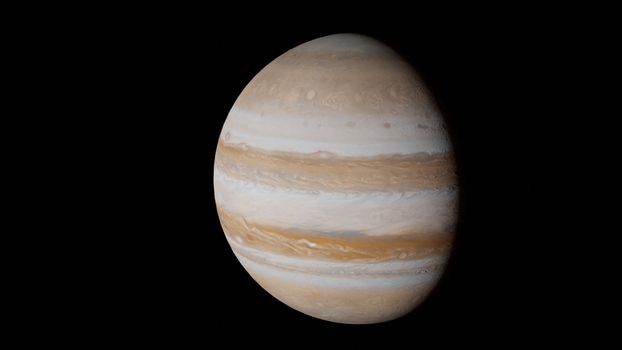
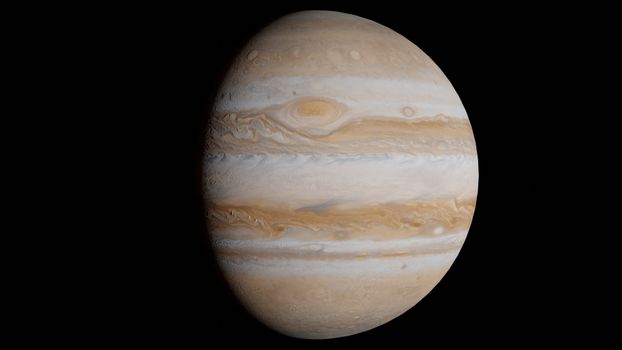
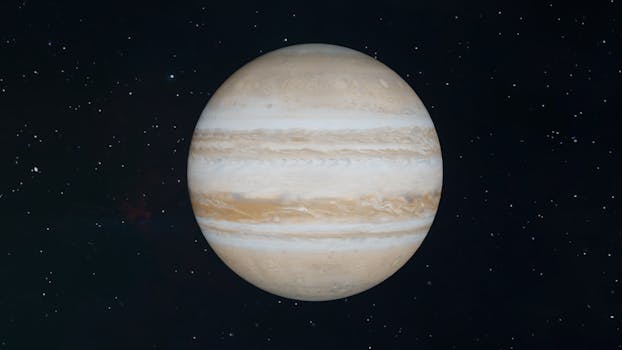
Jupiter is often called the king of the planets—and for good reason. With a mass 318 times that of Earth and a volume large enough to contain more than 1,300 Earths, Jupiter is the largest planet in our solar system. But its influence isn’t just a matter of size. Jupiter’s gravity, magnetism, and composition make it a critical player in the solar system’s evolution.
Most notably, Jupiter has a magnetic field 20,000 times stronger than Earth’s, stretching millions of kilometers into space. This immense field forms a magnetosphere so vast that it could contain the Sun itself. Scientifically, Jupiter is described as a failed star because, although it contains much of the same hydrogen and helium as the Sun, it never gained enough mass to ignite the nuclear fusion that powers stars. Still, Jupiter emits more energy than it receives from the Sun, thanks to residual heat from its formation and ongoing contraction. This trait makes it a unique energy source in the solar system—second only to the Sun itself.
.png)
The Sun’s Influence on Jupiter’s Atmosphere and Magnetosphere
The Sun is, of course, the dominant force in the solar system, providing light, heat, and the solar wind—a stream of charged particles that flows outward in all directions. This solar wind interacts dramatically with Jupiter, triggering a cascade of effects both visible and invisible.
One of the most striking examples is Jupiter’s auroras. Much like the northern and southern lights on Earth, Jupiter’s poles are ringed with glowing auroras. However, these auroras are hundreds of times more powerful than Earth’s, with some releasing up to a trillion watts of power. The Sun’s charged particles, when they collide with Jupiter’s magnetosphere, drive these spectacular light shows.
Moreover, solar storms—bursts of energy and particles from the Sun—can compress Jupiter’s magnetosphere, alter its radiation belts, and even influence weather patterns deep within Jupiter’s swirling clouds. Measurements taken by NASA’s Juno spacecraft have shown that changes in solar activity are closely mirrored by shifts in Jupiter’s magnetic and atmospheric behavior. For example, during periods of heightened solar activity, Jupiter’s auroras intensify, and its radiation belts become more energetic.
Jupiter’s Gravitational Dance with the Sun
While the Sun’s energy influences Jupiter, the giant planet also exerts its own powerful gravitational pull in return. Jupiter’s gravity is so significant that it causes the Sun itself to “wobble” slightly as both bodies orbit their common center of mass, known as the barycenter. For most planets, this barycenter lies within the Sun, but for Jupiter, the barycenter sits just above the Sun’s surface—an astonishing testament to Jupiter’s mass.
This relationship has far-reaching consequences. Jupiter’s orbit stabilizes the orbits of other planets and helps shape the overall architecture of the solar system. Without Jupiter’s presence, it is possible that the inner solar system—including Earth—would have been bombarded more frequently by comets and asteroids, potentially making life as we know it impossible.
Jupiter also influences the Sun’s own motion through the galaxy. Over the course of its 11.86-year orbit, Jupiter tugs on the Sun, causing subtle shifts in its trajectory. This effect is so pronounced that astronomers searching for exoplanets often look for similar wobbles in distant stars—a method that has led to the discovery of thousands of worlds beyond our solar system.
Energy Exchange: Radiation, Magnetic Fields, and Solar Cycles
The energetic relationship between Jupiter and the Sun is not limited to gravity and solar wind. There is growing evidence of electromagnetic interactions that may be even more mysterious. Jupiter’s powerful radio emissions, for instance, can be influenced by the Sun’s activity. During solar flares and coronal mass ejections, the intensity and frequency of Jupiter’s radio waves often spike.
These signals have been detected by radio telescopes on Earth since the 1950s, and their study has led to new insights into both planetary and solar physics. In particular, the interaction between Jupiter’s magnetic field and the Sun’s changing output seems to drive cycles of enhanced radiation and magnetic storms on and around the giant planet.
Interestingly, the Sun’s own 11-year activity cycle—marked by fluctuating numbers of sunspots and varying levels of solar radiation—closely matches Jupiter’s orbital period. This synchronicity has fueled speculation that the two bodies may influence each other’s cycles in subtle ways. Some scientists have even proposed that Jupiter’s gravitational and magnetic fields could exert a small but measurable effect on the timing of solar activity, though this remains an open question.
Comparative Data: Jupiter vs. the Sun
To better understand the relationship between Jupiter and the Sun, it’s helpful to compare their physical and energetic properties. The table below provides a snapshot of key attributes.
| Property | Jupiter | The Sun |
|---|---|---|
| Mass | 1.898 × 1027 kg | 1.989 × 1030 kg |
| Diameter | 142,984 km | 1,391,000 km |
| Magnetic Field Strength | Up to 20,000 times Earth's | 1-2 times Earth's at surface |
| Energy Output | Emits 1.6 times more energy than it receives from the Sun | Main energy source of the solar system |
| Rotation Period | ~9.9 hours | ~25 days (equator) |
| Orbital Period (around Sun) | 11.86 years | — |
| Auroral Power Output | Up to 1 trillion watts | Earth: up to 1 billion watts for comparison |
These figures reveal just how exceptional both bodies are, and why their interaction is a subject of intense study.
Jupiter as a Solar System Shield
One of the most dramatic aspects of the Jupiter-Sun relationship is Jupiter’s role as a cosmic shield. Thanks to its immense mass and gravity, Jupiter acts as a vacuum cleaner for the solar system, capturing or deflecting many comets and asteroids that might otherwise threaten the inner planets.
Statistical studies suggest that Jupiter’s presence has reduced the impact rate of large objects on Earth by up to 99%. For example, the famous Shoemaker-Levy 9 comet, which spectacularly collided with Jupiter in 1994, was just one of many such objects drawn in by Jupiter’s gravitational field. Without Jupiter’s intervention, such impacts could have posed a direct threat to life on Earth.
This protective role is intimately connected to the Sun’s influence. The solar wind, modulated by the Sun’s activity, interacts with Jupiter’s magnetosphere, helping to sweep away or redirect smaller charged particles and cosmic debris. In this way, the Sun and Jupiter work together—sometimes in opposition, sometimes in harmony—to sculpt the environment of the inner solar system.
The Unsolved Mysteries: Is There a Deeper Link?
Despite decades of observation and exploration, many aspects of the Jupiter-Sun relationship remain unexplained. Some researchers have pointed to curious correlations between Jupiter’s position and the intensity of solar cycles, suggesting a possible gravitational or electromagnetic influence on solar activity. While no definitive mechanism has been identified, ongoing data from missions like Juno and the Solar and Heliospheric Observatory (SOHO) continue to shed light on these tantalizing possibilities.
Moreover, the study of exoplanetary systems has revealed that giant planets like Jupiter may be common around other stars—and that their presence can dramatically alter the evolution and habitability of those systems.
The growing field of heliophysics, which studies the Sun’s influence across the solar system, increasingly recognizes Jupiter as a critical partner in understanding not just our own cosmic neighborhood, but the broader processes that govern planetary systems throughout the galaxy.
Conclusion
The connection between Jupiter and the Sun is a multi-layered story of energy, gravity, magnetism, and cosmic history. While much has been learned about how these two giants interact—from the dazzling auroras at Jupiter’s poles to the gravitational dances that shape the solar system—much remains to be discovered. As instruments grow more sensitive and missions probe ever deeper into the mysteries of space, the strange and powerful relationship between Jupiter and the Sun is sure to yield even more astonishing secrets. In unraveling this celestial partnership, we not only learn about our own solar system’s past and future, but also about the forces that may shape distant worlds and the potential for life beyond Earth.