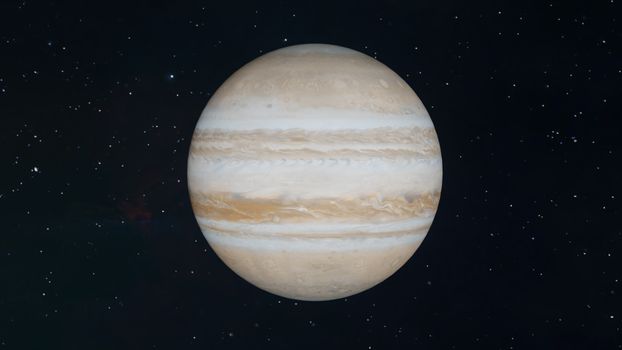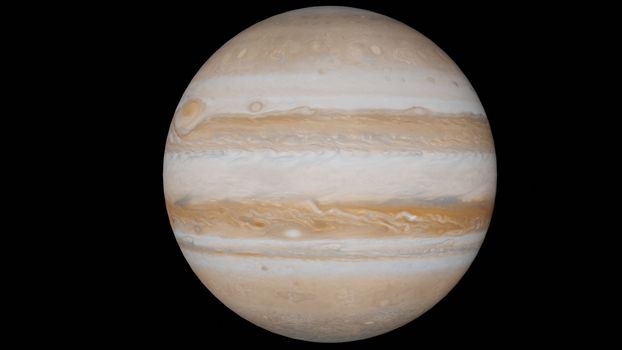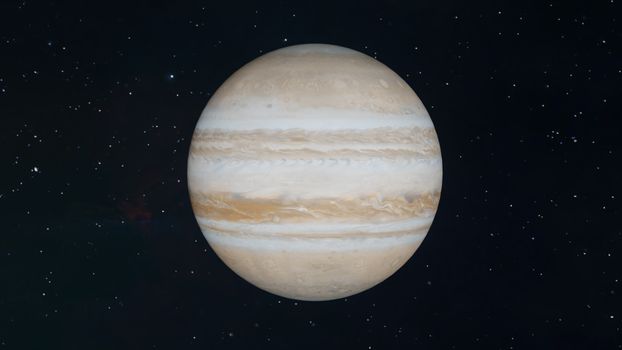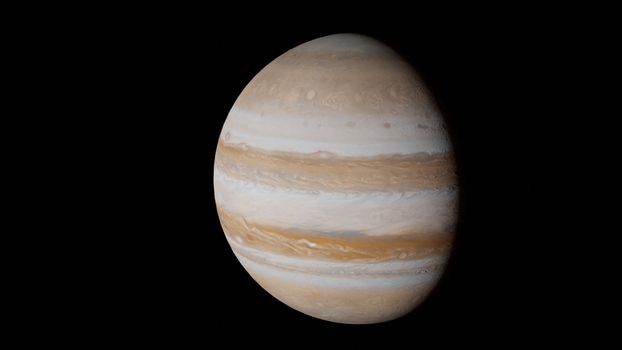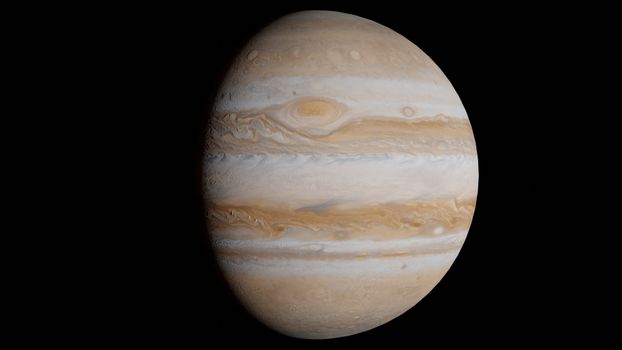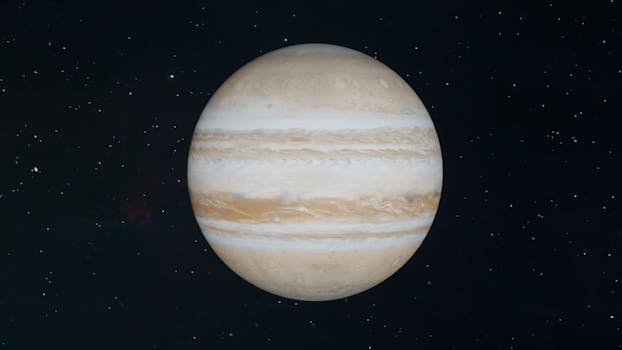
Jupiter, the behemoth of our solar system, commands attention not only for its immense mass and swirling storms but also for its retinue of over 90 moons. From the volcanic Io to the ice-crusted Europa, Jupiter’s moons are more than just satellites — they are dynamic worlds that have influenced planetary science for centuries. But could the dance of these moons around their gas giant parent offer clues about how exoplanets—planets orbiting stars outside our solar system—form and evolve? Recent astronomical research suggests a remarkable connection. By studying the intricate gravitational interplay and physical characteristics of Jupiter’s moons, scientists are uncovering new insights into the formation and development of exoplanets around distant stars.
This article explores how the legacy of Jupiter’s moons helps unravel the mysteries of exoplanets, from migration patterns to habitability prospects, and why these Jovian satellites are key reference points for understanding worlds far beyond our own.
Jupiter’s Moons: Natural Laboratories for Planetary Formation
Jupiter’s four largest moons—Io, Europa, Ganymede, and Callisto—collectively known as the Galilean moons, provide an exceptional cross-section of planetary evolution. These moons, discovered by Galileo Galilei in 1610, vary dramatically in composition, geological activity, and potential for habitability. For example:
.png) - Io is the most volcanically active body in the solar system.
- Europa’s smooth, icy surface hides a vast subsurface ocean.
- Ganymede is the only moon with its own magnetic field.
- Callisto sports one of the oldest, most cratered surfaces.
- Io is the most volcanically active body in the solar system.
- Europa’s smooth, icy surface hides a vast subsurface ocean.
- Ganymede is the only moon with its own magnetic field.
- Callisto sports one of the oldest, most cratered surfaces.
These diverse characteristics are not random. Instead, they reflect the underlying processes that also govern the birth and development of planets around other stars. The key lies in the so-called "mini solar system" model: the way Jupiter's gravity shaped its moons mimics how stars shape the planets that orbit them.
Recent simulations have shown that the Galilean moons likely formed from a circumplanetary disk of gas and dust, much like planets form around young stars. The distribution of materials in this disk—ice, rock, and gas—led to the moons’ distinct compositions. For exoplanets, similar disks around distant stars set the initial conditions for planet formation, influencing whether a planet becomes a rocky world, a gas giant, or something in between.
Moons and Migration: Clues to Exoplanet Orbits
One of the enduring mysteries of exoplanet science is the prevalence of “hot Jupiters”—gas giants orbiting perilously close to their stars, often much closer than Mercury is to the Sun. Such orbits defy the predictions of classical planet formation theory, which suggests gas giants should form farther out where icy material is abundant.
Jupiter’s moons offer a potential explanation through the phenomenon of orbital migration. Studies of the Galilean moons reveal that they likely migrated inward after their formation. This migration was driven by interactions with the circumplanetary disk and with each other, as well as with Jupiter’s powerful gravitational field.
In a similar fashion, exoplanets may migrate through their natal disks, moving from cold outer regions to hot inner ones. In fact, numerical models that accurately reproduce the distribution of Jupiter’s moons are now being applied to exoplanet systems, helping to explain the diverse range of planetary orbits observed by missions such as NASA’s Kepler and TESS.
For example, Ganymede and Callisto’s relatively wide orbits, compared to Io and Europa's tighter paths, mirror the spacing of multi-planet exosystems. These patterns suggest that the physical processes shaping Jupiter’s moons are universal, governing planet formation across the galaxy.
Resonance and Stability: The Jovian Blueprint for Exoplanet Systems
A striking feature of Jupiter’s moons is their orbital resonance. Io, Europa, and Ganymede are locked in a 4:2:1 resonance, meaning for every four orbits of Io, Europa makes two, and Ganymede makes one. This resonance prevents chaotic gravitational interactions that could otherwise destabilize their orbits.
This mechanism is not unique to Jupiter. Many exoplanetary systems exhibit similar resonant chains. The TRAPPIST-1 system, for example, features seven Earth-sized planets in tight orbits, many of which are in resonance. These configurations enhance the long-term stability of planetary systems and are thought to promote the retention of atmospheres and, potentially, conditions conducive to life.
The table below compares key resonant relationships observed in both Jupiter's moons and exoplanetary systems:
| System | Number of Bodies | Resonance Pattern | Implications for Stability |
|---|---|---|---|
| Jupiter’s Galilean Moons | 3 (Io, Europa, Ganymede) | 4:2:1 | Prevents close encounters; maintains orbital spacing |
| TRAPPIST-1 | 7 exoplanets | Several pairs in 3:2, 4:3, and 5:3 | Enhances system longevity; supports atmospheric retention |
| Kepler-223 | 4 exoplanets | 8:6:4:3 | Suggests migration and disk interactions |
These resonant relationships, first observed in our own backyard, provide a blueprint for interpreting the architecture of distant planetary systems. They also support the idea that planet-planet and planet-disk interactions are fundamental to the evolution of exoplanet orbits.
Habitability Lessons from Europa and Beyond
Jupiter’s moon Europa has captured the imagination of both scientists and the public for decades. Its subsurface ocean, shielded from radiation by a thick ice shell, is considered one of the most promising locations for life beyond Earth within our solar system. This realization has profound implications for exoplanet research.
Planets and large moons in the habitable zones of other stars might also harbor subsurface oceans, especially if they are subject to tidal heating — the process by which gravitational forces stretch and heat a world’s interior. On Europa, tidal forces from Jupiter generate enough heat to maintain liquid water beneath the ice, despite surface temperatures plunging to -160°C (-260°F).
Exoplanets orbiting close to their stars, or exomoons orbiting giant planets, may experience similar tidal effects. Recent studies estimate that up to 25% of known exoplanets could be ocean worlds, some possibly with subsurface seas akin to Europa’s. Understanding how Jupiter’s moons retain and recycle their water has become a cornerstone of the search for habitable worlds across the galaxy.
Observational Techniques: Using Jupiter’s Moons as Exoplanet Analogs
Astronomers frequently use Jupiter’s moons as analogs to interpret exoplanet data. The Galileo and Juno missions, for instance, provided high-resolution imagery and compositional maps of the Jovian system, allowing researchers to model the atmospheres, surfaces, and internal structures of distant exoplanets and exomoons.
Spectroscopy, a technique that analyzes light to determine chemical composition, was first perfected on Jupiter’s moons. Today, the same spectral fingerprints are used to identify water, methane, and other key molecules in exoplanetary atmospheres.
Moreover, transit observations—monitoring the dip in starlight as a planet passes in front of its host star—are informed by lessons learned from watching Jupiter’s moons transit and eclipse each other. These methods have enabled the discovery of over 5,000 exoplanets as of 2024, with NASA’s James Webb Space Telescope poised to reveal atmospheric details at unprecedented resolution.
Jupiter’s moons have even inspired new missions: the upcoming European Space Agency JUICE (JUpiter ICy moons Explorer) and NASA’s Europa Clipper will probe these worlds in detail, providing crucial data to refine models of exoplanet formation and habitability.
Final Reflections: Jupiter’s Moons as Cosmic Time Machines
The influence of Jupiter’s moons extends far beyond the boundaries of our solar system. By serving as miniature laboratories for planetary formation, migration, and resonance, they offer a window into the processes that shape worlds orbiting other stars. As astronomers piece together the history etched into Io’s fiery volcanoes, Europa’s hidden seas, and Ganymede’s magnetic field, they are simultaneously decoding the origins and destinies of exoplanets light-years away.
In the coming decades, continued exploration of Jupiter’s moons and observation of distant planetary systems will deepen our understanding of how common Earth-like worlds might be in the universe. Thanks to these icy and rocky companions of Jupiter, humanity is closer than ever to answering the age-old question: are we alone?