Jupiter's Lesser Known Moons: A Journey Beyond Io and Europa
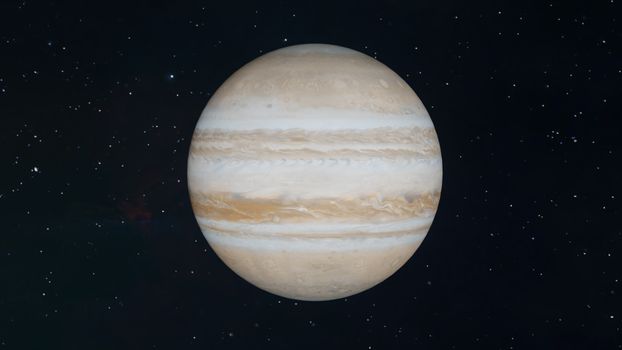
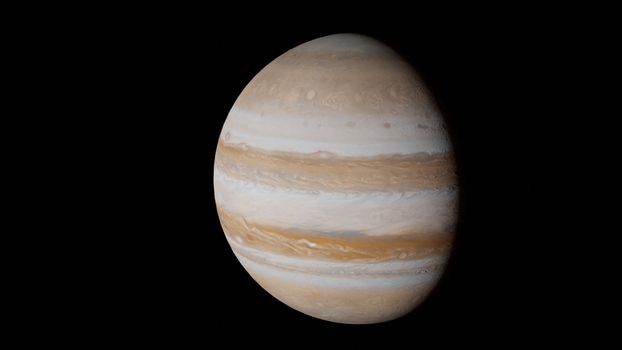
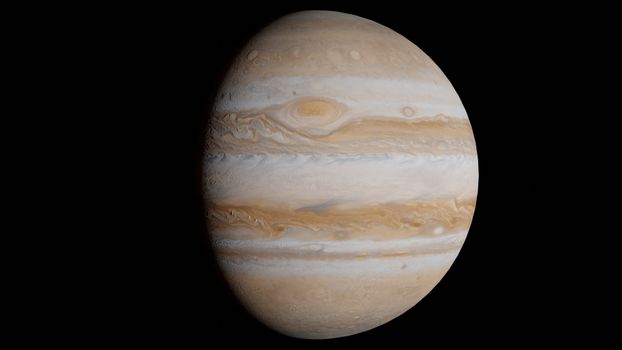
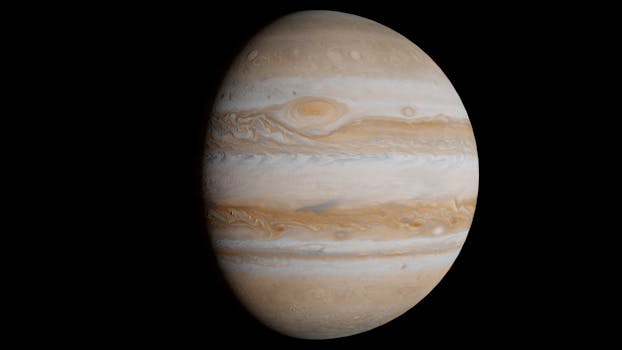
Among the wonders of our solar system, Jupiter stands out not only for its sheer size and swirling storms but also for its eclectic family of moons. While names like Io, Europa, Ganymede, and Callisto—the famous Galilean moons—often headline space news, Jupiter’s entourage extends far beyond these giants. In fact, as of 2024, Jupiter boasts a confirmed count of 95 moons, with dozens remaining shrouded in mystery. These lesser known moons, ranging from tiny captured asteroids to irregularly shaped bodies with puzzling orbits, offer a fascinating glimpse into the complexity of our solar system's largest planet.
Join us on a journey to explore Jupiter’s lesser known moons: their origins, discoveries, unique features, and what they reveal about planetary science—venturing into realms that even seasoned space enthusiasts may find surprising.
Jupiter's Moon Family: More Than Meets the Eye
Jupiter’s gravitational grip is legendary. Not only does it shepherd comets and asteroids, but it also hosts the largest collection of moons in the solar system. While the Galilean moons draw most of the attention due to their size and scientific intrigue, more than 90 smaller moons orbit further out, in distant and eccentric paths.
.png)
These lesser known moons are typically grouped into families based on their orbits and characteristics. Most of them are irregular moons—small, often captured objects that follow highly inclined and sometimes retrograde orbits (meaning they move in the opposite direction to Jupiter’s rotation). Some are just a few kilometers across and dimly visible, making them a challenge to spot even with advanced telescopes.
For instance, Himalia, the largest of the irregular moons, measures about 170 kilometers across—tiny compared to Europa’s 3,121 kilometers, but still significant among the outer moons. Others, like Carme, Pasiphae, and Sinope, are part of clusters that hint at violent, collisional pasts.
The Discovery of Jupiter’s Lesser Known Moons
The hunt for Jupiter’s moons stretches back over 400 years, but the majority of its smaller satellites have only come to light in recent decades. The first four (the Galilean moons) were discovered by Galileo Galilei in 1610. For centuries, only a handful more were known, with discoveries trickling in thanks to improved telescopes and photographic techniques.
A breakthrough came in the late 20th and early 21st centuries. With the advent of digital imaging and large sky surveys, astronomers began to detect much fainter and smaller objects orbiting Jupiter. Between 2000 and 2018, dozens of new moons were identified, often by teams led by astronomers like Scott S. Sheppard and David Jewitt.
As of 2024, the number of confirmed Jupiter moons stands at 95, a number likely to grow as surveys continue. Many of these moons have diameters of less than 5 kilometers, and some may be as small as 1 kilometer across. Their discovery showcases the remarkable capabilities of modern astronomical technology and the persistent curiosity of planetary scientists.
Families and Groups: The Clans of Jupiter’s Outer Moons
The outer moons of Jupiter are not just a random collection. Over time, astronomers have noticed that many share similar orbital characteristics, suggesting common origins. These “families” or “groups” are believed to be the debris of larger parent bodies that were shattered by collisions in the distant past.
Here’s a comparative overview of several of Jupiter’s notable moon groups:
| Group Name | Number of Moons | Orbital Distance (million km) | Inclination (degrees) | Largest Member |
|---|---|---|---|---|
| Himalia Group | 5 | 11.5–13 | 26–29 | Himalia (170 km) |
| Carme Group | 17 | 22.9–24.1 | 163–166 | Carme (46 km) |
| Ananke Group | 12 | 19.3–22.7 | 145–154 | Ananke (28 km) |
| Pasiphae Group | 14 | 22.8–24.1 | 144–158 | Pasiphae (58 km) |
These groups generally orbit far from Jupiter—often more than 20 million kilometers away. Many have retrograde orbits (opposite to Jupiter’s spin), and their similar inclinations and distances hint at a shared history, likely as fragments from ancient collisions with comets or asteroids.
Unique Features and Surprising Facts About the Lesser Moons
Despite their diminutive sizes, Jupiter’s lesser known moons have remarkable stories to tell. Here are some standout facts:
1. $1 Many of these moons follow highly eccentric and inclined orbits, unlike the near-circular, prograde paths of the Galilean moons. For example, Carme orbits at an inclination of about 165 degrees—almost perpendicular to Jupiter’s equator and in the opposite direction of its rotation. 2. $1 The irregular moons are believed to be captured objects—asteroids or fragments from other solar system bodies that wandered too close and were snared by Jupiter’s gravity. Their groupings suggest that some were once larger bodies broken apart by collisions. 3. $1 Observations show that some groups share similar surface colors, hinting at common origins. The Himalia group, for instance, tends to have grayish surfaces, while the Carme group is more reddish, suggesting differences in their parent bodies’ compositions. 4. $1 Many of these moons are barely more than a kilometer in diameter. For comparison, Ganymede—the largest moon in the solar system—is 5,268 kilometers across. Detecting such small, faint objects at Jupiter’s distance (about 778 million kilometers from Earth) is a testament to modern astronomy’s precision. 5. $1 In 2021, astronomers announced the discovery of 12 new moons, the largest jump in Jupiter’s moon tally in decades. These findings highlight just how much remains to be learned about Jupiter’s extended family.Why Jupiter’s Lesser Known Moons Matter
It’s easy to overlook these small and distant moons, but they are crucial keys to understanding the solar system’s history. Here’s why:
- $1 The presence of so many captured moons suggests that Jupiter’s gravitational influence was, and remains, a major force in shaping the solar system. Studying these moons helps scientists reconstruct the processes that governed planetary migration and the capture of foreign bodies. - $1 The irregular moons serve as natural laboratories for studying collisions and fragmentation. Their groupings and compositions can teach us about the conditions early in the solar system’s history, including the types of materials available and the frequencies of violent impacts. - $1 Discovering and tracking these tiny objects pushes the limits of telescope technology, image processing, and orbital mechanics. Each new moon offers opportunities for innovation and learning. - $1 Though missions to these distant, small moons are challenging, they remain tantalizing targets for future flybys or robotic explorers. Even a brief visit could revolutionize our understanding of the outer solar system.Exploring the Unknown: The Future of Jupiter’s Moon Discoveries
The story of Jupiter’s moons is far from complete. As technology advances, astronomers expect to uncover even more tiny satellites. Some simulations suggest that Jupiter could host over 100 moons larger than 1 kilometer, with many yet to be confirmed.
Ongoing and upcoming missions, such as NASA’s Europa Clipper and ESA’s JUICE (JUpiter ICy moons Explorer), are focused on the large, icy Galilean moons, but their instruments may also capture glimpses of Jupiter’s lesser known satellites. Meanwhile, ground-based telescopes—especially those with wide fields of view and sensitive detectors—will continue to survey the planet’s surroundings for new additions to its moon family.
The search is not just about counting moons; it’s about piecing together how the solar system evolved, how planets interact with their environments, and how chaos and order coexist in the dance of celestial bodies.
Final Thoughts: The Hidden Riches of Jupiter's Outer Realms
While Europa’s oceans and Io’s volcanoes may grab the headlines, Jupiter’s lesser known moons offer their own rich tapestry of mystery and scientific value. Each tiny moon, with its distinct orbit, history, and composition, is a thread in the grand fabric of our solar system’s evolution. Their discovery and study remind us that in the vastness of space, even the smallest objects can hold the greatest secrets.
As we continue to gaze skyward and push the boundaries of discovery, Jupiter’s lesser known moons will remain a frontier teeming with potential—waiting for the next generation of explorers, astronomers, and dreamers to unveil their stories.