Jupiter’s Impact on Comet Trajectories: The Solar System’s Cosmic Traffic Cop
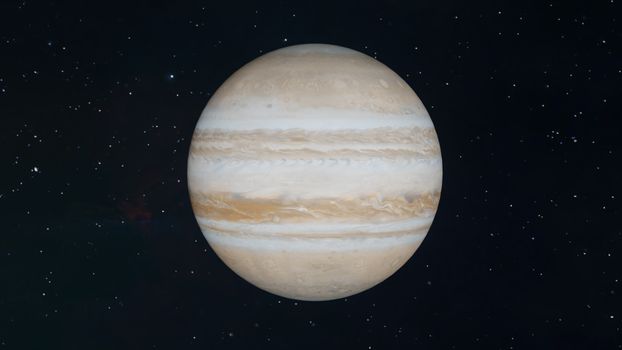
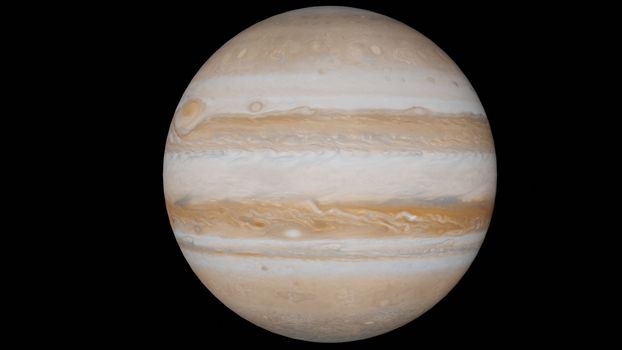
Our solar system is a magnificent dance of celestial bodies, with planets, asteroids, and comets weaving intricate paths around the Sun. At the heart of this cosmic choreography stands Jupiter, the largest planet in our solar system. But Jupiter is far more than just a massive gas giant: it is the solar system’s “cosmic traffic cop,” exerting a profound influence on the paths of comets that venture through our cosmic neighborhood. From redirecting icy wanderers to shielding Earth from potential impacts, Jupiter’s gravitational might has shaped the history of comets—and, by extension, life on our planet. In this article, we’ll explore how Jupiter alters comet trajectories, examine key examples, and delve into the science behind this planetary powerhouse’s role as a celestial guardian and sculptor.
The Gravitational Powerhouse: How Jupiter Influences Comet Paths
Jupiter’s influence on comets begins with its immense mass. Weighing in at approximately 1.9 x 10^27 kilograms, Jupiter is more than 300 times as massive as Earth and over two-and-a-half times the mass of all the other planets combined. This staggering heft gives Jupiter a gravitational pull strong enough to tug at comets flying through the solar system, altering their courses—sometimes dramatically.
When a comet approaches the inner solar system, it may pass close to Jupiter. Depending on the angle, speed, and distance of this encounter, Jupiter’s gravity can:
.png) - Change the comet’s orbit, pulling it closer to the Sun or flinging it out into deep space
- Capture the comet, turning it into a “Jupiter-family comet” with an orbit that keeps it near the giant planet
- Deflect the comet away from potential collisions with Earth or other planets
- Change the comet’s orbit, pulling it closer to the Sun or flinging it out into deep space
- Capture the comet, turning it into a “Jupiter-family comet” with an orbit that keeps it near the giant planet
- Deflect the comet away from potential collisions with Earth or other planets
According to NASA, Jupiter’s gravitational field extends for millions of kilometers, creating a vast zone of influence. This reach enables Jupiter to intercept or significantly alter the trajectories of comets that might otherwise pose a risk to inner planets.
Jupiter’s Role as a Celestial Shield for Earth
One of the most significant impacts of Jupiter’s gravitational dominance is its role in protecting Earth from potentially catastrophic comet impacts. Many scientists believe that Jupiter acts as a “cosmic shield,” diverting or capturing comets that could otherwise strike Earth.
A compelling example comes from the impact rates of long-period comets—those originating from the distant Oort Cloud. Studies have shown that, without Jupiter’s presence, the rate of such objects colliding with Earth would be significantly higher. In a 1994 study published in the journal Nature, researchers estimated that Jupiter decreases the impact rate of comets on Earth by a factor of at least 2 to 3.
But Jupiter’s protective role isn’t absolute. While it redirects many comets, it can also send some toward the inner solar system, occasionally increasing the risk of impacts. However, overall, Jupiter’s massive gravitational field is seen as a net positive for planetary safety.
Jupiter-Family Comets: A Case Study in Orbital Transformation
Jupiter’s gravitational reach has given rise to a special class of comets known as “Jupiter-family comets” (JFCs). These are comets whose orbits have been dramatically altered by close encounters with Jupiter, resulting in relatively short orbital periods (less than 20 years) and orbits that don’t stray far from the giant planet.
Some key facts about Jupiter-family comets:
- There are over 400 known Jupiter-family comets as of 2024. - JFCs typically have orbits with low inclinations, meaning their paths are close to the plane of the solar system. - Many JFCs originated in the Kuiper Belt but were captured by Jupiter’s gravity.A famous example is Comet 2P/Encke, which completes an orbit around the Sun every 3.3 years and never strays far from the inner solar system. Its current path is the result of centuries of gravitational nudges from Jupiter.
Shoemaker-Levy 9: Jupiter’s Gravitational Masterclass
No discussion of Jupiter’s influence on comets would be complete without mentioning Comet Shoemaker-Levy 9. First discovered in 1993, this comet provided a dramatic, real-time demonstration of Jupiter’s gravitational power.
In the early 1990s, Shoemaker-Levy 9 passed so close to Jupiter that it was torn apart by tidal forces, breaking into more than 20 fragments. In July 1994, these fragments collided with Jupiter’s atmosphere at speeds exceeding 60 kilometers per second (over 130,000 miles per hour). The impacts created massive scars in Jupiter’s clouds, some larger than the diameter of Earth, which were visible for months.
The Shoemaker-Levy 9 event was the first direct observation of a collision between two solar system bodies and offered invaluable insights into Jupiter’s role in intercepting and absorbing cometary impacts. It also underscored the potential for Jupiter to shield the inner solar system from such catastrophic collisions.
Comparing Jupiter’s Influence with Other Planets
While all planets exert some gravitational pull, none matches Jupiter’s ability to alter comet trajectories. The table below compares Jupiter’s impact on comets with that of other major planets:
| Planet | Mass (Earth Masses) | Zone of Influence (Hill Sphere, million km) | Typical Effect on Comets |
|---|---|---|---|
| Jupiter | 318 | 53 | Major orbital changes, captures, ejections |
| Saturn | 95 | 45 | Moderate orbital nudges, some captures |
| Uranus | 14 | 11 | Limited influence, minor orbital adjustments |
| Neptune | 17 | 11 | Influences Kuiper Belt objects, minor comet effects |
| Earth | 1 | 1.5 | Very localized effects, rare captures |
As the table illustrates, Jupiter’s immense mass and large Hill sphere (the region where its gravity dominates) make it uniquely capable of capturing and redirecting comets. Saturn, while significant, has only about one-third of Jupiter’s mass and a slightly smaller zone of influence.
Scientific Methods for Studying Jupiter’s Effects on Comets
Astronomers use a variety of techniques to study how Jupiter shapes comet trajectories. Among the most important are:
- Computer Simulations: By simulating the gravitational interactions between Jupiter and comets, researchers can predict how cometary orbits will change over time. These models have shown that Jupiter can eject comets from the solar system or trap them in short-period orbits. - Observational Astronomy: Telescopes track the positions and paths of comets as they move through the solar system, allowing scientists to see the effects of Jupiter’s gravity in real time. - Space Missions: Probes such as NASA’s Juno (studying Jupiter itself) and ESA’s Rosetta (which studied Comet 67P/Churyumov–Gerasimenko, a Jupiter-family comet) have provided crucial data on comet composition and dynamics.One striking statistic: A 2008 study found that, over the last 500 million years, Jupiter has likely ejected more than 99% of long-period comets that entered the inner solar system, dramatically reducing the risk of catastrophic impacts.
The Broader Implications: Jupiter and the Evolution of Life
Jupiter’s role in shaping comet trajectories extends beyond planetary defense—it has influenced the very evolution of life on Earth. Comets are rich in water ice and organic molecules, and many scientists believe they played a role in delivering these essential ingredients to the early Earth.
By steering some comets toward Earth and deflecting others, Jupiter may have helped to regulate the frequency and scale of cometary impacts. Too many large impacts could have repeatedly sterilized the planet’s surface, while too few might have deprived Earth of important chemical building blocks. Jupiter’s moderating influence could, therefore, be a key factor in why life was able to take hold and flourish here.
Final Thoughts on Jupiter’s Impact on Comet Trajectories
Jupiter’s gravitational might makes it a dominant force in our solar system, especially when it comes to the paths of comets. By capturing, redirecting, or ejecting these icy wanderers, Jupiter has acted as both a cosmic sculptor and a planetary guardian. Its influence has not only protected Earth from countless potential impacts but has also shaped the history and habitability of our planet. The ongoing study of Jupiter’s role in the solar system reminds us of the intricate and interconnected nature of celestial mechanics—a dance choreographed by gravity, time, and the silent movements of giants.