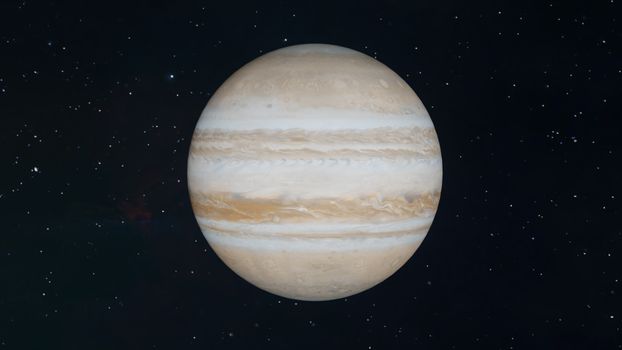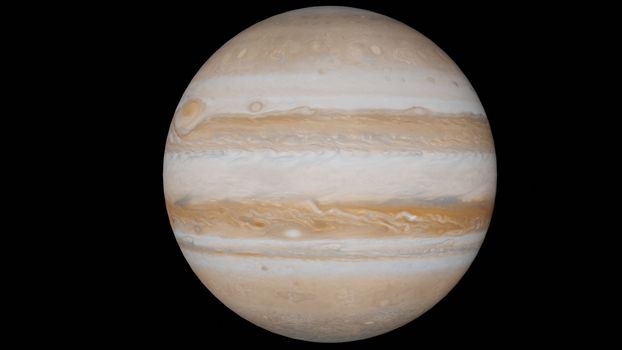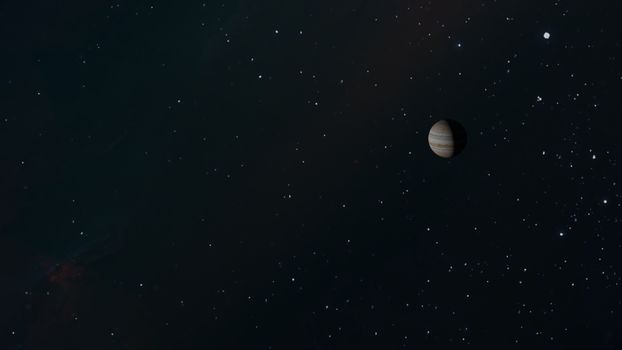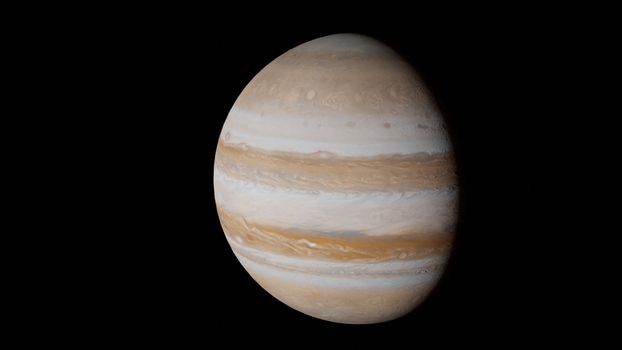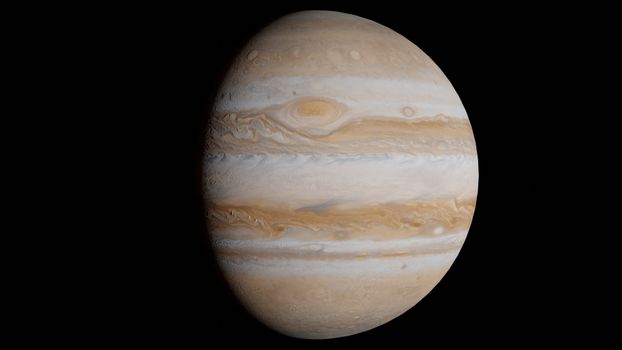
Jupiter’s magnetic field is one of the most awe-inspiring and scientifically intriguing features in our solar system. Stretching millions of kilometers into space and dwarfing all other planetary fields, Jupiter’s magnetic domain is a cosmic powerhouse that shapes not only the planet itself but also the surrounding space environment. From shielding its moons to generating dazzling auroras, Jupiter’s magnetic field offers a window into the powerful forces at play deep inside this gas giant. In this article, we’ll dive into what makes Jupiter’s magnetic field so extraordinary, how it compares with others, and why its secrets continue to captivate astronomers and space enthusiasts alike.
The Immense Scale of Jupiter’s Magnetic Field
Jupiter’s magnetic field is the largest and most powerful planetary magnetic field in our solar system, except for the Sun’s own magnetic influence. To grasp its enormity, consider this: Jupiter’s magnetosphere—the region dominated by its magnetic field—extends up to 7 million kilometers toward the Sun and nearly reaches Saturn’s orbit on the night side, stretching more than 600 million kilometers.
This immense size means Jupiter’s magnetosphere could easily envelop the Sun and all its planets with room to spare. In comparison, Earth’s magnetosphere extends about 65,000 kilometers from our planet. The sheer scale of Jupiter’s magnetic field is a direct result of its rapid rotation and massive, metallic hydrogen core.
.png) Key facts about Jupiter’s magnetic field scale:
- Magnetic field strength at the cloud tops: 4.2 gauss (Earth’s is about 0.5 gauss)
- Magnetosphere tail length: Over 600 million kilometers
- Magnetosphere volume: 20,000 times greater than Earth’s
Key facts about Jupiter’s magnetic field scale:
- Magnetic field strength at the cloud tops: 4.2 gauss (Earth’s is about 0.5 gauss)
- Magnetosphere tail length: Over 600 million kilometers
- Magnetosphere volume: 20,000 times greater than Earth’s
These staggering numbers highlight just how uniquely powerful and vast Jupiter’s magnetic influence is in the solar system.
How Jupiter’s Magnetic Field is Generated
The origin of Jupiter’s magnetic field lies deep within its interior. Unlike Earth, where a molten iron core generates the magnetic field, Jupiter’s field is produced by a vast layer of metallic hydrogen—a rare, exotic state of hydrogen that exists only under extreme pressure.
Here’s how the process works: - Jupiter’s massive gravity compresses hydrogen gas into a liquid metallic form about 20,000 kilometers below the cloud tops. - This metallic hydrogen acts like an electrical conductor. - Jupiter’s rapid rotation (a day on Jupiter lasts just under 10 hours) stirs this layer, creating powerful electric currents. - These currents generate a magnetic field through a process called the dynamo effect.This unique mechanism is only possible because of Jupiter’s immense size and internal pressure, making it a standout among the gas giants. The field is not only incredibly strong but also strangely shaped. Recent data from NASA’s Juno spacecraft have shown that Jupiter’s magnetic field is lopsided, with one pole much stronger than the other, and features unusual regions such as the “Great Blue Spot”—a localized area of intense magnetic activity.
The Dynamic Impact on Jupiter’s Moons and Space Environment
Jupiter’s magnetic field doesn’t just stay close to the planet—it profoundly influences the space around it, especially its more than 90 moons. The four largest moons—Io, Europa, Ganymede, and Callisto—reside within Jupiter’s magnetosphere and interact with it in fascinating ways.
For instance, Io, the most volcanically active body in the solar system, spews out vast amounts of sulfur and oxygen ions. These particles get trapped by Jupiter’s magnetic field, forming a ring of charged particles known as the Io plasma torus. The constant bombardment of this plasma creates intense radiation belts around Jupiter, far more powerful than Earth’s Van Allen belts.
Europa, another of Jupiter’s major moons, also feels the effects. As it orbits within the magnetic field, it experiences electric currents that may help warm its subsurface ocean, raising intriguing possibilities for life.
The magnetic field also produces stunning auroras at Jupiter’s poles—much brighter than Earth’s northern and southern lights. These auroras, detected in ultraviolet and X-ray wavelengths, are driven by the complex interplay between the magnetic field and charged particles from the solar wind and Jupiter’s own volcanic moons.
Comparing Jupiter’s Magnetic Field with Other Planets
To truly appreciate the uniqueness of Jupiter’s magnetic field, it’s helpful to compare it with those of other planets in our solar system. The table below illustrates some key differences:
| Planet | Field Strength at Surface (Gauss) | Magnetosphere Size (km from planet) | Unique Features |
|---|---|---|---|
| Jupiter | 4.2 | 7,000,000 (sunward) | Largest, lopsided, metallic hydrogen dynamo |
| Earth | 0.5 | 65,000 | Iron core dynamo, protects life |
| Saturn | 0.2 | 1,000,000 | Almost perfectly symmetrical |
| Ganymede (moon) | 0.007 | 2,700 | Only moon with its own field |
| Mercury | 0.003 | 1,500 | Weak, offset from center |
From the table, it’s clear that Jupiter’s field is not only the strongest among planets but also the most complex. Interestingly, Ganymede, one of Jupiter’s moons, is the only moon known to have its own magnetic field—possibly due to a partially liquid iron core.
Juno Mission: Unlocking the Mysteries of Jupiter’s Magnetism
In 2016, NASA’s Juno spacecraft entered orbit around Jupiter, carrying some of the most sophisticated instruments ever sent to study a planet’s magnetic field. Juno’s magnetometers have mapped Jupiter’s field in unprecedented detail, revealing new surprises that challenge previous theories.
Some of Juno’s key findings include: - Discovery of the “Great Blue Spot,” an intense patch of magnetic field near the equator, distinct from the poles. - Confirmation that Jupiter’s field is highly asymmetric, with stronger regions in the northern hemisphere. - Evidence that the magnetic field is evolving over time, suggesting complex movements within the planet’s metallic hydrogen layer.Juno’s close flybys—some passing just 4,200 kilometers above the cloud tops—have given scientists a front-row seat to the planet’s magnetic dynamics. These observations are helping researchers refine dynamo theory and understand how magnetic fields evolve on both gas giants and terrestrial planets.
Why Jupiter’s Magnetic Field Matters for Science and Exploration
Jupiter’s magnetic field isn’t just a scientific curiosity—it has practical implications for space exploration, planetary science, and our understanding of magnetic fields throughout the universe.
First, the intense radiation belts created by Jupiter’s magnetic field pose a serious challenge for spacecraft. Any probe or lander must be carefully shielded to survive, as the radiation near Jupiter can be up to 10 times stronger than Earth’s Van Allen belts.
Second, studying Jupiter’s magnetic field helps scientists model the interiors of other giant planets, both in our solar system and around other stars. Since magnetic fields are generated by internal dynamos, learning how Jupiter’s works can shed light on the formation and evolution of exoplanets.
Finally, the unique interactions between Jupiter’s field and its moons—especially Europa, with its subsurface ocean—provide tantalizing clues about where life could potentially exist elsewhere in the solar system. Understanding how magnetic fields contribute to heating and protecting these environments could be key to future discoveries.
Final Reflections: The Lasting Mysteries of Jupiter’s Magnetic Field
Jupiter’s magnetic field stands as one of the most powerful and mysterious forces in our solar system. Its colossal size, complex shape, and dynamic interactions with the planet’s environment continue to surprise scientists and inspire new missions. With each new discovery—whether from ground-based telescopes or cutting-edge spacecraft like Juno—we come closer to unraveling the secrets of this cosmic giant.
As we look to the future, Jupiter’s magnetic field remains a crucial window into the workings of planetary interiors, the hazards of deep space, and the possibilities of life beyond Earth. Its story is far from finished, and the next generation of explorers may yet reveal even more astonishing truths hidden within Jupiter’s mighty grasp.