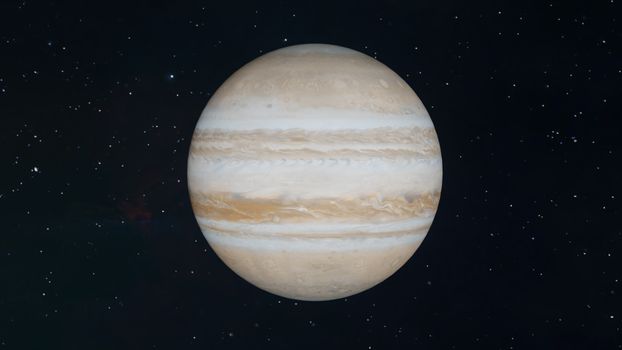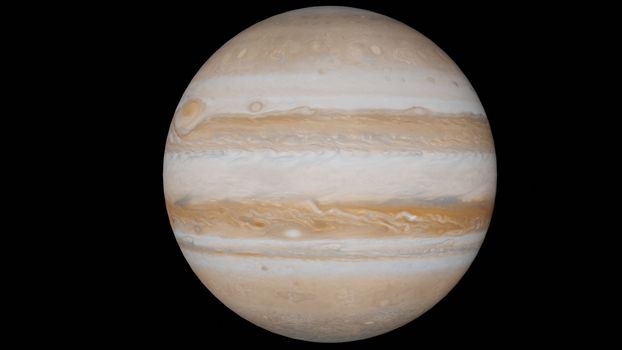
Jupiter’s vast system of moons, numbering at least 95 according to recent discoveries, represents one of the most intriguing frontiers for robotic space exploration. With worlds ranging from volcanic Io to the ice-encrusted Europa and the mysterious subsurface ocean of Ganymede, Jupiter’s moons offer an unparalleled laboratory for studying planetary science, astrobiology, and the history of our solar system. But how do we actually explore these distant, challenging worlds? In this article, we’ll examine the diverse options available for robotic missions to Jupiter’s moons, from flybys and orbiters to ambitious landers and even potential sample-return concepts. We’ll also take a look at the technological hurdles, mission planning strategies, and the most promising upcoming and proposed missions poised to revolutionize our understanding of these alien environments.
The Unique Challenges of Exploring Jupiter’s Moons
Before diving into the types of robotic missions, it’s vital to understand the unique obstacles that make exploring Jupiter’s moons both difficult and fascinating.
Firstly, distance is a major factor. Jupiter is about 778 million kilometers (484 million miles) from the Sun, or more than five times farther than Earth. This means even the fastest spacecraft take years to reach the Jovian system. For example, NASA’s Galileo mission took over 6 years to arrive at Jupiter in 1995.
.png)
Secondly, Jupiter’s powerful radiation belts pose a significant threat to spacecraft electronics. The planet’s immense magnetic field traps charged particles, creating an environment hundreds of times more intense than Earth’s Van Allen belts. This is especially hazardous near inner moons like Io and Europa.
Third, the moons themselves present diverse environments. Europa and Ganymede are believed to harbor subsurface oceans beneath icy crusts; Io is the most volcanically active body in the solar system; and Callisto, while less active, is pockmarked with ancient craters. Each world requires custom strategies for exploration, data collection, and landing.
These challenges dictate the types of robotic missions that can be designed and the scientific questions they can address.
Flyby Missions: First Looks and Reconnaissance
Flyby missions are often the first step in exploring distant moons. They provide a rapid, cost-effective means to gather critical data without the complexity of orbit insertion or landing.
The Voyager 1 and 2 spacecraft, launched in 1977, revolutionized our understanding of Jupiter’s moons with their flybys in 1979. The missions discovered active volcanoes on Io, complex surface features on Europa, and evidence of water ice on Ganymede and Callisto.
More recently, the Juno spacecraft, which arrived at Jupiter in 2016, has conducted close flybys of Ganymede, Europa, and Io, capturing high-resolution images and measuring magnetic and gravitational fields.
Advantages of flyby missions include: - Lower fuel and energy requirements - Ability to visit multiple moons in a single mission - Relatively fast data return after arrivalHowever, flybys offer only brief observation windows, limiting their ability to monitor dynamic processes or map entire surfaces in detail.
Orbiter Missions: Extended Investigations from Jovian Orbit
Orbiters represent the next level of robotic exploration, enabling long-term, detailed studies of one or more moons from orbit. These spacecraft can map surfaces, study atmospheres, and monitor changes over time.
NASA’s Galileo orbiter, active from 1995 to 2003, was the first to enter orbit around Jupiter, conducting repeated flybys of its major moons. Galileo discovered strong evidence for subsurface oceans on Europa, Ganymede, and possibly Callisto, and observed Io’s volcanic activity.
Upcoming missions are set to build on this legacy. The European Space Agency’s Jupiter Icy Moons Explorer (JUICE), launched in 2023 and scheduled to arrive at Jupiter in 2031, will spend three years in the system, making detailed studies of Ganymede, Europa, and Callisto before entering orbit around Ganymede—the first time a spacecraft will orbit a moon other than our own.
NASA’s Europa Clipper, set for launch in 2024, will conduct nearly 50 close flybys of Europa. While not an orbiter of Europa itself (due to radiation concerns), it will operate in a highly elliptical Jovian orbit, optimizing science return while minimizing radiation exposure.
Orbiter missions are crucial for: - Long-duration monitoring of surface and atmospheric changes - High-resolution mapping for future lander sites - Detailed study of magnetic, gravitational, and geological propertiesLander Missions: Touching Down on Alien Surfaces
Landing on Jupiter’s moons is a formidable challenge due to distance, radiation, and surface conditions. Nevertheless, lander missions offer the most direct way to analyze surface composition, search for biosignatures, and test for habitability.
No lander has yet touched down on any of Jupiter’s moons, but several concepts are in development:
– Europa Lander: NASA is studying a concept for a Europa lander that would drill into the icy surface and analyze samples for complex organic molecules and possible signs of life. Europa’s surface temperatures can plunge to -160°C (-256°F), and the harsh radiation environment would limit mission duration to about 20 days.
– Ganymede and Callisto Landers: While not yet officially under development, these moons are also considered prime candidates for landers. Ganymede’s weaker radiation exposure, compared to Europa, makes it an appealing target for longer-duration surface missions.
Key lander mission goals include: - Direct sampling of surface and near-surface material - Seismology to probe internal structures - Detailed imaging and compositional analysisLanding sites must be carefully chosen, balancing scientific interest with safety and technical feasibility.
Sample Return and Subsurface Exploration: Ambitious Future Options
The holy grail of planetary science is the return of samples from another world. Sample return missions from Jupiter’s moons would allow laboratories on Earth to conduct detailed chemical and isotopic analyses impossible with robotic instruments alone.
Potential concepts include: - Europa Sample Return: A multi-stage mission could land, collect surface samples, and launch them back to Earth. Technical challenges include sterilization to prevent contamination, surviving Jupiter’s radiation, and the vast distances involved. - Cryobots and Subsurface Probes: NASA has funded studies of cryobots—robots designed to melt through Europa’s ice shell to reach the underlying ocean. These would deploy instrument packages or even small submersibles to search for life in the ocean below.These missions are decades away, but their scientific payoff could be enormous: direct tests for life, precise measurements of water chemistry, and clues to the moon’s formation and evolution.
Comparing Robotic Mission Types to Jupiter’s Moons
Below is a comparison of the main robotic mission types for exploring Jupiter’s moons, outlining their goals, advantages, and challenges.
| Mission Type | Main Goals | Advantages | Challenges | Examples |
|---|---|---|---|---|
| Flyby | Reconnaissance, mapping, initial data | Low cost, visit multiple moons, rapid data | Short observation time, limited detail | Voyager 1 & 2, Juno |
| Orbiter | Long-term study, mapping, monitoring | Extended data collection, time-variable science | Complex mission design, radiation exposure | Galileo, JUICE, Europa Clipper |
| Lander | Surface analysis, search for life, in situ measurements | Direct sampling, detailed analysis | Technical complexity, harsh environments | Europa Lander (proposed) |
| Sample Return | Return surface/subsurface material to Earth | Highest scientific return, laboratory analysis | Extremely challenging, not yet attempted | Europa Sample Return (concept) |
| Subsurface Probe | Explore beneath ice, search for life | Direct access to ocean, unique science | Technically ambitious, high risk | Cryobot (concept) |
Technological Innovations Driving Future Exploration
Robotic exploration of Jupiter’s moons pushes the boundaries of engineering and science. Several breakthroughs are making these missions possible:
- Advanced Radiation Shielding: The Europa Clipper, for example, uses a “vault” of titanium and aluminum to shield sensitive electronics from Jupiter’s radiation, increasing expected mission lifespan. - Miniaturized Science Instruments: Modern instruments can perform sophisticated chemical analyses using less power and mass, allowing for more compact and versatile payloads. - Autonomous Navigation: Given the communication delay (up to 50 minutes round trip), spacecraft must land and operate semi-independently, using onboard software to avoid hazards and make real-time decisions. - Power Generation: Missions to Jupiter’s moons often rely on radioisotope thermoelectric generators (RTGs) for power, as sunlight is only about 4% as strong at Jupiter as at Earth. - Sample Handling and Sterilization: For future sample return or life detection missions, strict protocols are necessary to avoid contaminating both the moons and Earth.These innovations not only advance Jupiter moon missions but also set the stage for deeper exploration of the outer solar system.
The Road Ahead: What Robotic Missions Can Reveal About Jupiter’s Moons
The next decade promises a leap forward in our understanding of Jupiter’s moons. With JUICE and Europa Clipper poised for launch, and lander and subsurface probe concepts under active study, humanity stands on the brink of answering some of our most profound questions: Are ocean worlds like Europa and Ganymede habitable? Does life exist beyond Earth? How did these extraordinary moons form and evolve?
Robotic missions are our eyes and hands in these distant realms, turning science fiction into testable exploration. Each mission type—flyby, orbiter, lander, sample return—offers unique insights, and together they will unveil the secrets of Jupiter’s captivating moons.