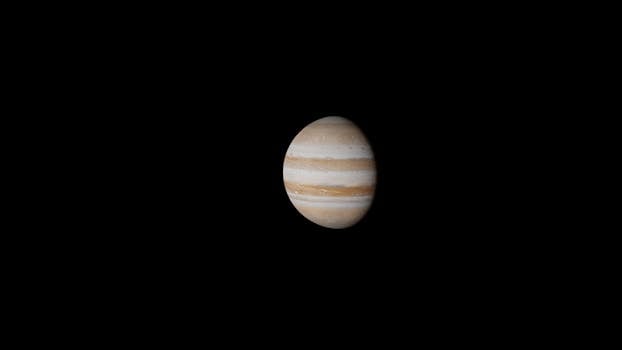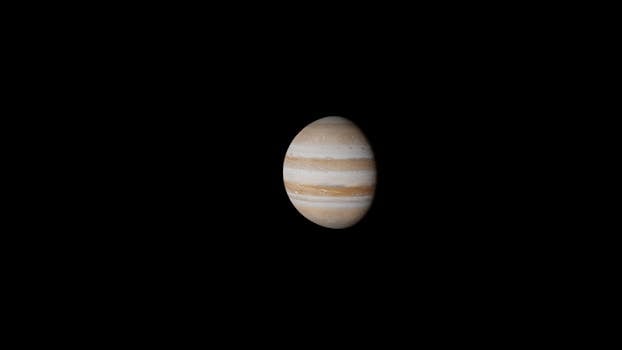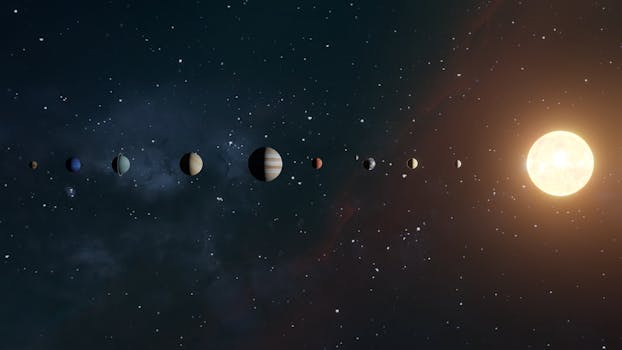
Jupiter, the behemoth of our solar system, holds the title of the largest planet and serves as a fascinating subject for scientific study. This gas giant, primarily composed of hydrogen and helium, carries over twice the mass of all the other solar system planets combined. This article delves into the intricate aspects of Jupiter, including its structure, atmospheric dynamics, magnetic properties, and its pivotal role in astronomical research.
Structure and Composition Jupiter's grand scale influences its internal architecture significantly. Unlike terrestrial planets like Earth, Jupiter lacks a solid surface. Instead, its visible layer consists of thick clouds floating in an atmosphere dominated by hydrogen and helium. As one descends, the increasing pressure and temperature transform hydrogen gas into a liquid state, leading to the formation of a metallic hydrogen sea. This dense layer encases a core that, while roughly Earth-sized, is much denser.
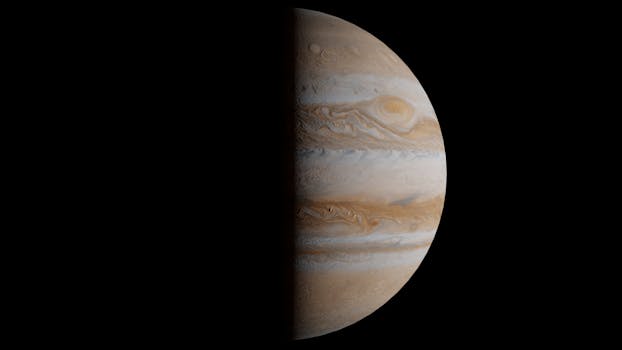
Atmospheric Dynamics Jupiter showcases some of the solar system's most extraordinary weather phenomena. Its iconic feature, the Great Red Spot, is a colossal storm larger than Earth that has persisted for centuries. Jupiter's rapid rotation—it completes one spin every 10 hours—and internal heat contribute to its complex weather patterns, including powerful jet streams and massive vortices.
.png)
Magnetic Field and Magnetosphere The planet's magnetic field is the most intense in the solar system, about 20,000 times stronger than Earth's. This field is generated by the movements of conducting materials in the liquid metallic hydrogen layer. Jupiter's magnetosphere, which extends far into space, would dominate our night sky if visible, showcasing its immense scale.
Scientific Missions and Discoveries Exploration missions like Pioneer, Voyager, and the more recent Juno spacecraft have significantly advanced our understanding of Jupiter. Since reaching Jupiter in 2016, Juno has sent back crucial data about the planet’s atmospheric conditions, magnetic field, and gravitational anomalies. Insights from these missions enhance our knowledge of gas giants and the broader mechanisms at play in our universe.
Challenges and Rewards of Studying Jupiter Investigating Jupiter presents unique challenges due to its severe conditions and intense radiation belts, which demand highly resilient and advanced technological solutions for spacecraft. Despite these obstacles, the scientific rewards are substantial. Research into Jupiter's structure and behavior helps clarify the solar system's formation, atmospheric dynamics on other planets, and even the potential for life on moons orbiting other gas giants.
Conclusion Jupiter is more than just a planetary giant; it is a critical component in our quest to comprehend the cosmos. Its diverse layers and powerful phenomena provide insights into similar processes that could occur on other gas giants throughout the universe. Continued exploration and research promise to further unravel the mysteries of our solar system and potentially others, making Jupiter an essential focus for any astronomy enthusiast. This giant planet not only invites admiration but also demands our attention as we strive to understand the larger forces at work in our galaxy and beyond.