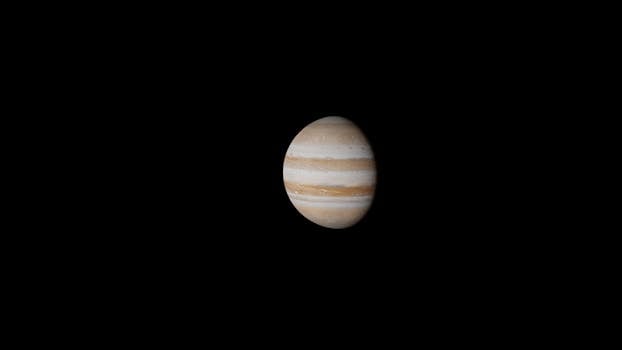
Jupiter's Great Red Spot is a gigantic storm that has been swirling on Jupiter for centuries, captivating the interest of astronomers and scientists alike. Located in the solar system's largest planet, this storm is a significant feature of Jupiter, providing key insights into the atmospheric dynamics of gas giants.
What is the Great Red Spot?
The Great Red Spot is a colossal anticyclonic storm on Jupiter, rotating counterclockwise in the planet's northern hemisphere. It spans about 16,350 kilometers in width, making it 1.3 times wider than Earth. The storm's oval shape and striking reddish hues make it an iconic sight in astronomical images.
.png)
Historical Significance
The storm has been observed continuously since 1830, though it was likely noted as early as the 17th century. Over the recent decades, the Great Red Spot has been shrinking, a phenomenon that remains a puzzle for scientists, sparking numerous studies to explore the reasons behind this trend.
Why is it Red?
The distinctive red color of the Great Red Spot is theorized to be caused by complex organic molecules, red phosphorus, or other chemical compounds that originate from deeper within Jupiter's atmosphere. The precise reason for its coloration is still under study, with missions like NASA's Juno spacecraft providing critical data to help uncover these mysteries.
Atmospheric Dynamics
The storm's longevity and persistence are notable, with high-velocity winds reaching up to 432 kilometers per hour near its edges. These winds are crucial for maintaining the storm’s structure and are thought to contribute to its long existence. The Great Red Spot is situated in the South Equatorial Belt of Jupiter, impacting the local atmospheric conditions and playing a significant role in the planet’s atmospheric dynamics.
Thermal Influence
The Great Red Spot also acts as a sort of heat pump. It draws heat from Jupiter's deeper layers and releases it into the upper atmosphere, influencing the thermal structure and dynamics of the planet's extensive atmosphere.
Future Research and Missions
Ongoing and future missions to Jupiter, such as the Europa Clipper, aim to provide more detailed observations of the Great Red Spot. Scientists are eager to utilize this data to delve deeper into the storm’s origins, its decreasing size, and its broader implications for understanding Jupiter's atmosphere and the atmospheric phenomena of other gas giants in our solar system and beyond.
Conclusion
Jupiter's Great Red Spot is more than just a visual spectacle; it's a complex and dynamic atmospheric phenomenon that holds keys to understanding not only Jupiter but also the atmospheric behaviors of similar planets in our galaxy. As our technological capabilities for space exploration grow, our knowledge of such extraordinary celestial features will continue to expand, offering deeper insights into the mysteries of the universe.