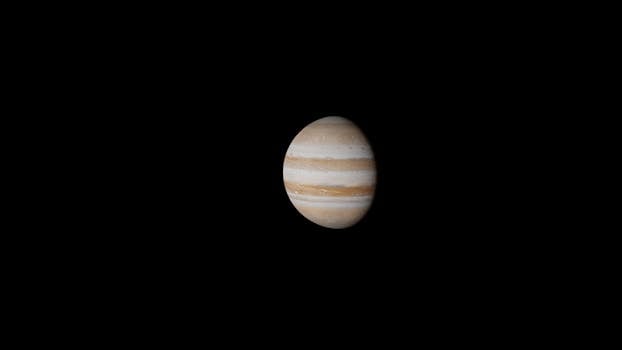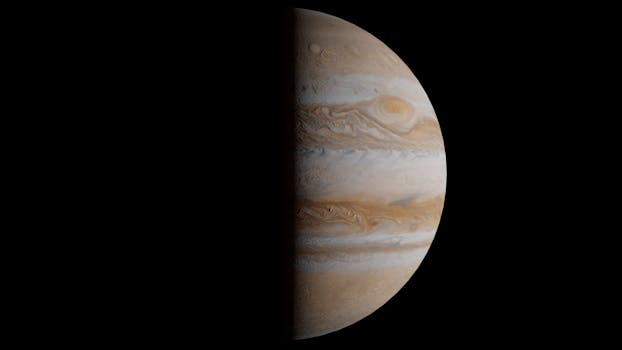
Jupiter's striking appearance, characterized by its vivid color bands, is one of the most recognized features in our solar system. These bands are not just visually captivating; they hold crucial information about the atmospheric dynamics and composition of the giant planet. The formation, characteristics, and implications of these colorful bands on Jupiter provide valuable insights into both the planet itself and broader astronomical phenomena.
How Jupiter's Color Bands Form
The formation of Jupiter's color bands is a result of complex atmospheric conditions driven by chemical compositions, temperature variations, and the planet's rapid rotation. Jupiter's atmosphere is predominantly hydrogen and helium, interspersed with traces of ammonia, methane, hydrogen sulfide, and water vapor that contribute to its varied color palette.
.png)
- Chemical Differences and Cloud Formation: The distinct colors of Jupiter's bands are largely due to how these chemical elements are distributed and how they react under different conditions. For instance, the presence of phosphorus-containing molecules is thought to contribute to the reddish hues of some bands, while deeper blues may be influenced by the scattering of light from the atmosphere.
- Atmospheric Movement: Jupiter's fast rotation, which completes a turn in just about 10 hours, significantly influences atmospheric dynamics. This rapid spinning creates strong centrifugal forces that shape the movement of gases in the atmosphere, forming the distinct zonal bands seen from afar.
- Temperature and Pressure Variations: The lighter-colored zones are generally cooler and consist of rising gases, whereas the darker belts are composed of warmer, sinking gases. These temperature differences are due to variations in solar heating and the internal heat of the planet, affecting the altitude and density of cloud cover.
What Jupiter's Bands Tell Us
The study of Jupiter's bands extends beyond their aesthetic appeal, providing critical data about the planet's atmospheric properties and behavior.
- Atmospheric Composition and Structure: By examining the light absorption and reflection patterns of the bands, scientists can deduce the predominant chemicals in different parts of Jupiter's atmosphere and how they vary with altitude.
- Weather Patterns: The dynamics within the bands reveal information about Jupiter's meteorological activity. For instance, the interaction between adjacent bands can lead to massive storms, such as the Great Red Spot.
- Internal Heat and Energy: The variations in temperature across the bands help scientists understand how internal heat is distributed and transported in Jupiter's atmosphere, offering clues about its internal energy processes.
Broader Implications
Understanding the atmospheric dynamics of Jupiter serves a dual purpose. Firstly, it provides a model for studying other gas giants in our solar system, such as Saturn, Uranus, and Neptune. Each of these planets exhibits similar banding though with different characteristics and underlying mechanisms.
Secondly, Jupiter serves as a comparative baseline for studying exoplanets. Many of the gas giants discovered outside our solar system share physical characteristics with Jupiter. Insights gained from Jupiter's atmosphere aid astronomers in hypothesizing the atmospheric conditions of these distant worlds, which are often beyond the direct reach of current technology.
Conclusion
Jupiter's color bands are a key to unlocking the mysteries of the gas giant's atmospheric phenomena and serve as a fundamental reference point for understanding not only other planets in our solar system but also the countless gas giants orbiting distant stars. Continual observations and advancements in technology will likely further our understanding of these dynamic atmospheric bands, enhancing our knowledge of planetary sciences and the workings of the universe.