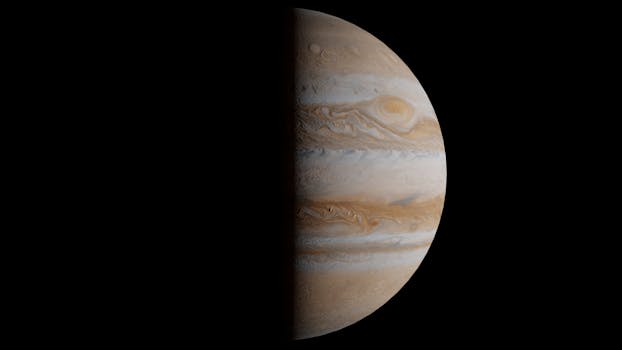
Jupiter's magnetic field stands as a colossal force within our solar system, offering a wealth of scientific insights and challenges. Its magnetic strength, approximately 14 times that of Earth, is generated through the dynamo effect driven by the movement of metallic hydrogen within the giant planet. This process occurs as hydrogen, under extreme pressures in Jupiter’s interior, transitions into a metallic state, facilitating electrical conductivity and magnetic field generation.
The complexity of Jupiter's magnetic field is underscored by its irregular and significantly tilted dipole compared to Earth's more aligned magnetic field. This suggests that the magnetic field may be produced by multiple sources within Jupiter, potentially within both the metallic hydrogen layer and its rocky core. Such complexity not only intrigues scientists but also prompts a deeper investigation into the planetary magnetic dynamics.
Jupiter's magnetic field manifests most visibly in its auroras, which are permanent and vastly more energetic than those on Earth. These spectacular light shows result from charged particles trapped by the magnetic field, colliding with the planetary atmosphere. The power and permanence of Jupiter's auroras provide a stark contrast to the more ephemeral auroral displays on Earth, highlighting the intense magnetic activity of Jupiter.
.png)
Understanding Jupiter’s magnetic field extends beyond academic curiosity. It holds practical implications for space exploration, particularly in preparing for and mitigating the challenges posed by the planet’s intense radiation belts. These belts, enhanced by the strong magnetic field, can severely damage spacecraft and pose significant risks to crewed missions. Moreover, studying Jupiter’s interaction with solar wind offers critical insights into space weather conditions, which can impact Earth.
Significant advancements in our understanding of Jupiter's magnetic field have come from missions like NASA’s Juno spacecraft, launched in 2016. Juno’s sophisticated instruments have enabled detailed mapping of the magnetic field, uncovering its dynamic nature and various irregularities. This wealth of data challenges previous understandings and prompts further scientific inquiry into the magnetic phenomena of large planets.
Furthermore, the study of Jupiter’s magnetic field enriches our understanding of planetary magnetism across the universe. By comparing Jupiter to other planets, including exoplanets, scientists can explore magnetic properties across different planetary environments, enhancing our understanding of the universe's diversity.
In essence, Jupiter’s magnetic field is not only a pivotal aspect of the planet’s character but also a key to broader planetary science. It invites ongoing research that promises to deepen our understanding of the solar system and inform future explorations, ensuring that our knowledge of these celestial phenomena continues to grow.