The exploration and comparison of the atmospheres of Jupiter and Earth reveal a fascinating contrast between these two celestial bodies. Jupiter, a vast gas giant, and Earth, our life-sustaining home, possess atmospheric characteristics that are both intriguing and vastly different, highlighting the diversity within our solar system.
Jupiter's Atmosphere: A Gaseous Giant's Envelope Jupiter's atmosphere is predominantly made up of hydrogen and helium, a stark contrast to Earth's nitrogen and oxygen-rich air. This composition influences everything from the appearance to the dynamics of Jupiter's weather systems. The atmosphere is incredibly deep, extending thousands of kilometers into the planet, far beyond the shallow atmospheric layer that envelops Earth.
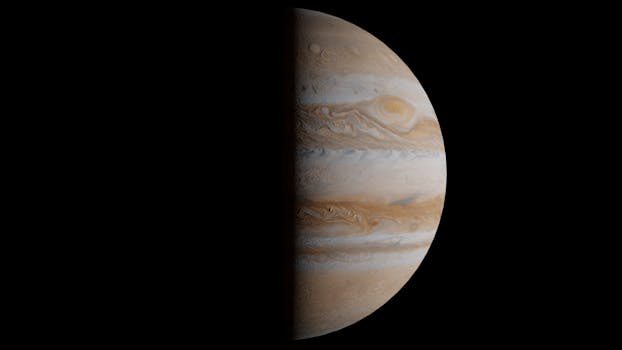
The visual spectacle of Jupiter's atmosphere is dominated by the Great Red Spot, an enormous storm system that is larger than Earth and has persisted for centuries. This enduring storm is a product of Jupiter's rapid rotation and internal heat, which also fuel other complex and intense weather phenomena. The varied colors visible in Jupiter's atmosphere, from deep reds to browns and oranges, are due to the presence of different chemicals like ammonium hydrosulfide and phosphorus.
.png)
Earth's Atmosphere: A Cradle for Life Earth's atmosphere, primarily composed of nitrogen (78%) and oxygen (21%), is essential for life as we know it. This thin layer not only provides the air we breathe but also plays a crucial role in climate regulation through the greenhouse effect. Trace gases like carbon dioxide, methane, and water vapor trap heat, maintaining a temperature range that supports diverse ecosystems.
Moreover, Earth's atmosphere protects its inhabitants from solar radiation and space debris. The ozone layer, situated in the stratosphere, filters out harmful ultraviolet light, safeguarding all life forms. The atmosphere also mitigates the temperature extremes between day and night, further stabilizing conditions on the surface.
Comparative Dynamics: Weather and Climate The atmospheric dynamics of Jupiter and Earth are profoundly different. Jupiter's extreme weather, characterized by powerful winds and massive storms, is driven by its rapid rotation (a complete rotation approximately every 10 hours) and the vast internal energy that heats its atmosphere. These conditions foster a turbulent and ever-changing atmospheric scene, unlike anything observed on Earth.
Conversely, Earth's weather systems are influenced by solar radiation, geographic and topographic variability, and the planet's moderate rotational speed. Earth's solid surface and oceanic coverage also play integral roles in shaping climate patterns, features absent on Jupiter.
Conclusion: A Study in Contrasts The atmospheres of Jupiter and Earth serve as a stark study in contrasts. Jupiter's thick, hydrogen and helium-dominated atmosphere is a hotbed of meteorological extremes, while Earth's thinner, life-sustaining envelope is defined by its ability to support and nurture life through temperature regulation, radiation protection, and air provision. These differences underscore the uniqueness of Earth in the context of our solar system and highlight the incredible variety of atmospheric conditions that exist across planets. Each planet's atmosphere tells a story of its composition, its environmental dynamics, and its place within the solar system, offering invaluable insights into the processes that shape celestial bodies.