Jupiter: The Colossal Guardian of Our Solar System
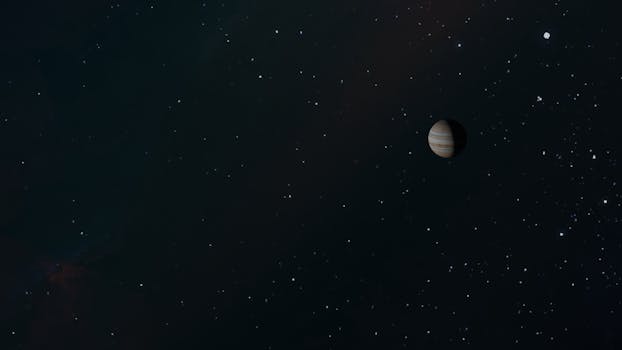
Jupiter, often hailed as the behemoth of our solar system, stands out not only for its sheer size but also for its intriguing celestial role. Known for being massive enough to be akin to a star, Jupiter intriguingly falls short of this fiery fate. This article delves into the enigmatic nature of Jupiter, exploring its characteristics, and shedding light on why it remains a planet rather than igniting as a star.
Understanding Jupiter
.png)
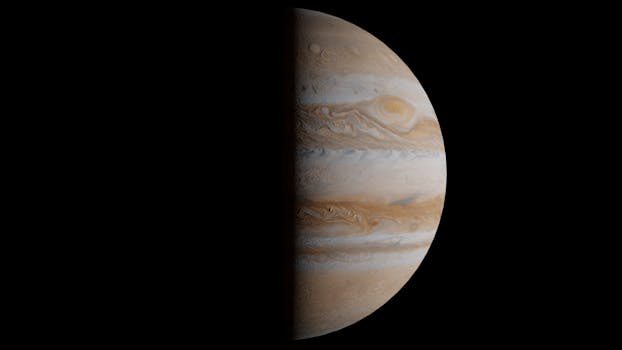
Jupiter is not only the largest planet in our solar system but also predominantly composed of hydrogen and helium—elements central to the makeup of stars. Despite its impressive mass, which is over twice that of all other planets combined, Jupiter lacks the necessary mass to initiate nuclear fusion, the fundamental process that powers stars.
Why Isn't Jupiter a Star?
For an object to transform into a star, it must possess sufficient mass to generate extreme pressure at its core, enough to fuse hydrogen atoms into helium. This fusion releases vast amounts of energy and light. However, Jupiter would need to be about 80 times more massive to kickstart this process. Hence, it is sometimes described as a failed star or, in astronomical terms, akin to a "brown dwarf."
The Dual Role of Jupiter in Our Solar System
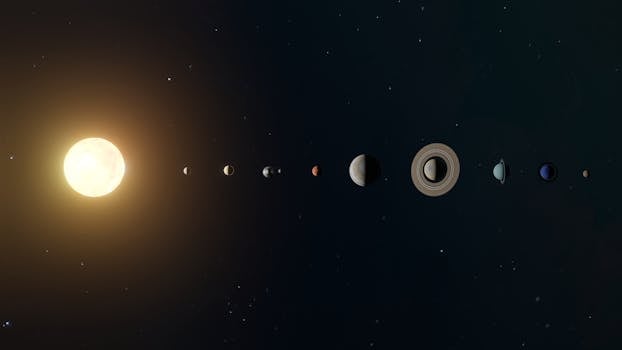
Jupiter's classification as a failed star brings both benefits and drawbacks to our solar system. Positively, its massive gravitational force plays a pivotal role in shaping the orbits of other planets, potentially enhancing the stability of the solar system's configuration. It also serves as a cosmic shield, capturing or deflecting comets and asteroids that might otherwise pose a threat to Earth.
Conversely, Jupiter's strong gravitational pull can destabilize the orbits of nearby celestial bodies. This influence can lead to dramatic shifts that might pose risks if these objects are sent hurtling towards the Sun or Earth.
Case in Point: The Shielding Effect of Jupiter
The protective role of Jupiter was dramatically showcased during the Shoemaker-Levy 9 comet impact in 1994. Captured by Jupiter’s gravity, the comet collided with the planet, resulting in a spectacular explosion and leaving visible scars in Jupiter's atmosphere. This event underscored Jupiter's role as a sort of cosmic vacuum cleaner, helping to mitigate extraterrestrial threats to Earth.
Conclusion
Jupiter’s classification as a failed star is a captivating feature of our solar system. It significantly influences the dynamics and stability of other planetary bodies and contributes to Earth's safety by intercepting or redirecting space debris. Although its powerful gravitational field can also introduce orbital instabilities, the overall benefits provided by Jupiter in maintaining our planet's security are invaluable. While not a star in the literal sense, Jupiter undeniably plays a stellar role in the cosmic ballet of our solar system.