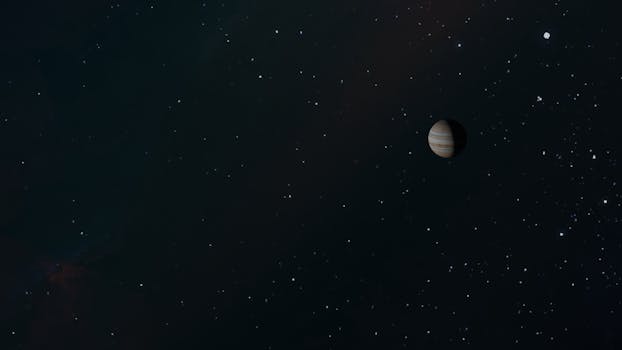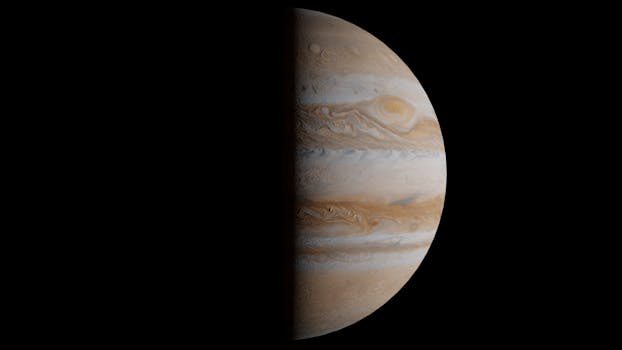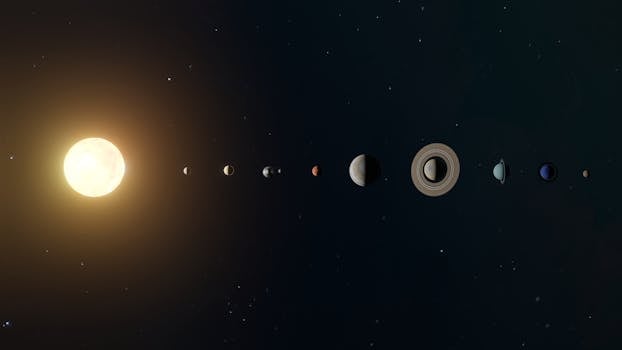
Jupiter, the largest planet in our solar system, often captures the imagination with its immense size and stormy atmosphere. Given its scale and gaseous makeup, it's tempting to wonder why Jupiter didn’t become a star. This article delves into the scientific reasons behind Jupiter’s state as a planet rather than a star, enhancing our understanding of astronomical phenomena and star formation.
The Critical Factor of Mass
The fundamental reason Jupiter is not a star lies in its mass. For a celestial body to engage in nuclear fusion—the core process powering stars like our Sun—it must have sufficient mass to create the extreme pressure and temperature required to fuse hydrogen atoms into helium. Although Jupiter is massive by planetary standards, it possesses only about 0.1% of the mass necessary to kickstart this process. Specifically, Jupiter would need to be about 75 times its current mass to begin nuclear fusion and become a star.
.png)
Jupiter’s Composition and Structural Differences
While Jupiter is primarily composed of hydrogen and helium, similar to a star, its internal structure and composition differ markedly from those of a star. Jupiter features a dense core surrounded by a deep layer of metallic hydrogen, but it lacks the requisite density and uniformity for the pressures and temperatures needed for nuclear fusion. The specific distribution of mass and atmospheric composition are not aligned with the conditions needed to sustain fusion reactions.
Gravitational Constraints and Solar Positioning
The location and gravitational field of Jupiter also contribute to why it did not evolve into a star. Positioned far from the Sun, Jupiter is exposed to less solar energy, impacting its atmospheric conditions and internal temperatures. Moreover, although Jupiter’s gravitational pull is strong, it is insufficient to attract and accumulate the additional mass that would be necessary to reach the threshold for initiating nuclear fusion.
Insights from Theoretical Models
Theoretical models in astrophysics provide further clarity on Jupiter’s development. These models indicate that had Jupiter acquired more mass during the nascent stages of the solar system, it might have achieved the critical mass necessary for nuclear fusion. However, the actual material distribution and solar system dynamics during its formation period did not support such mass accumulation.
Conclusion
Jupiter's status as a planet, rather than a star, can be attributed to several interlinked factors: its inadequate mass, its composition and structural makeup, and its position within the solar system. While Jupiter shares some characteristics with stars, such as being rich in hydrogen and helium, it significantly lacks in other essential aspects required for star formation. This exploration not only highlights Jupiter’s unique nature but also broadens our comprehension of how stars are formed and the intricate dynamics that govern our solar system.