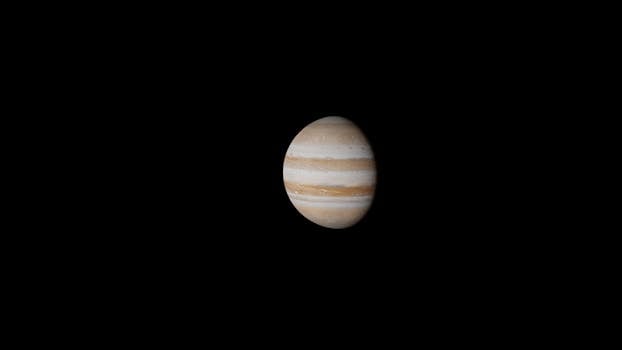
Jupiter, the behemoth of our solar system, captivates with its vast size and dynamic atmospheric phenomena. This guide delves into the essentials of navigating and understanding the stormy weather of Jupiter, an area of keen interest for scientists and space enthusiasts.
Understanding Jupiter's Unique Atmosphere
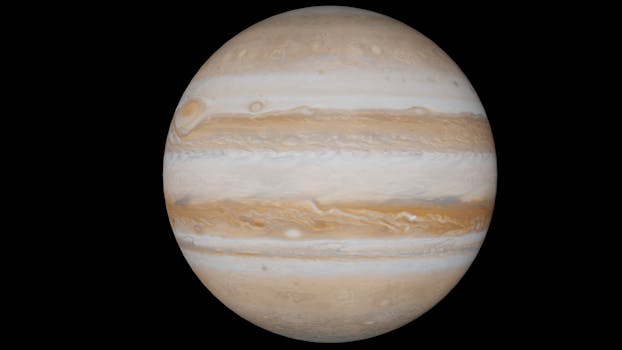
Jupiter's atmosphere is mostly hydrogen and helium, but it also contains ammonia, methane, water vapor, and other compounds. These elements, combined with Jupiter's rapid rotation—completing a full turn on its axis approximately every 10 hours—create its notorious weather systems. This rapid rotation significantly affects atmospheric movement, giving rise to the planet's characteristic striped appearance, formed by high-speed winds in the upper atmosphere.
.png)
The Iconic Great Red Spot
The most famous of Jupiter's weather phenomena is the Great Red Spot, a massive storm system that has been observed for over 300 years. This anticyclonic storm is roughly the size of three Earths and represents a high-pressure zone in the planet's atmosphere. While it appears to be shrinking, the Great Red Spot remains a subject of intense study and fascination due to its size, longevity, and the mystery surrounding its sustained energy.
Other Storm Systems on Jupiter
Beyond the Great Red Spot, Jupiter's atmosphere is a turbulent scene of numerous other storm systems. These storms can develop extremely high wind speeds, contributing to the chaotic environment. The interaction between these storms and the planet's overall atmospheric dynamics offers valuable insights into meteorological processes that can be quite different from those on Earth.
Challenges of Navigating Jupiter's Atmosphere
Navigating through Jupiter's hostile atmosphere poses a formidable challenge. For robotic explorers like NASA's Juno probe, survival and data collection in such an extreme environment require cutting-edge technology and meticulous planning. Instruments aboard these spacecraft must withstand severe radiation and colossal pressure differences, navigating around the most intense storm areas to conduct scientific measurements and send data back to Earth.
Technological Advances in Studying Jupiter
Technological advancements have continually improved our understanding of Jupiter. Modern spacecraft are equipped with sophisticated instruments capable of penetrating Jupiter's cloud layers to study underlying weather systems. These studies are crucial for understanding not just Jupiter but also providing comparative data that can improve our understanding of planetary atmospheres more broadly, including that of Earth.
The Future of Jovian Exploration
Looking forward, the exploration of Jupiter's atmospheric conditions is set to expand. Upcoming missions, like the Europa Clipper, aim to explore not only Jupiter itself but also its intriguing moons, such as Europa, which may hold the potential for life. These missions will further explore the interplay between Jupiter's weather and its moons, enriching our understanding of the planet's role within the broader solar system context.
In summary, Jupiter presents a fascinating but challenging target for exploration. Its complex and dynamic atmosphere, highlighted by spectacular storm systems like the Great Red Spot, offers a unique window into planetary weather processes. As our technological capabilities evolve, so too will our ability to study and understand this giant planet, continuing to unlock the secrets of our solar system.