Understanding Jupiter: A Deep Dive for Astronomy Enthusiasts
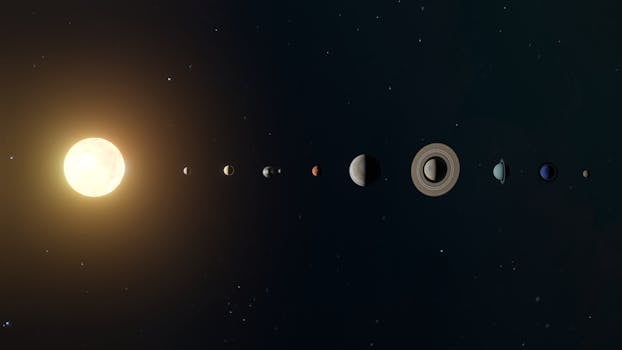
Jupiter, the behemoth of our solar system, stands out not just in size but as a subject of profound scientific interest and visual beauty. As the fifth planet from the Sun, Jupiter's massive presence influences many aspects of our solar neighborhood. This guide aims to enrich the knowledge of astronomy enthusiasts with detailed insights into Jupiter’s structure, atmosphere, magnetic field, and its many moons.
Jupiter's Size and Structure
.png)
Jupiter is enormous, with a diameter of approximately 86,881 miles, making it 11 times wider than Earth. This colossal size translates into a gravitational pull that is 2.5 times stronger than that of Earth, playing a critical role in the orbital dynamics of the solar system’s planetary bodies.
Unlike Earth, Jupiter is not a rocky planet but a gas giant. It does not have a traditional solid surface; its visible exterior is composed primarily of gaseous and liquid matter. Deep within, it is believed that the planet may have a core of rocky material or metallic hydrogen, though its exact composition remains a subject of ongoing research.
Atmospheric Composition and Phenomena
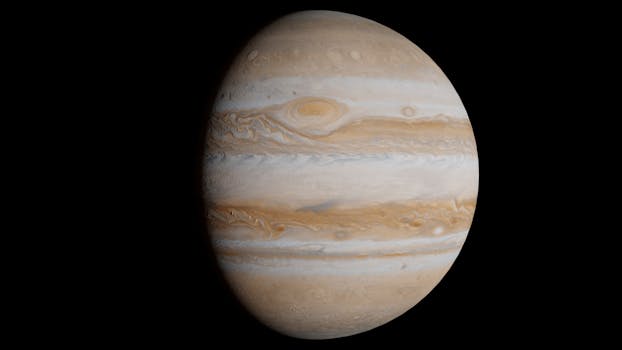
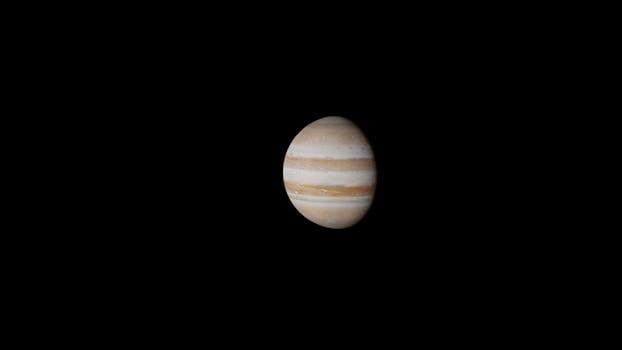
Jupiter's atmosphere is predominantly hydrogen and helium, similar in composition to the Sun. The striking visual patterns on Jupiter’s surface are due to the ammonia crystals and other elements that form the cloud bands. These bands display a variety of colors and move at different speeds, creating a dynamic visual spectacle.
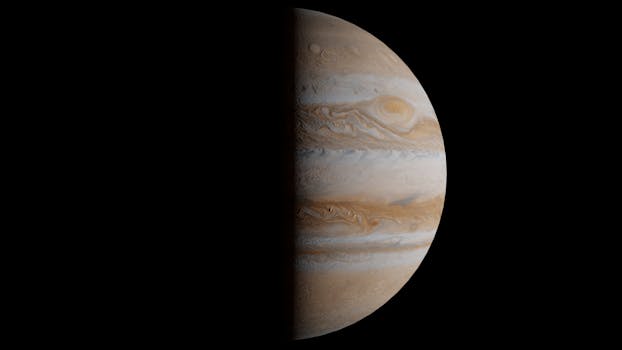
The Great Red Spot, a storm larger than Earth itself, is perhaps the most famous feature on Jupiter. This persistent high-pressure region in Jupiter’s atmosphere offers valuable clues about atmospheric dynamics and planetary weather systems.
Magnetic Field and Radiation
Jupiter possesses the most intense planetary magnetic field in our solar system, about 20 times stronger than Earth’s. This magnetic field is generated by eddy currents in the planet's liquid metallic hydrogen core, and it extends far into space, creating a vast magnetosphere. This magnetosphere captures and accelerates particles, including those from the volcanic eruptions on Io, contributing to a complex and intense radiation environment around Jupiter.
Moons Galore
Jupiter is famous for its extensive system of moons, with 79 known moons as of the latest counts. The Galilean moons — Io, Europa, Ganymede, and Callisto — are the largest and among the most interesting celestial bodies in the solar system. Each moon offers unique characteristics, from Io’s frequent volcanic activity to Europa’s ice-covered ocean, which might contain life.
Observational Tips
Jupiter is one of the brightest objects in the night sky and can be seen with the naked eye under good conditions. For those with telescopes, even modest equipment can reveal the four Galilean moons as distinct points of light. Higher-powered telescopes can show Jupiter’s cloud bands and even the Great Red Spot, a must-see for any amateur astronomer.
Jupiter’s Role in the Solar System
Jupiter’s immense gravity has influenced many aspects of the solar system, from the shaping of the asteroid belt to the protection it offers Earth by diverting comets and other potential impactors. Its presence and position have helped to maintain the stability of the solar system’s planetary orbits.
Conclusion: A Celestial Giant with Endless Mysteries
Jupiter is not just another planet; it is a complex system that continues to captivate scientists and astronomy enthusiasts alike. Its vast size, dynamic atmosphere, strong magnetic field, and rich array of moons make it a significant focus of study in understanding our solar system. For anyone passionate about the cosmos, Jupiter offers endless opportunities for observation, discovery, and awe.